Car Camping on a Road Trip: Setup, Safety, and Sleeping Well
There is a special freedom in a road trip where your bedroom travels with you. No check-in times, no checkout stress, no $180 hotel bill eating your adventure budget. Just you, your car, and a different view outside the window each morning. Car camping turns a regular road trip into something wilder and cheaper, and it is far more comfortable than most beginners expect, as long as you set it up right.
This guide covers the three things that matter: where you are legally allowed to sleep, how to set up your car so you actually rest, and how to stay safe doing it. It is written for the road trip version of car camping, where you sleep somewhere new each night, not the basecamp version where you pitch a tent for a week.
Car Camping on a Road Trip: The Short Version
New to this? Here is the whole system in a box.
- Sleep where it is legal: established campgrounds, BLM and National Forest dispersed sites, and some store and truck stop lots (with permission). Never on highway shoulders or in residential neighborhoods.
- Set up for comfort: fold the seats flat, level the sleeping surface, cover the windows, and crack two windows for airflow.
- Stay safe: lock the doors, keep keys and phone within reach, keep the driver's seat clear so you can drive away without getting out, tell someone your plan, and trust your gut.
- Pack for speed: one bin for sleep gear, one for kitchen, one for clothes. Twenty minutes to set up, fifteen to tear down.
Why Car Camping Is Perfect for Weekend Road Trips
Hotels are the biggest line item on most road trips, and they come with strings attached: check-in windows, cancellation policies, and locations that are rarely where the adventure is. Car camping flips that. Your lodging budget drops to nearly zero, and you sleep exactly where you want to be: at the trailhead, by the lake, under actual dark skies.
It also buys you flexibility, which is gold on a weekend. See a side road that looks interesting? Take it. Want to stay an extra hour at the overlook? No front desk is waiting. When your whole trip fits in 48 hours, removing the friction of lodging reservations gives you back real time.
And honestly, it is fun. There is something deeply satisfying about pulling into a quiet forest site at dusk, making dinner on a tailgate, and falling asleep to wind in the pines. Office life rarely delivers that.
Where You Can Legally Sleep in Your Car
Every beginner asks this, and it matters because sleeping in the wrong spot can earn you a 2 AM knock on the window or a ticket. Here are your options, ranked from most to least comfortable:
| Option | Typical cost | What to know |
|---|---|---|
| Established campgrounds (state park, national forest, private) | $15 to $45/night | Safest and most comfortable. Picnic table, fire ring, toilets. Book ahead on weekends via Recreation.gov or the state park site. |
| Dispersed camping on BLM / National Forest land | Free | Legal on most BLM and Forest Service land outside developed areas. No services. The BLM generally limits stays to 14 days in any 28-day period. Arrive before dark to scout a spot. |
| Truck stops | Free | Legal overnight parking, plus showers, WiFi, and food. Noisy with idling trucks. Park near the lights, bring earplugs. |
| Store lots (Walmart, Cracker Barrel, etc.) | Free | Policies vary by store and city. Always ask the manager on duty, park away from the entrance but under lights, and buy something as a thank you. |
| Highway rest areas | Free (where allowed) | Rules vary by state. Some states allow overnight stays, many limit you to a few hours. Check the state DOT website before counting on one. |
What to avoid
Do not sleep on highway shoulders, on-ramps, or in residential neighborhoods. Do not assume a "no overnight parking" sign does not apply to you. And do not stealth camp somewhere that feels wrong just because it is convenient. The golden rule: if you have to ask "is this okay?", find a better spot. With apps like Campendium, iOverlander, and Roadtrippers, there is almost always a legal option within 20 minutes.
A note on dispersed camping
Free camping on public land is the holy grail of road trip car camping, and it is genuinely available across the West. The Bureau of Land Management allows dispersed camping at no cost, generally up to 14 days in any 28-day period, though exact limits vary by field office. The trade: no toilets, no water, no trash service. You bring everything, and you pack everything out. For a weekend road tripper, one or two nights of dispersed camping is the perfect taste of freedom.
Setting Up Your Car for Sleeping
You do not need a converted van. People comfortably sleep in everything from Honda Civics to Subarus to minivans. The principles are the same; only the dimensions change.
The flat surface (the most important part)
Comfort starts with a level sleeping platform. Fold the rear seats flat and check for the gap and slope that most cars have between the trunk and the folded seatbacks. Fill it with a folded blanket, a duffel bag, or a cheap foam pad cut to size. Then lay down your sleeping pad or air mattress on top.
For sedans where the seats do not fold fully flat, the front passenger seat reclined all the way back works surprisingly well for one person. It is not palatial, but for a night or two it beats a hotel bill.
Window covers (privacy and temperature)
Covered windows do three jobs: privacy, darkness, and insulation. The classic DIY solution is Reflectix (reflective insulation from any hardware store) cut to fit each window, held in place by friction or small magnets. It costs about $20 total, blocks light completely, and adds real insulation. As a bonus, the reflective side facing out keeps the car cooler on sunny mornings.
Curtains on a tension rod or even dark towels tucked into the window frames work in a pinch. Whatever you use, make sure you can remove them in seconds from inside. You never want to be fumbling with window covers if you need to drive away quickly.
Ventilation (the part beginners forget)
A sealed car fills with moisture overnight from your breathing. You will wake up to fogged windows and damp bedding, which feels miserable and gets worse each night. The fix is simple: crack two windows on opposite sides about half an inch. Window rain guards (vent visors) let you do this even in rain without water getting in, and they are one of the best $40 upgrades a car camper can buy.
A small battery-powered USB fan clipped to a headrest moves air beautifully and doubles as white noise. On warm nights, it is the difference between sleeping and stewing.
Bedding
A sleeping bag rated for the expected low temperature, plus a real pillow from home, beats any fancy setup. If you run cold, add a sleeping bag liner; it adds about 10 degrees of warmth for very little space. In summer, a light blanket and a sheet are plenty. Always bring one more warm layer than the forecast suggests. Mountain towns can drop 30 degrees overnight, and being cold ruins car camping fast.
Tent or Car? How to Decide Each Night
On a road trip you can mix and match. Sleep in the car when:
- You are arriving late and leaving early (no setup, no teardown)
- The weather is bad (wind, heavy rain, or surprise cold snap)
- You are in a parking lot or rest area (faster, more discreet)
- You just want simplicity
Pitch the tent when:
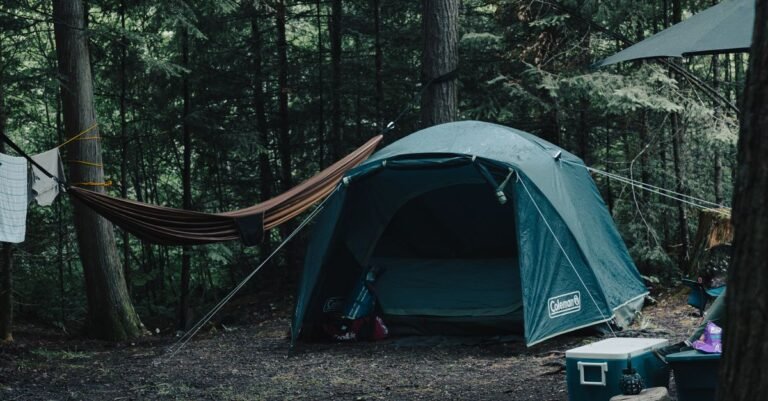
- You have a real campsite and time to enjoy it
- It is hot (tents ventilate far better than cars)
- You are staying two nights and want a "base" while you day-trip
- You crave the full camping experience: fire, stars, morning coffee outside
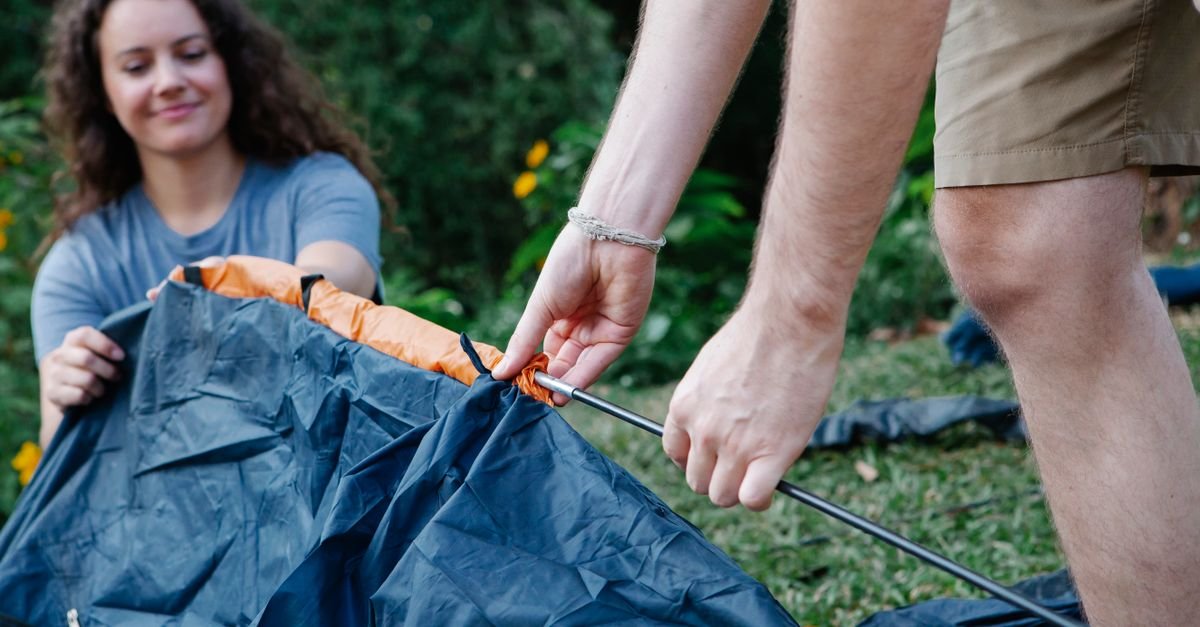
Many road trippers carry a cheap tent as a backup even when they plan to sleep in the car. It is the best $80 insurance policy in the outdoors.
The 20-Minute Camp Setup System
Arrive with enough daylight to see what you are doing. This is a hard rule. Everything is harder, slower, and sketchier in the dark, from picking a level spot to finding the headlamp you definitely packed somewhere.
- Pick your spot (5 min). Level ground, away from dead trees or branches overhead, not in a low spot where water pools. If dispersed camping, use an existing site rather than creating a new one.
- Set up sleep (5 min). Fold seats, lay the platform filler and pad, unroll the sleeping bag, put up window covers.
- Set up camp (5 min). Chairs out, table or tailgate kitchen ready, cooler accessible, headlamp on.
- Secure the site (5 min). Food stored (in the car with windows up if bears are a possibility, or in a bear box where provided), trash bag hung, valuables out of sight, doors locked when you are away from the car.
That is it. Resist the urge to unpack everything you own. The less you deploy, the faster tomorrow morning goes.
Cooking and Eating on a Car Camping Road Trip
You do not need a camp kitchen that rivals your home. For a weekend, the winning formula is: no-cook breakfasts, trail lunches, and one hot dinner.
- Breakfast: overnight oats in a jar, granola bars, fruit, coffee via a simple pour-over or instant. Eat in your sleeping bag while the sun comes up.
- Lunch: tortilla wraps, cheese, cured meat, nuts, fresh fruit. Zero cooking, zero cleanup, eaten at a scenic pullout.
- Dinner: this is where a single-burner camp stove earns its keep. One-pot pasta, canned chili doctored with cheese, or foil-packet veggies and sausage. One pot, one meal, minimal dishes.
Keep a dedicated "kitchen bin" with the stove, fuel, lighter, one pot, a spatula, two bowls, two sporks, a knife, dish soap, and a sponge. When the bin is packed, the kitchen is packed. For more meal ideas, see our no-cook camping meals guide.
Water
Bring more than you think. A gallon per person per day covers drinking, cooking, and basic washing. Refill at campgrounds, visitor centers, and gas stations. If you will be far from services, a portable water filter turns streams and lakes into backup supply.
Staying Safe While Car Camping
Let us be honest: the first night sleeping in your car in an unfamiliar place can feel nerve-wracking. That is normal, and it fades fast once you have a system. These practices are what experienced car campers actually do.
The non-negotiables
- Lock the doors. Every time, even at a quiet forest site. It is habit, not paranoia.
- Keep keys and phone within arm's reach. If something feels wrong at 3 AM, you want the key fob (panic button included) in your hand, not in a bag in the trunk.
- Keep the driver's seat clear. Arrange your setup so you can climb into the driver's seat and drive away without getting out of the car. This is the single most important safety layout decision.
- Tell someone your plan. Text a friend your route and where you plan to sleep each night. Check in when you arrive. If you have no cell service, a satellite communicator is worth its weight for remote trips.
- Trust your gut. If a spot feels off when you arrive, leave. There is always another site, another lot, another town. Your instincts are data.
Parking lot nights
Choose well-lit areas near other overnighters or near the building, not the dark far corner. Park, set up quietly, and keep a low profile: window covers up, no loud music, no lawn chairs sprawled across three spaces. Buy something from the store, use their bathroom, and be a good guest. The reason some stores revoke overnight parking is bad behavior by previous campers. Do not be that camper.
Wild site nights
At dispersed sites and forest roads, the risks are different: wildlife, weather, and remoteness rather than people. Store all food and scented items in the car with windows fully closed (or in provided bear boxes) in bear country. Know the weather forecast; flash floods in desert washes and lightning above treeline are the real dangers, and both are avoidable with planning. Keep at least half a tank of gas. If you needed to bail at midnight, could you? Always yes.
A word on solo car camping
Solo car campers, especially women, often ask if this is safe alone. Thousands of people do it regularly. The practices above apply doubly: share your itinerary, check in nightly, choose your spots carefully, and trust your instincts without apology. Start with established campgrounds for your first solo nights; the presence of a camp host and neighboring campers is genuinely reassuring while you build confidence.
Sleeping Well: Temperature, Light, and Noise
Sleeping well is a skill with three variables.
Temperature: Cold is the enemy. The ground (or car floor) steals heat, so insulate underneath you as well as on top. A foam pad under your air mattress makes a bigger difference than a heavier sleeping bag. In heat, maximize airflow: all windows cracked, fan running, damp bandana on your neck.
Light: Window covers handle most of it. An eye mask is the $10 backup that never fails, especially in parking lots and during summer's early sunrises.
Noise: Earplugs for truck stops and rest areas. In the wild, the "noise" is usually wonderful: wind, owls, coyotes in the distance. If silence unnerves you, a downloaded white noise track or podcast at low volume works.
The 15-Minute Morning Teardown
The road trip car camper's morning routine, in order:
- Window covers down, bedding rolled and stowed (5 min)
- Kitchen bin packed, cooler latched, trash bagged (5 min)
- Walk the site: check for anything left behind, douse any fire completely, leave it cleaner than you found it (5 min)
Seats up, and you are a regular car again. Nobody at the trailhead will know you slept in the parking area. Stop for the good breakfast in town. You earned it.
Frequently Asked Questions
Is it legal to sleep in your car on a road trip?
It depends entirely on where you park. It is legal at established campgrounds, on most BLM and National Forest dispersed sites, and in many store and truck stop lots with permission. It is generally not legal on highway shoulders, in many city streets, or anywhere posted "no overnight parking." When in doubt, use Campendium or iOverlander to find confirmed legal spots.
Is car camping safe?
Yes, with basic precautions. Lock your doors, keep your keys handy, keep the driver's seat accessible, tell someone your itinerary, and trust your gut about locations. Most experienced car campers say the fear fades after the first couple of nights and never fully returns once they have a routine.
Can you sleep in a Walmart parking lot?
Many Walmart stores allow overnight RV and car parking, but policies vary by store and local ordinances. Always ask the manager on duty when you arrive, park in a well-lit spot away from the entrance, keep a low profile, and buy something as a courtesy. If the store says no, respect it and move on.
How do you stay warm sleeping in a car?
Insulate underneath you (foam pad plus air mattress), use a sleeping bag rated for the expected low, crack windows slightly to prevent condensation dampness, and keep a warm layer and beanie within reach. A hot water bottle (poured from your camp stove into a sturdy bottle) inside the sleeping bag works wonders on cold nights.
What car is best for car camping?
The best car is the one you already own. That said, vehicles with flat-folding rear seats and a long cargo area (Subaru Outback, Honda CR-V, minivans, small SUVs) make the easiest sleepers. Sedans work fine for one person with the passenger seat reclined. Before buying anything for car camping, try one night in your current car.
Do I need reservations for car camping?
At established campgrounds on weekends, yes, usually. Popular state park and national park campgrounds often book out days or weeks ahead; reserve through Recreation.gov or the state system. For dispersed BLM and Forest Service sites, no reservations exist: it is first come, first served, so arrive before dark.
Car Camping Road Trip Packing Checklist
| Category | Essentials |
|---|---|
| Sleep | Sleeping bag, sleeping pad or air mattress, pillow, blanket, eye mask, earplugs |
| Car setup | Window covers (Reflectix), window rain guards, USB fan, headlamp with red mode |
| Kitchen | Camp stove + fuel, lighter, one pot, bowls, sporks, knife, cooler, water (1 gal/person/day) |
| Safety | First aid kit, roadside emergency kit, flashlight, satellite communicator (remote trips), paper maps |
| Comfort | Camp chairs, table or tailgate setup, trash bags, baby wipes, toilet paper + trowel |
| Documents | ID, insurance, campground confirmations (screenshotted), offline maps downloaded |
Car camping on a road trip is one of those things that sounds intimidating until you have done it once, and then you wonder why you ever paid for hotels on short trips. Start with one night at an established campground close to home. Dial in your sleep setup. Then point the car at the horizon on a Friday evening and go. The best bedroom view you will ever have is free, and it changes every night.