Desert Road Trip Essentials: What to Pack for Heat and Isolation
The desert does not forgive poor planning the way a forest does. Miss a turn in the mountains and you get a scenic detour. Miss your water estimate outside Moab in July and you have a genuine emergency. That sounds dramatic, but it is the truth that makes desert road trips so rewarding: a little preparation buys you total confidence, and then you get the red rocks, the impossible sunsets, and the starriest skies in America all to yourself.
This guide is built for the US Southwest road tripper: southern Utah, Arizona, Nevada, New Mexico, and West Texas. It covers what to pack, how to prep your car for extreme heat, what to do if things go sideways between towns, and how to read your body's warning signs before heat becomes dangerous.
Desert Road Trip Essentials: The Short List
If you pack nothing else, pack these. Everything below expands on why.
- Water: about a gallon per person per day, plus a separate emergency reserve that you do not touch unless you must.
- Sun armor: wide-brim hat, sunglasses, high-SPF sunscreen, lip balm with SPF, and lightweight long sleeves.
- Car readiness: healthy tires (including the spare), full coolant, working AC, and a fuel rule: never drop below half a tank in remote stretches.
- Navigation backup: offline maps downloaded, plus a paper map. Cell signal vanishes for long stretches.
- Emergency kit: the desert version of our roadside emergency kit, with extra water and shade gear.
- Heat knowledge: the difference between heat exhaustion and heat stroke, and what to do for each.
Water: The Non-Negotiable
In normal life you drink when you are thirsty. In the desert, thirst means you are already behind. The dry air pulls moisture from your skin and lungs constantly, and you will not feel sweaty because sweat evaporates instantly. The National Park Service's desert safety guidance is direct: carry plenty of water and drink it, roughly a gallon per person per day when it is hot, more if you are hiking.
How to carry it
Do not rely on a case of small plastic bottles rolling around the trunk. They heat up, they are hard to ration, and they create a trash problem. Better options:
- A 5-gallon jug with a spigot for the car. This is your base supply for drinking, cooking, and washing.
- A personal hydration reservoir or large bottles (at least 3 liters) for hikes and day outings, filled from the jug each morning.
- A separate emergency gallon stashed somewhere you will not casually drink from. This is your "the car broke down and it is 4 PM" reserve.
How to drink it
Sip steadily all day rather than chugging at intervals. Add electrolytes on hiking days: plain water plus salty snacks works, or bring electrolyte packets. If your urine is dark yellow, drink more. Clear to light yellow is the target. And go easy on alcohol and excess caffeine in the heat; both work against hydration.
Sun Protection That Actually Works
Desert sun is a different animal. The UV index regularly hits extreme levels, the light reflects off sand and rock from below, and the dry air means you burn without the sticky warning feeling of humid climates. Severe sunburn can happen fast, and it will ruin not just your day but your whole weekend.
- Wide-brim hat, not a baseball cap. Your ears and neck burn too. A proper brim is the single highest-value sun item you own.
- Sunglasses with real UV protection. Cheap fashion shades are worse than none because they let your pupils dilate while letting UV through. Look for 100% UV protection labeling.
- Sunscreen, SPF 30+. Apply 15 minutes before exposure, reapply every two hours and after swimming or heavy sweating. Do not forget ears, the back of your neck, and the tops of your feet.
- UPF clothing. A lightweight long-sleeve UPF shirt protects better than sunscreen, never sweats off, and keeps you cooler than bare skin by blocking radiant heat.
- Lip balm with SPF. Cracked, sunburned lips are miserable and entirely preventable.
Dressing for 100 Degrees (and 50-Degree Nights)
The desert's cruelest trick is the temperature swing. A July day in Canyonlands can hit 100 degrees and drop into the 60s at night. In spring and fall, the swing is even wilder: 85-degree afternoons and near-freezing nights at higher elevations. Pack for both.
Daytime: loose, light-colored, breathable fabrics. Linen and lightweight synthetics beat cotton, which holds sweat and dries slowly. Long sleeves and long pants in thin fabric protect from sun and brush better than shorts and a tank.
Evening: a fleece or puffy jacket, long pants, warm socks, and a beanie. You will laugh at the beanie at 3 PM and be grateful for it at 10 PM around the campfire.
Feet: broken-in hiking shoes or sturdy sandals with heel straps for camp. Never break in new boots on a desert trip; blisters plus heat plus sand is a special kind of suffering.
Your Car in Desert Heat
Heat punishes vehicles. Tires, coolant, batteries, and fuel systems all work harder, and a breakdown 40 miles from the nearest town with no shade is the scenario this whole guide exists to prevent.
Before you leave
- Tires: check pressure (heat increases it; check cold, in the morning) and inspect for cracks or worn tread. Confirm the spare is inflated and you know where the jack is. Heat blowouts are real and terrifying at highway speed.
- Coolant: verify the reservoir level. If your temperature gauge has ever crept up, get the cooling system checked before a desert trip, not during one.
- Battery: heat kills batteries faster than cold. If yours is more than three years old, have it tested. A $15 test beats a $200 tow.
- AC: run it now. If it blows warm, fix it now. AC is not a luxury in 105-degree heat; it is safety equipment.
- Wipers and washer fluid: dust storms coat windshields fast. Full reservoir, good blades.
The half-tank rule
In remote desert stretches, never let the fuel drop below half a tank. Gas stations can be 80-plus miles apart, and the one your app promised might be closed, out of fuel, or a boarded-up memory. Fill up whenever you see a station in remote country, even if you are at three-quarters. This one habit eliminates the most common desert driving emergency.
What to Do If You Break Down Between Towns
First: do not panic. Most breakdowns are inconvenient, not dangerous, as long as you handle the first 30 minutes correctly.
- Get fully off the road. Shoulder, pullout, anywhere your car is clear of traffic. Turn on hazards.
- Stay with the car. This is the big one. A car is visible from the air and the road; a person walking is not. People get into serious trouble leaving their vehicle to "walk for help."
- Make shade. If you have a sunshade, tarp, or even a space blanket, create shade on the side away from the sun. Crack windows for airflow.
- Ration water calmly. Sip your emergency reserve. You packed it for exactly this.
- Signal for help. Hazards on, hood up (the universal distress signal), bright cloth tied to the antenna or mirror. At night, interior dome light on.
- Call for help if you have signal. If not, wait. Desert highways may be empty for an hour, but someone always comes eventually. This is why you told someone your route before leaving.
If you must leave the car (extremely rare, only if you can see civilization), leave a note on the dashboard with your direction, the time, and your description.
Heat Illness: Know the Signs Before You Need To
Your body gives escalating warnings in extreme heat. Knowing them is as important as any gear.
| Heat exhaustion | Heat stroke (emergency) | |
|---|---|---|
| Signs | Heavy sweating, weakness, headache, nausea, dizziness, pale clammy skin | Hot red skin (sweating may stop), confusion, slurred speech, fainting, body temp 103+ |
| What to do | Move to shade or AC, lie down, loosen clothing, sip cool water, cool skin with wet cloths | Call 911 immediately. Cool the person by any means (shade, water on skin, fanning) while waiting. Do not give fluids if confused or unconscious. |
| Recovery | Usually improves within 30 minutes of cooling | Requires emergency medical care |
The rule of thumb: heat exhaustion that does not improve within 30 minutes of cooling down can progress to heat stroke. When in doubt, treat it as serious. And the best treatment is prevention: water, shade, and respecting the midday hours.
Timing Your Day: Beat the Heat
Desert veterans plan their days around the sun, and you should too. The pattern is simple:
- Dawn to 10 AM: hike, explore, do the strenuous stuff. The light is golden, the air is cool, and you will have trails nearly to yourself.
- 10 AM to 4 PM: the furnace hours. Drive the air-conditioned scenic miles, visit a museum or visitor center, eat the long lunch, nap in the shade, or find water (a swim, a shady creek).
- 4 PM to sunset: the desert's second golden window. Evening hikes, overlooks, photography. The rocks glow.
- After dark: stargazing. Desert skies, far from city lights, are among the darkest and most spectacular in the country.
Trying to hike at 1 PM in July is how people end up in the heat illness table above. The desert rewards early risers extravagantly.
Monsoon Season and Flash Floods
From roughly June through September, the Southwest gets monsoon storms: intense, fast-building thunderstorms that can dump a month of rain in an hour. The danger is flash flooding, especially in slot canyons, dry washes, and low road crossings. Water can arrive as a wall from a storm you cannot even see, miles upstream.
Rules that keep you alive:
- Never camp or park in a wash or dry riverbed, no matter how dry it looks.
- Check the forecast every morning during monsoon season. If flash flood warnings are posted for your area, stay out of canyons and washes entirely.
- Never drive through flooded roads. Six inches of moving water can knock you down; twelve inches can carry a car. Turn around.
- Watch the sky. Towering dark clouds building in the afternoon mean get to high ground and wait it out.
Desert Driving After Dark: Wildlife and Fatigue
Desert highways at night have two hazards: animals and emptiness. Deer, elk, javelina, and cattle wander onto roads after dark, and hitting one at 75 mph ruins everyone's trip. Slow down, use high beams when no traffic is coming, and scan the shoulders.
The emptiness is the subtler risk. Long, straight, dark highways are hypnotic, and fatigue crashes peak in the late-night hours. If you are driving after dark, take breaks, share driving, and stop if you feel drowsy. No destination is worth pushing through heavy eyelids.
3 Classic Desert Routes for a Long Weekend
If the packing is handled, here is where to point the car. These three loops are proven weekenders that keep driving days reasonable.
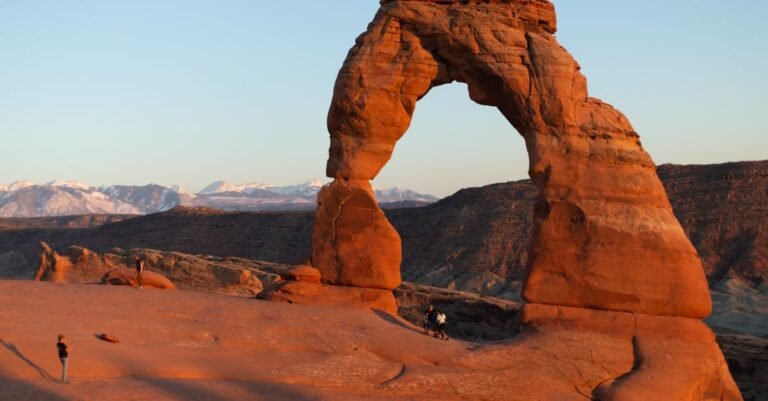
The Mighty 5 sampler (southern Utah). Base in Moab for Arches and Canyonlands, or in Springdale for Zion. You will not see all five parks in a weekend, and that is fine. Pick two parks, do one signature hike in each (Delicate Arch at sunset, the Narrows or Angels Landing in Zion with proper permits and preparation), and spend the middle of the day driving the absurdly scenic highways between them. This is the trip our 7-day Utah national parks itinerary expands into a full week.
The Arizona circle (Phoenix to Sedona to Grand Canyon). Sedona's red rocks are two hours from Phoenix, and the Grand Canyon's South Rim is another two beyond that. Red rock hikes, Slide Rock swimming in season, sunset at the canyon rim. An easy loop with great food stops and no extreme remoteness, ideal for a first desert trip.
The West Texas loop (Big Bend country). For the adventurous: Big Bend National Park is remote, vast, and gloriously empty. Hot springs by the Rio Grande, the Window Trail at sunset, and some of the darkest skies in the country. Distances are long and services are thin, so this is the trip where the half-tank rule and extra water matter most.
Frequently Asked Questions
How much water do I need for a desert road trip?
Plan on about a gallon per person per day for drinking, cooking, and basic washing in hot conditions, plus extra if you are hiking. Carry it in a large jug in the car plus personal bottles for outings, and keep a separate emergency gallon you do not touch unless needed.
Is it safe to drive through the desert in summer?
Yes, with preparation. The risks are heat, dehydration, and breakdowns far from help. Mitigate them with extra water, a heat-prepped car, the half-tank fuel rule, offline maps, and by timing strenuous activity for morning and evening. Thousands of people road trip the desert every summer safely.
What should I do if my car overheats in the desert?
Turn off the AC, turn the heater to full hot (it pulls heat off the engine), and pull over safely as soon as you can. Let the engine cool for at least 30 minutes before opening the hood, and never open a hot radiator cap. Once cool, check coolant levels. If it overheats again quickly, stay put and call for help rather than risking engine damage in a remote area.
Can I camp for free in the desert?
Yes, extensively. Dispersed camping is allowed on most BLM and National Forest land in the Southwest at no cost, generally up to 14 days in any 28-day period. There are no services, so you bring everything and pack everything out. Arrive before dark to choose a safe, legal spot.
What is the best time of year for a desert road trip?
Spring (March to May) and fall (October to November) offer the best balance: warm days, cool nights, and wildflowers in spring. Summer brings extreme heat but fewer crowds and dramatic monsoon skies. Winter is pleasant in low deserts like Joshua Tree and Saguaro but cold at higher elevations like the Grand Canyon's South Rim.
Do I need a 4×4 for a desert road trip?
No, for the classic paved routes through national parks and between towns. A regular car handles the main Southwest road trip corridors fine. You only need high clearance or 4WD for unpaved backroads, and you should never take an unfamiliar dirt road without researching its condition first.
Desert Road Trip Packing Checklist
| Category | Pack |
|---|---|
| Water | 5-gallon jug + spigot, personal bottles (3L+), 1-gallon emergency reserve, electrolyte packets |
| Sun | Wide-brim hat, UV sunglasses, SPF 30+ sunscreen, SPF lip balm, UPF long-sleeve shirt |
| Clothing | Light breathable layers for day, fleece/puffy + beanie for night, broken-in shoes, swimsuit |
| Car | Tire check + full-size spare, coolant topped, battery tested, AC working, paper maps, sunshade |
| Safety | First aid kit, headlamp, whistle, satellite communicator for remote areas, roadside emergency kit |
| Camp | Tent or car sleep setup, shade tarp, cooler with ice, camp stove, trash bags (pack it all out) |
| Food | Salty snacks, non-perishables, cooler meals, extra day of food beyond your plan |
The desert asks more of you than other landscapes, and it gives more back. Respect the heat, carry the water, prep the car, and you will drive home with red dust in the door seams and a camera roll full of impossible light. That is a fair trade.