7-Day Utah National Parks Road Trip Itinerary (The Mighty 5)
Some road trips are drives with stops. The Utah Mighty 5 is a pilgrimage. Five national parks, each so different they barely seem to share a planet: Zion's towering canyon walls, Bryce's amphitheaters of stone hoodoos, Capitol Reef's wrinkled rainbow cliffs, Arches' impossible stone spans, and Canyonlands' vast carved emptiness. All of it connected by some of the most scenic highways in America.
Seven days is the sweet spot. It is enough to stand beneath Delicate Arch at sunset, walk among Bryce's hoodoos at sunrise, and still be home before your PTO runs dry. This itinerary gives you a day-by-day plan with drive times, where to sleep, which hikes to prioritize, and the practical details (like where to buy groceries) that separate a great trip from a frustrating one.
The 7-Day Mighty 5 Itinerary at a Glance
| Day | Drive | Highlight |
|---|---|---|
| 1 | Las Vegas to Springdale (2.5-3 hrs) | Arrive Zion, sunset at Canyon Overlook or in town |
| 2 | None (Zion) | Full day in Zion: Emerald Pools, the Narrows or Angels Landing |
| 3 | Springdale to Bryce Canyon (1.5-2 hrs) | Afternoon among the hoodoos, sunset at Sunset Point |
| 4 | Bryce to Torrey via Scenic Byway 12 (3-4 hrs) | One of America's great road days, evening in Capitol Reef |
| 5 | Torrey to Moab (2.5-3 hrs) | Capitol Reef morning, Arches at sunset (Delicate Arch) |
| 6 | None (Moab) | Arches morning, Canyonlands Island in the Sky afternoon |
| 7 | Moab to Salt Lake City (4 hrs) | Sunrise at Mesa Arch, drive north, fly home |
Total driving: roughly 1,000 miles across the week. Longest single day: about 4 hours.
The Mighty 5: What You Are Driving Toward
Utah's five national parks are often called the Mighty 5, a name popularized by the state's tourism office. Each park protects a different chapter of Colorado Plateau geology, and the variety is the whole point:
- Zion: a canyon half a mile deep, with walls that glow at sunrise. Famous for the Narrows (wading up a slot canyon river) and Angels Landing (a thrilling fin-like ridge walk requiring a permit).
- Bryce Canyon: not actually a canyon but a series of amphitheaters packed with hoodoos, those weird stone spires that look like a frozen crowd. Best at sunrise when the rocks ignite.
- Capitol Reef: the quiet one. Rainbow-colored cliffs, ancient petroglyphs, and historic orchards where you can pick fruit in season. The least crowded Mighty 5 park, and many visitors' surprise favorite.
- Arches: over 2,000 natural stone arches, including Delicate Arch, Utah's unofficial emblem. A photographer's playground.
- Canyonlands: the wildest and least developed. Vast mesas, deep canyons, and overlooks that make you feel very small in the best way.
Best Time to Do This Road Trip
Spring (April to May) and fall (September to October) are the prime windows. Daytime temperatures are comfortable for hiking, the light is gorgeous, and you avoid both summer's furnace heat and winter's short days and possible snow at Bryce's high elevation.
Summer works but demands strategy: start hikes at dawn, rest midday, and carry serious water. Zion in July regularly tops 100 degrees. Winter is the contrarian's choice: Bryce under snow is jaw-droppingly beautiful, crowds vanish, and lodging is cheap, but some roads and trails close and daylight is short.
Book lodging as early as you can for spring and fall. Towns like Springdale and Moab fill up, and in-park lodging sells out months ahead.
Which Direction: Las Vegas or Salt Lake City Start?
Most itineraries run one of two ways, and both work:
Start in Las Vegas, end in Salt Lake City (recommended). Vegas flights are often cheaper, the drive to Zion is short (under 3 hours), and the route builds beautifully: you start with Zion's drama and finish with Moab's greatest hits. Ending in Salt Lake City sets up an easy flight home.
Start and end in Salt Lake City (loop). Simpler if you find a good SLC fare or want to avoid a one-way car rental fee. Drive south to Moab first, do the parks in reverse, and return north. The loop adds some backtracking but keeps logistics easy.
One-way rentals between Vegas and SLC sometimes carry a drop fee, so price both options. For many travelers the fee is worth it for the better route flow.
Day 1: Las Vegas to Zion (Springdale)
Land, grab the rental car, and hit the road. The drive from Las Vegas to Springdale takes about 2.5 to 3 hours, transitioning from neon to red rock in a way that never gets old. Stop for groceries in St. George or Springdale: there are no real grocery options inside Zion, and you will want breakfast and lunch supplies for the next two days.
Settle into Springdale, the gateway town right outside Zion's entrance. Walk the main street, eat an early dinner, and if energy allows, catch sunset from the Canyon Overlook Trail (a short, easy trail with a huge payoff) or simply watch the cliffs glow from town.
Stay: Springdale (hotel, vacation rental, or the campgrounds in and near the park).
Day 2: Zion National Park (Full Day)
Zion's main canyon is served by a shuttle system for most of the year; private cars are restricted on the scenic drive during shuttle season. This is actually great: hop on and off without parking stress.
Morning: ride the shuttle to the Temple of Sinawava and walk the Riverside Walk, the paved trail leading to the Narrows. If you want the full Narrows experience (wading upstream in the Virgin River between thousand-foot walls), rent the gear package in Springdale: canyoneering shoes, neoprene socks, and a walking stick. Check conditions first; the Narrows closes when the river runs high.
Alternative morning: Angels Landing, Zion's famous ridge hike with chains and dizzying drop-offs. This hike requires a permit obtained through the NPS lottery system, so apply well before your trip. It is strenuous and exposed; skip it if heights bother you, with zero shame.
Afternoon: the Emerald Pools trails (a lovely trio of pools and waterfalls) or the easy Pa'rus Trail along the river. Then ride the shuttle back, rest your legs, and eat dinner in Springdale.
Day 3: Zion Morning to Bryce Canyon
Get an early start with a sunrise hike if your legs allow it: the Watchman Trail from Springdale or the Canyon Overlook at dawn. Then drive to Bryce Canyon, about 1.5 to 2 hours northeast. The route climbs in elevation, and the landscape shifts from canyon walls to high pine forest.
Afternoon in Bryce: walk the rim between Sunrise and Sunset Points, then descend into the amphitheater on the Navajo Loop and Queens Garden Trail combination. Walking among the hoodoos, rather than just viewing them from above, is the essential Bryce experience. It is a moderate 3-mile loop that fits perfectly in an afternoon.
Sunset: be at Sunset Point or Inspiration Point. The hoodoos catch fire in the low light. Then dinner in Bryce Canyon City or Tropic, and an early night. Bryce sits near 8,000 feet, so nights are cool even in summer: bring a jacket.
Day 4: Bryce Canyon to Capitol Reef via Scenic Byway 12
Today is one of the great road days in America. Utah's Scenic Byway 12 winds 124 miles from Bryce to Torrey through landscapes that change every 20 minutes: red rock canyons, aspen forests, the otherworldly white domes of the Grand Staircase, and the hogback ridges with drop-offs on both sides. Allow 3 to 4 hours with stops, though you could spend all day.
Stops worth making: Red Canyon's arches right outside Bryce, the overlooks along the Hogback, Calf Creek Falls trailhead (a 6-mile round trip to a waterfall in a desert oasis, if you have the legs), and the Burr Trail switchbacks viewpoint.
Evening in Capitol Reef: the park's scenic drive, the historic Gifford Homestead (famous for pie when the orchards are in season), and the petroglyph panels along the road. Capitol Reef is gloriously uncrowded; you may have viewpoints to yourself.
Stay: Torrey, the small town at the park's west entrance, with a handful of excellent inns and restaurants far better than a town its size has any right to offer.
Day 5: Capitol Reef to Moab, Arches at Sunset
Morning: Hickman Bridge Trail in Capitol Reef, an easy 2-mile round trip to a huge natural bridge, or the Grand Wash Trail through towering narrows. Grab pie at the Gifford House if it is open.
Drive to Moab (2.5 to 3 hours) along highways that follow the Fremont River and then open into red rock country. Stock up on groceries in Moab: like Zion, Arches and Canyonlands have no food inside the parks.
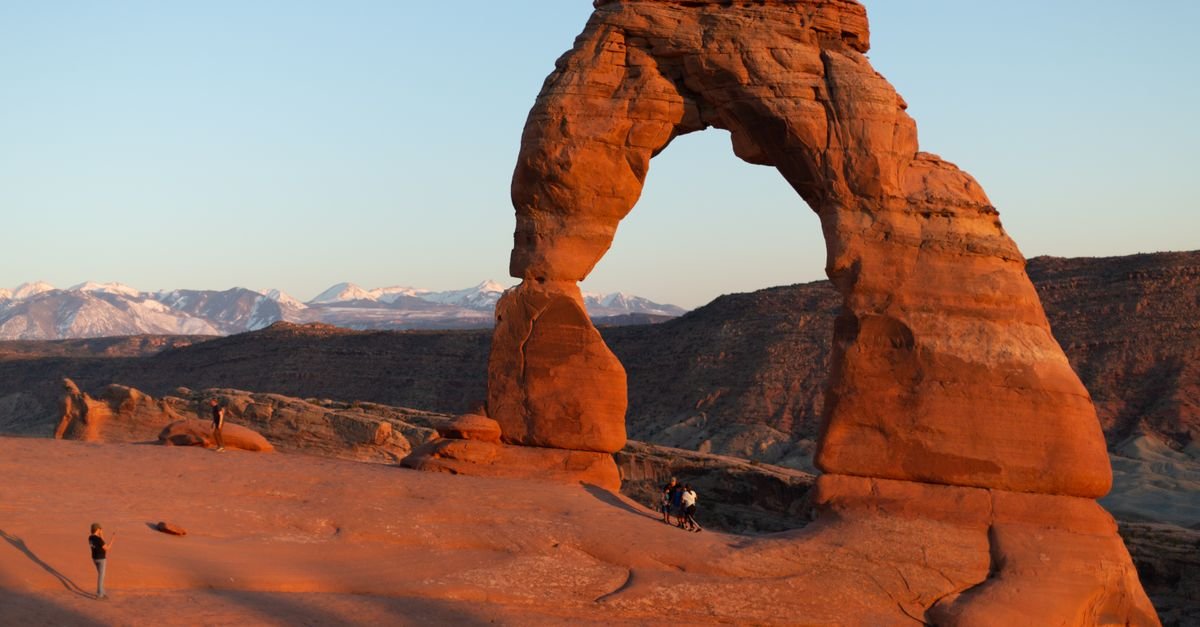
Sunset at Delicate Arch. The 3-mile round-trip hike to Delicate Arch is moderately strenuous but it is the single most iconic view in Utah, and sunset is when it earns the fame. Arrive at the trailhead 2 to 3 hours before sunset, bring more water than you think, and stay for the afterglow. Note that Arches has used a timed entry reservation system during peak seasons in recent years, so check the NPS Arches page before your trip and book your entry window in advance.
Stay: Moab, your base for the next two nights.
Day 6: Arches and Canyonlands
Morning in Arches: enter early (before 8 AM beats both crowds and heat). Drive the park road with stops at Park Avenue, Balanced Rock, the Windows Section (a short loop past massive arches), and Devils Garden at the road's end. If you have energy, the Landscape Arch trail is an easy add.
Afternoon in Canyonlands (Island in the Sky district): 30 minutes from Moab. This is the overlook park: Mesa Arch at its best in morning light (come back tomorrow for sunrise if you can), Grand View Point, and the short Upheaval Dome trail. The scale here dwarfs Arches; stand at any rim viewpoint and the canyon just keeps going.
Sunset: Dead Horse Point State Park, just outside Canyonlands. The overlook above the Colorado River gooseneck at sunset is one of the great views in the Southwest, and the $20-ish state park fee is money well spent.
Day 7: Canyonlands Sunrise, Drive to Salt Lake City
Sunrise at Mesa Arch. Yes, it is worth the early alarm. The arch frames the canyon as the sun ignites the La Sal Mountains behind it, and for about twenty minutes it is the most photographed sunrise in Utah. Arrive 30 minutes before sunrise for a spot.
Then the 4-hour drive north to Salt Lake City along I-70 and US-6, through scenery that stays interesting the whole way. If your flight is late, the Utah State Capitol and Temple Square offer an easy afternoon. Fly home dusty, tired, and already planning the return trip.
Drive Times Between Parks
Approximate driving times for the key legs (actual times vary with stops, traffic, and construction):
| Leg | Approximate drive time |
|---|---|
| Las Vegas to Springdale (Zion) | 2.5 to 3 hours |
| Springdale to Bryce Canyon | 1.5 to 2 hours |
| Bryce Canyon to Torrey (Capitol Reef) via UT-12 | 3 to 4 hours with stops |
| Torrey to Moab | 2.5 to 3 hours |
| Moab to Arches entrance | 15 minutes |
| Moab to Canyonlands (Island in the Sky) | 35 to 45 minutes |
| Moab to Salt Lake City | 4 hours |
| Zion to Las Vegas | 2.5 to 3 hours |
Where to Stay Each Night
| Night | Base | Options |
|---|---|---|
| 1-2 | Springdale (Zion) | Hotels, lodges, vacation rentals; Watchman Campground in the park |
| 3 | Bryce Canyon City / Tropic | Hotels and cabins; North Campground in the park |
| 4 | Torrey (Capitol Reef) | Small inns and B&Bs; Fruita Campground in the park |
| 5-6 | Moab | Wide range of hotels, rentals, campgrounds; Devils Garden Campground in Arches |
Book the in-park campgrounds the moment reservations open (they go fast), and book town lodging as early as possible for spring and fall.
What to Pack for a Utah Road Trip
Desert essentials apply all week: more water than feels reasonable, sun protection, and layers for big temperature swings. Add: sturdy hiking shoes (broken in), a daypack, headlamp, trekking poles for the Narrows and steep descents, and a cooler you restock in each gateway town. Spring and fall demand a warm jacket for Bryce's elevation and cool desert nights. See our desert road trip essentials guide for the full packing system.
How Much It Costs
For two people sharing lodging, a week typically runs:
| Category | Typical range |
|---|---|
| Flights + rental car | $500 to $1,200 |
| Lodging (6 nights) | $600 to $1,500 |
| Food (mix of groceries + restaurants) | $400 to $700 |
| Gas (~1,000 miles) | $120 to $200 |
| Park entry | Covered by an America the Beautiful annual pass, or per-park fees |
| Activities/extras | $100 to $300 |
| Total | $1,700 to $3,900 |
Camping instead of hotels cuts the lodging line dramatically. An annual parks pass pays for itself on this trip alone if you visit all five parks.
8 Tips That Make or Break the Trip
- Start hikes early. Trailhead parking fills by 9 AM in peak season, and desert heat builds fast. Dawn starts are the cheat code.
- Check NPS reservation requirements. Timed entry and permits change by season and park. Verify on each park's official NPS page a month before you go.
- Grocery shop in gateway towns. There is no food inside Arches, Canyonlands, or much of Capitol Reef. Moab, Springdale, and Torrey are your supply points.
- Carry more water than you think. A gallon per person per day in the car, plus 3 liters each for hiking days.
- Download offline maps. Cell service dies between parks and inside canyons. Download the whole route before you leave home.
- Build in one flex afternoon. Weather, tired legs, or a place you love more than expected: leave room for the trip to breathe.
- Respect the elevation. Bryce sits near 8,000 feet. Take it easy the first day, drink extra water, and expect cooler temperatures.
- Leave no trace. Pack out everything, stay on trails, and never carve or stack rocks. These parks are being loved to death; tread lightly.
Frequently Asked Questions
Can you do the Mighty 5 in 7 days?
Yes. Seven days gives each park meaningful time: two days for Zion, a full day each for Bryce, Capitol Reef, Arches, and Canyonlands, plus the spectacular drives between them. It is a full pace but not a frantic one. With fewer days, cut Capitol Reef or Canyonlands rather than rushing all five.
What is the best month for a Utah national parks road trip?
April, May, September, and October offer the best combination of comfortable hiking weather, manageable crowds, and open facilities. June through August bring extreme heat and peak crowds. Winter offers solitude and snow-dusted beauty but shorter days and possible road closures at higher elevations.
Do I need reservations for Utah national parks?
It depends on the park and season. Arches has used a timed entry reservation system during peak months, and Angels Landing in Zion requires a permit obtained through an NPS lottery. Requirements change, so check each park's official NPS page before your trip and book what you need as early as allowed.
How many miles is the Mighty 5 road trip?
The classic Las Vegas to Salt Lake City route covers roughly 1,000 miles of driving across the week, plus park roads. The longest single driving day is about 4 hours (Moab to Salt Lake City), and most days are 2 to 3 hours behind the wheel.
Is the drive between the parks scenic?
Spectacularly so. Scenic Byway 12 between Bryce and Capitol Reef is often called one of America's most scenic drives, and the highways around Moab and between Zion and Bryce are stunning in their own right. The driving days are highlights, not chores.
Should I camp or stay in hotels?
Both work. Camping (in-park campgrounds or gateway town sites) is cheaper and more immersive but requires gear and advance reservations. Hotels in Springdale, Bryce Canyon City, Torrey, and Moab offer comfort and hot showers after long hiking days. Many travelers mix: camp a few nights, hotel the rest.
The Mighty 5 in seven days is one of those trips that recalibrates your sense of what a week off can hold. You will watch sunrise ignite a canyon, walk rivers through slot canyons, and stand under arches that took millions of years to carve. And you will do it all on a route so well laid out it feels designed for exactly this. It was. Now go drive it.