Roadside Emergency Kit Checklist: 25+ Things to Keep in Your Car
Picture this: you are driving a gorgeous stretch of desert highway on a Friday evening, an hour from the nearest town, when the tire blows. It is getting dark. Your phone has two bars. Now picture the same scene with a trunk full of the right gear: spare tire checked, jack you know how to use, flashlight, reflective triangles, water, and a charged power bank. One version is a scary story. The other is a 20-minute inconvenience.
A roadside emergency kit is the cheapest insurance you will ever buy. For roughly the cost of one tank of gas, you can assemble a kit that handles flats, dead batteries, minor injuries, bad weather, and long waits for help. This is the complete checklist, organized so you can build it in stages, plus what to do when things actually go wrong.
Why Every Car Needs a Kit
Breakdowns are not rare events reserved for other people. Tires pick up nails, batteries die in parking lots, and alternators fail on highways. Emergency preparedness agencies like Ready.gov and state programs such as Michigan's MIREADY all publish car kit checklists, and the National Safety Council recommends drivers keep emergency supply kits in their vehicles. The logic is simple: help can be hours away on a rural road, and even in the city, a tow truck during rush hour is not instant.
The good news: most breakdown scenarios are survivable and even fixable with basic gear and a little know-how. Your kit turns "stranded and helpless" into "inconvenienced but in control."
The Essentials: 12 Things Every Car Should Carry
These are the non-negotiables. Build this list first.
| # | Item | Why it matters |
|---|---|---|
| 1 | Jumper cables (or portable jump starter) | Dead batteries are the most common roadside issue |
| 2 | Properly inflated spare tire, jack, and lug wrench | A flat without a usable spare is a tow |
| 3 | Flashlight with extra batteries | Most breakdowns feel worse in the dark |
| 4 | Reflective warning triangles or road flares | Makes you visible to traffic, especially at night |
| 5 | First aid kit | Handles cuts, scrapes, and minor injuries |
| 6 | Bottled water (several bottles) | Dehydration, overheating, and long waits |
| 7 | Non-perishable snacks (energy bars, nuts) | Energy and morale during long waits |
| 8 | Blanket (or emergency mylar blanket) | Warmth if stranded in cold weather |
| 9 | Phone charger (12V car adapter) plus power bank | A dead phone turns a breakdown into isolation |
| 10 | Tire pressure gauge | Catch slow leaks before they become flats |
| 11 | Basic tool kit (screwdrivers, pliers, adjustable wrench) | Tightening, prying, and improvising |
| 12 | Duct tape and zip ties | Temporary fixes for hoses, trim, and bumpers |
A few notes on the big ones:
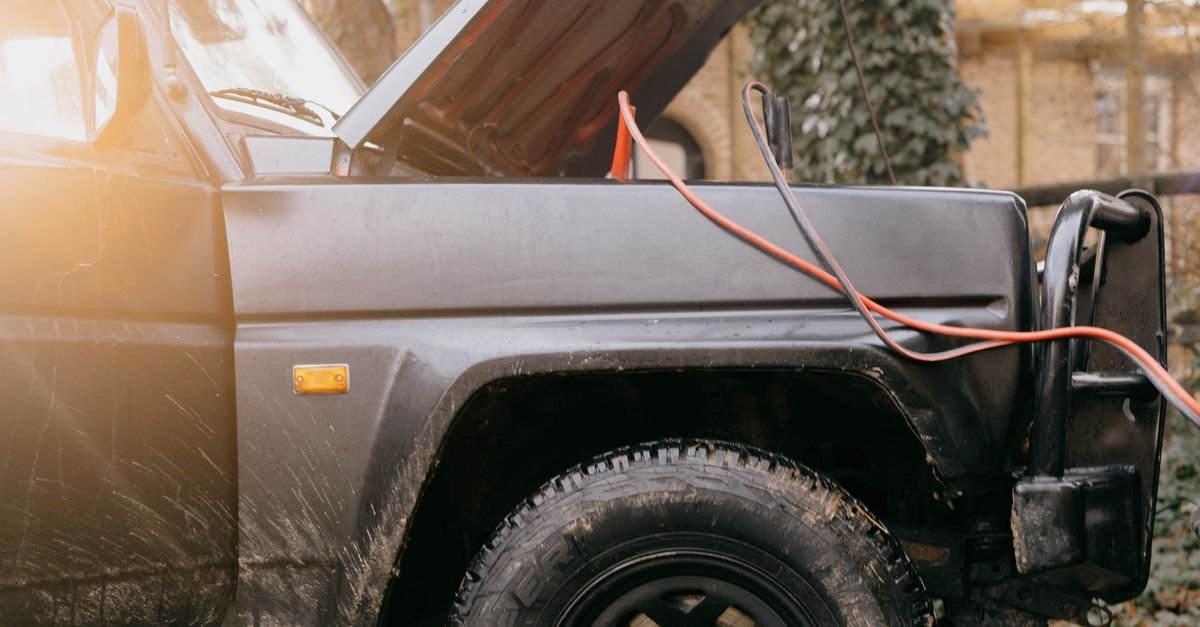
Jumper cables vs. portable jump starter. Cables are cheap and work if another car stops to help. A portable lithium jump starter works with no second car, doubles as a phone charger, and is the better choice for solo travelers and remote roads. If you can only pick one, pick the jump starter.
The spare tire problem. Many new cars ship without a spare at all, just a can of tire sealant and an inflator. Know which you have before you need it. If you have a donut spare, check its pressure every few months; a flat spare is the cruelest surprise. And if you have never changed a tire, practice in your driveway once. Twenty minutes of practice on a Saturday beats learning on a highway shoulder at midnight.
The first aid kit. A basic pre-made kit covers most needs: bandages, gauze, antiseptic, pain relievers, tweezers, gloves, and medical tape. Add any personal medications, an inhaler if you use one, and an EpiPen if prescribed.
Upgrade Items Worth Adding
Once the essentials are covered, these upgrades meaningfully expand what you can handle.
| Item | Why |
|---|---|
| Portable tire inflator (12V) | Tops off slow leaks without a gas station |
| Tire sealant (e.g., Fix-a-Flat style can) | Temporary fix when no spare is available |
| Fire extinguisher (small ABC-rated) | Engine fires are rare but catastrophic |
| Reflective safety vest | Makes you visible when you must exit the car |
| Multi-tool | Knife, pliers, and screwdrivers in one |
| Work gloves | Tire changes and hot engine bays |
| Rain poncho | Staying dry while working on the car |
| Seatbelt cutter / window breaker tool | Escape tool for serious crashes; keep in the cabin, not the trunk |
| Tow strap (not a tow chain) | Lets a Good Samaritan pull you from a ditch |
| Quart of motor oil and coolant | Top-offs that prevent bigger damage |
| Paper maps of your region | When GPS fails or there is no signal |
| Cash (small bills) | Tow drivers, small-town gas stations, and emergencies |
| Pen and paper | Notes, insurance exchanges, leaving messages |
Winter Add-Ons
Cold weather turns a breakdown from inconvenient to dangerous. If you drive anywhere that freezes, add:
- Ice scraper and snow brush
- Compact folding shovel
- Bag of cat litter or sand (traction on ice)
- Extra warm clothing: hat, gloves, wool socks, heavy coat
- Sleeping bag or heavy blanket (in addition to the regular one)
- Hand warmer packets
- Extra windshield washer fluid rated for freezing temperatures
The core winter rule: if you slide off the road in a storm, stay with the car. It is shelter, it is visible, and rescuers look for vehicles. Run the engine in short bursts for heat (crack a window, clear the exhaust pipe of snow to prevent carbon monoxide buildup), and make yourself visible with hazard lights and bright cloth tied to the antenna.
Summer and Desert Add-Ons
Heat is the other killer. For summer road trips and desert driving:
- Extra water: at least a gallon per person
- Sunshade for the windshield
- Sunscreen and a wide-brim hat
- Light-colored cloth or umbrella for shade
- Electrolyte packets
If you overheat in the desert, get out of the sun, drink water steadily, and do not leave the car to walk for help unless you can see civilization and it is close. People underestimate desert distances badly.
Remote and Backcountry Driving Add-Ons
Heading down dirt roads to trailheads and dispersed campsites? Add:
- Full-size spare if you have one (donuts hate dirt roads)
- Extra water and food for 24 hours
- Satellite communicator or personal locator beacon if you go truly remote
- Recovery boards (traction boards) if you drive sand or mud
- Detailed paper maps: forest service roads laugh at cell signals
Tell someone your route and expected return time before heading into areas without cell service. This costs nothing and is the single most effective safety measure for remote travel.
Traveling with Kids or Pets
- Extra water, snacks, and any medications for everyone in the car
- Diapers, wipes, and a change of clothes for little ones
- Pet food, water bowl, leash, and any pet medications
- A favorite comfort item for kids during long waits
How to Pack and Organize Your Kit
A kit scattered across the trunk is barely a kit. Keep it together and accessible:
- Use one sturdy container. A duffel bag, milk crate, or plastic bin keeps everything in one place and stops items from rolling around.
- Keep the cabin items in the cabin. The seatbelt cutter, phone charger, flashlight, and water bottle belong within reach of the driver, not buried under luggage.
- Secure heavy items. A loose jack or toolbox becomes a projectile in a sudden stop. Wedge the container or strap it down.
- Label and list. Tape a checklist to the inside of the container lid. Future you, repacking after using the jumper cables, will thank present you.
- Do not bury the spare. If your kit sits on top of the spare tire well, make sure you can still reach the spare quickly.
How to Jump-Start a Car (Without Frying Anything)
Knowing the order matters. Do it wrong and you can damage electronics or, rarely, cause a battery explosion. The correct sequence:
- Park the working car close enough for the cables to reach, but do not let the cars touch. Turn off both engines and all accessories.
- Connect the red clamp to the positive (+) terminal of the dead battery.
- Connect the other red clamp to the positive (+) terminal of the good battery.
- Connect the black clamp to the negative (-) terminal of the good battery.
- Connect the final black clamp to an unpainted metal surface on the dead car's engine block, away from the battery. This is the ground, and it keeps sparks away from battery gases.
- Start the working car, wait a minute, then start the dead car.
- Remove the cables in reverse order. Let the revived car run for at least 15 minutes to recharge.
A portable jump starter is simpler: connect red to positive, black to a ground point, turn the unit on, start the car. Read your unit's manual once before you need it.
How to Change a Tire in 15 Minutes
- Pull fully off the road onto flat, solid ground. Engage the parking brake and turn on hazards.
- Place reflective triangles behind the car. Put on the reflective vest if you have one.
- Loosen the lug nuts slightly (counterclockwise) while the tire is still on the ground.
- Position the jack at the correct lift point (check your owner's manual; the wrong spot can damage the car). Raise the car until the tire clears the ground.
- Remove the lug nuts, pull off the flat, and mount the spare.
- Hand-tighten the lug nuts in a star pattern, lower the car, then tighten fully in the same star pattern.
- Drive to a repair shop promptly. Donut spares are limited to around 50 mph and short distances; check your manual for the exact limits.
Two things people forget: recheck the lug nuts after driving 25 to 50 miles, and get the flat repaired or replaced immediately so you are not driving on a donut for a week.
Breakdown Scenarios: What Actually Happens
It helps to rehearse the common ones mentally:
- Flat tire: pull over, hazards, triangles, change it. If you cannot, call roadside assistance and wait in the car.
- Dead battery: jump-start it yourself if you have the gear, or flag down help. After a jump, drive at least 20 minutes; if the battery dies again, it needs replacing, not another jump.
- Overheating: pull over immediately and turn off the engine. Do not open the radiator cap while hot. Wait at least 30 minutes, then check coolant levels. Driving an overheating car can destroy the engine.
- Ran out of gas: stay with the car, call for help, and accept that you will be telling this story for years. A small gas can in the kit prevents repeats, but never carry gasoline inside the passenger cabin.
- Stuck in mud or snow: do not spin the wheels; it digs you deeper. Clear around the tires, lay down traction aids (cat litter, floor mats, recovery boards), and rock gently between drive and reverse.
What to Do If You Break Down
Gear matters, but so does behavior. The safe protocol:
- Get off the road. Pull as far onto the shoulder as possible, away from traffic. If you cannot reach the shoulder, stay in the car with your seatbelt on and hazards flashing.
- Make yourself visible. Turn on hazard lights immediately. At night or in low visibility, set out reflective triangles behind the car.
- Stay in the car on busy roads. On highways and high-speed roads, the shoulder is dangerous. Stay belted inside unless the car is unsafe (fire, precarious position).
- Call for help. Roadside assistance, insurance emergency lines, or 911 if anyone is hurt or the situation is dangerous.
- Do not accept rides from strangers. Wait for official help or someone you called.
- If you must walk, leave a note on the dashboard with your direction and time, take water and your phone, and stick to the road.
Maintaining Your Kit: The Twice-a-Year Check
Kits degrade. Water bottles leach and freeze, batteries die, snacks expire, and first aid supplies get used and forgotten. Check your kit twice a year: when you switch to winter gear and when you switch back. Replace expired food and medications, test the flashlight, check the spare tire's pressure, recharge the jump starter, and refresh the water. Tie the check to something you already do, like daylight saving time changes.
Frequently Asked Questions
What is the most important thing to keep in your car for emergencies?
A charged phone with a car charger, jumper cables or a jump starter, a usable spare tire with jack and wrench, water, and a flashlight. Those five cover the most common breakdown scenarios.
How much does a roadside emergency kit cost?
A solid basic kit runs $50 to $100 if you assemble it yourself. A comprehensive kit with a portable jump starter, tire inflator, and quality first aid supplies runs $150 to $300. Pre-made kits exist but building your own is cheaper and better tailored.
Should I buy a pre-made emergency kit or build my own?
Building your own is better. Pre-made kits are convenient but often include flimsy tools and skip things you specifically need. Buy the core items individually, choosing quality for the things that matter most: the jump starter, flashlight, and first aid kit.
Do I need a fire extinguisher in my car?
It is not legally required for personal vehicles in most places, but a small ABC-rated extinguisher is cheap, compact, and the only thing that helps in an engine fire's first minute. Keep one if you have the space.
How often should I replace the water and food in my car kit?
Replace water every six months and check food expiration dates during your twice-yearly kit check. Heat accelerates spoilage, so summer-stored snacks may need more frequent rotation.
Is it safe to use my phone flashlight instead of a real flashlight?
In a pinch, yes, but a dedicated flashlight is brighter, frees your phone for calls, and does not drain the battery you need for rescue. Keep a real flashlight in the kit and the phone for communication.
What documents should I keep in the car for emergencies?
Keep copies of your insurance card, vehicle registration, and roadside assistance membership details in the glove box or kit. Emergency contact numbers written on paper are a smart backup if your phone dies.
What should I do if I get a flat tire with no spare?
Use tire sealant and a portable inflator for a temporary fix, then drive slowly to the nearest repair shop. If that fails, call roadside assistance. This is why knowing whether your car has a spare, a donut, or just sealant matters before you leave.
Build the kit this weekend. It takes one shopping trip and an hour of organizing, and it quietly upgrades every road trip you will ever take. The best emergency kit is the one sitting in your trunk right now, not the one on your to-do list.