The Ultimate 3-Day Grand Canyon National Park South Rim Itinerary
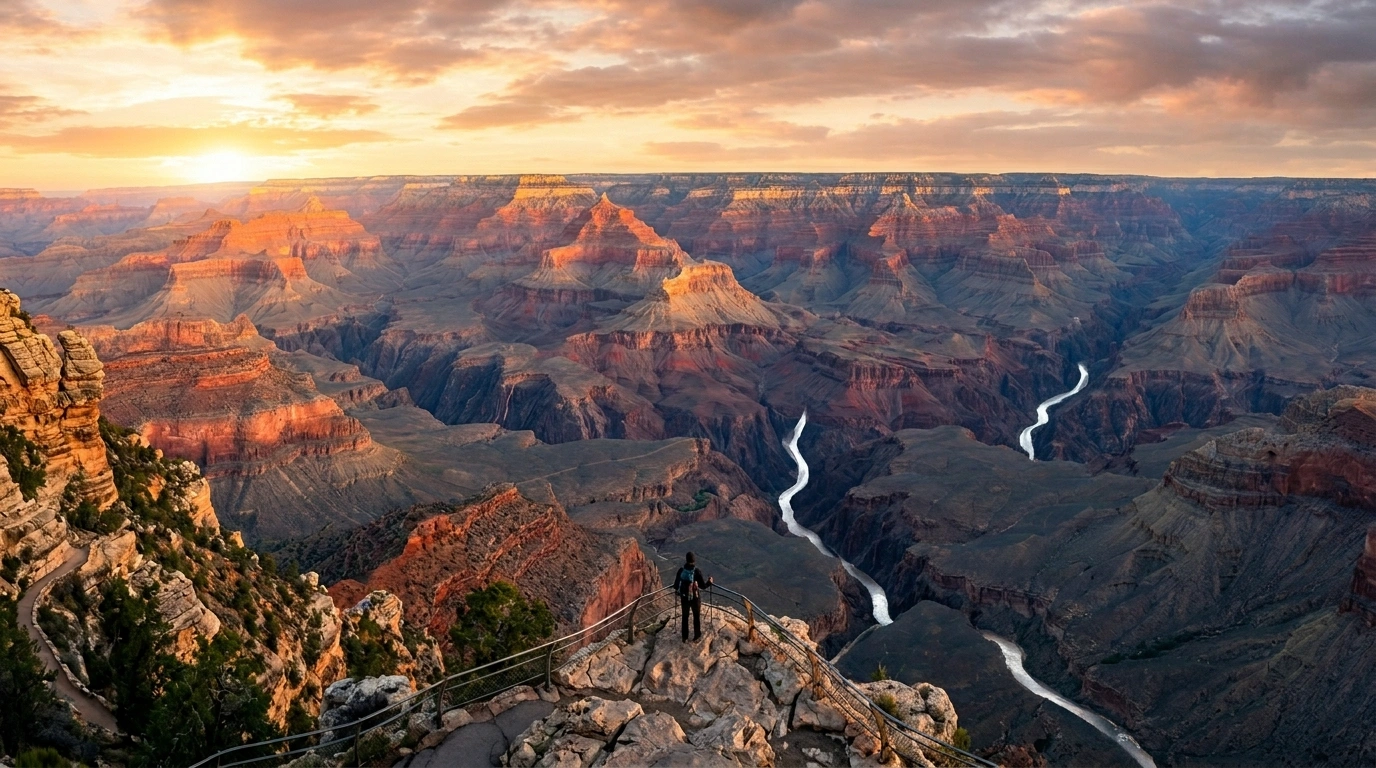
This 3 day Grand Canyon itinerary covers the South Rim comprehensively — the most accessible, most developed, and most visited section of Grand Canyon National Park that receives approximately five million visitors annually and rewards every single one of them with experiences that no photograph, no film, and no description adequately prepares you for. Whether you’re planning your first visit or returning after years away, this Grand Canyon South Rim itinerary maximizes every hour of your three days with intelligent trail choices, strategic viewpoint timing, practical logistics, and honest advice about what to expect from one of America’s most magnificent natural wonders.
About Grand Canyon National Park
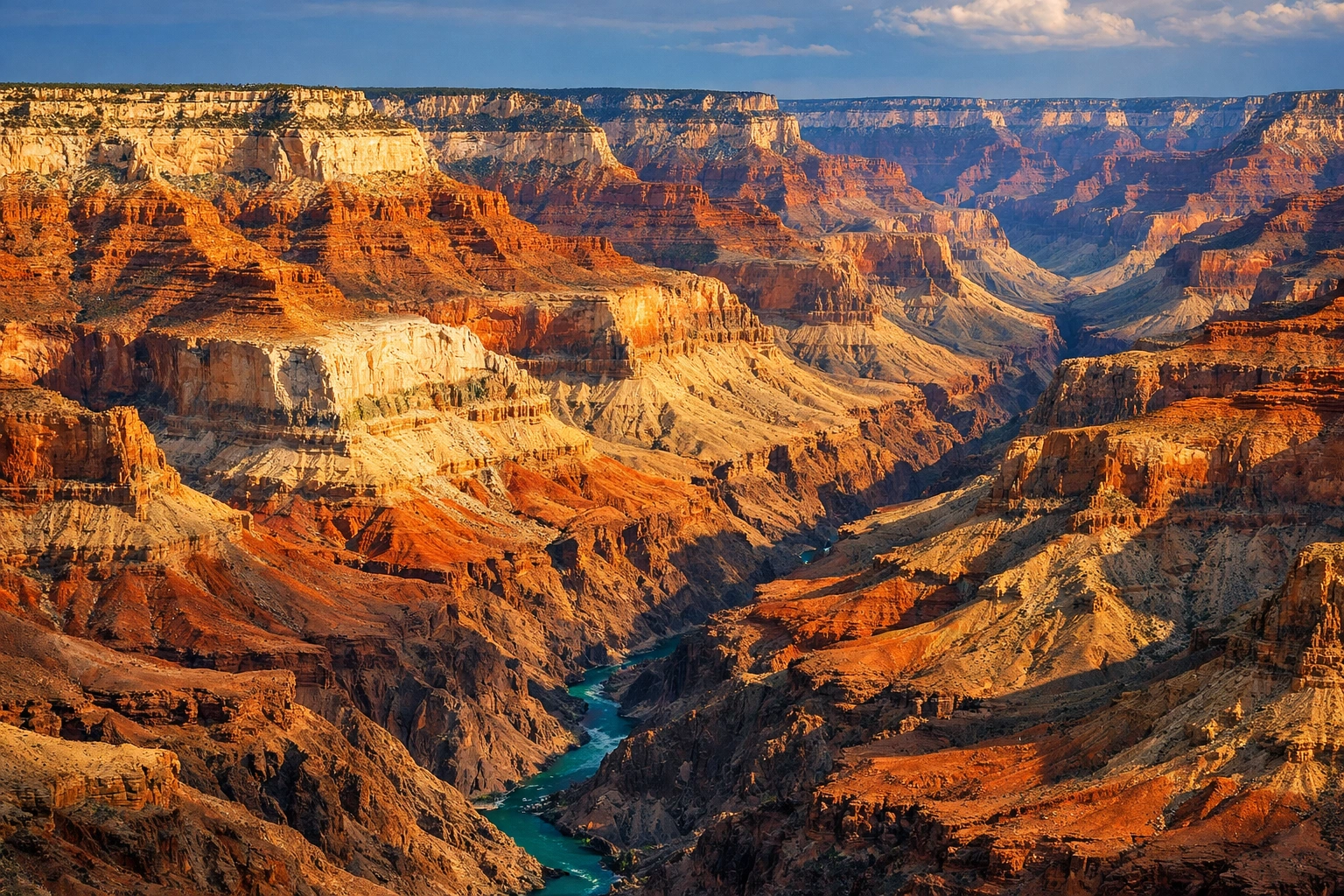
Grand Canyon National Park sits in northwestern Arizona and protects one of the world’s most spectacular geological formations — a canyon carved by the Colorado River over five to six million years through rock layers representing nearly two billion years of Earth’s geological history. The South Rim sits at approximately 7,000 feet elevation while the Colorado River at the canyon bottom sits at approximately 2,400 feet — that 4,600 foot vertical drop creates dramatic temperature and climate variation that makes desert hiking conditions a serious planning consideration regardless of the season you visit.
The South Rim travel itinerary experience differs significantly from the North Rim — the South Rim is open year-round, accessible via multiple transportation options, and offers substantially more visitor infrastructure including lodging, dining, shuttle systems, and visitor services than the North Rim which closes during winter and receives only approximately 10% of total park visitation. Best places in Grand Canyon National Park are almost exclusively on the South Rim for most visitors — Mather Point, Yavapai Point, Desert View, Hermit’s Rest, and the South Kaibab and Bright Angel trailheads all sit along the South Rim providing exceptional canyon access across three magnificently rewarding days of exploration.
Day 1 – South Kaibab Trail
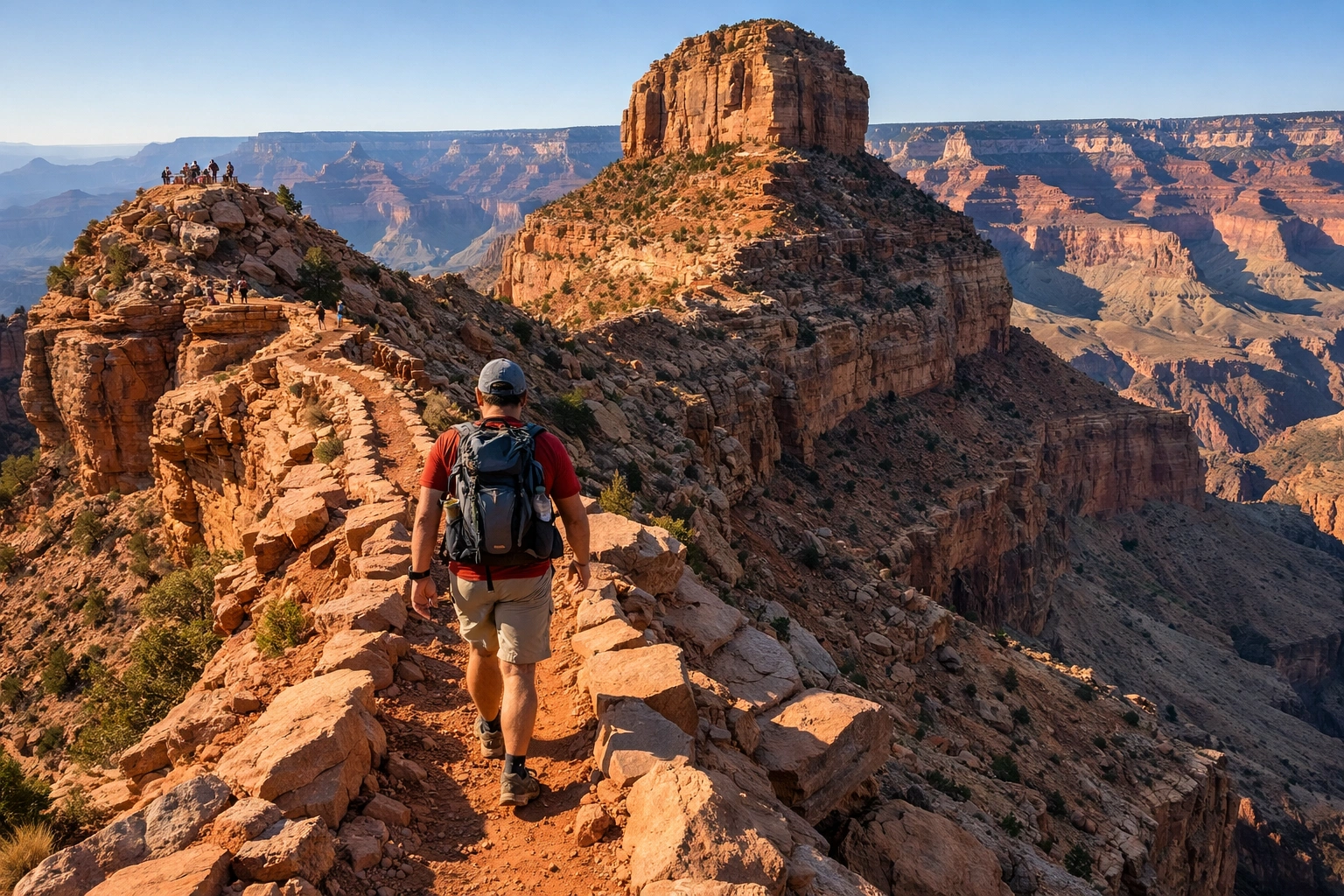
South Kaibab Trail deserves your first full day because it offers the most dramatic and most unobstructed canyon views of any trail on the South Rim — its ridgeline route rather than drainage route means you walk along exposed canyon spines with views dropping away dramatically on both sides creating a visual experience that enclosed drainage trails simply cannot replicate. The South Kaibab Trail begins at the South Kaibab Trailhead accessible via the Orange Route shuttle from the Grand Canyon Visitor Center — private vehicles cannot park at the trailhead making the shuttle the only practical access option regardless of your arrival method or accommodation location within the park.
you may also like this: Ultimate Guide to Ocean Beach, San Diego
| South Kaibab Trail Stopping Points | Distance Round Trip | Elevation Change | Difficulty | Time Required |
|---|---|---|---|---|
| Ooh Aah Point | 0.9 miles | 640 feet | Easy-Moderate | 1-2 hours |
| Cedar Ridge | 3 miles | 1,140 feet | Moderate | 2-4 hours |
| Skeleton Point | 6 miles | 2,040 feet | Strenuous | 4-6 hours |
| Colorado River | 14.3 miles | 4,780 feet | Very Strenuous | 2 days minimum |
Day 2 – Explore the Rim of Grand Canyon National Park
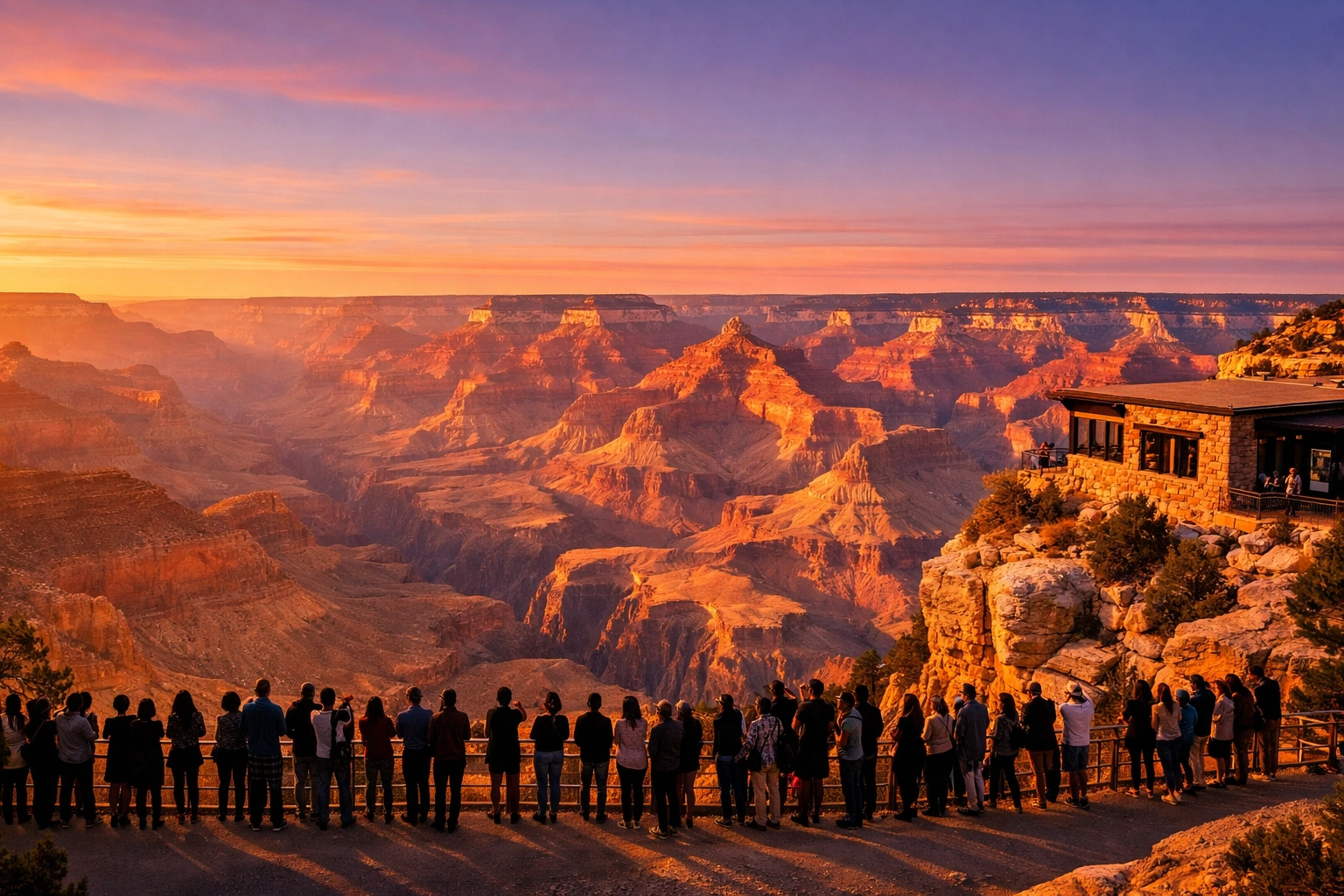
Grand Canyon viewpoints along the South Rim provide a completely different canyon experience from trail hiking — an accessible panoramic perspective that allows visitors of every physical ability level to encounter the canyon’s overwhelming scale from comfortable observation positions with safety railings, interpretive signage, and photographic opportunities that trail hiking simply cannot provide while simultaneously managing the physical demands of descending and ascending canyon trails. Day 2 dedicated to rim exploration allows a comprehensive survey of the canyon’s visual character across different lighting conditions, geological features, and atmospheric moods that single-viewpoint experiences entirely miss.
Mather Point is the logical starting point for Day 2 rim exploration — it’s the first viewpoint most visitors encounter after the Grand Canyon Visitor Center and for excellent reason, as it provides one of the broadest and most dramatically composed canyon panoramas available from any South Rim viewpoint. Yavapai Observation Station sits approximately one mile east of Mather Point and offers geological interpretation panels explaining the specific rock layers visible in the canyon walls alongside window views that frame the canyon’s geological cross-section with exceptional educational clarity. Canyon sunset views from the South Rim reach their absolute most spectacular from Mather Point, Yavapai Point, and Hopi Point on the Hermit Road — plan to arrive at your chosen sunset viewpoint at least 45 minutes before sunset to secure a good position before the crowd arrives in earnest.
Day 3 – Bright Angel Trail
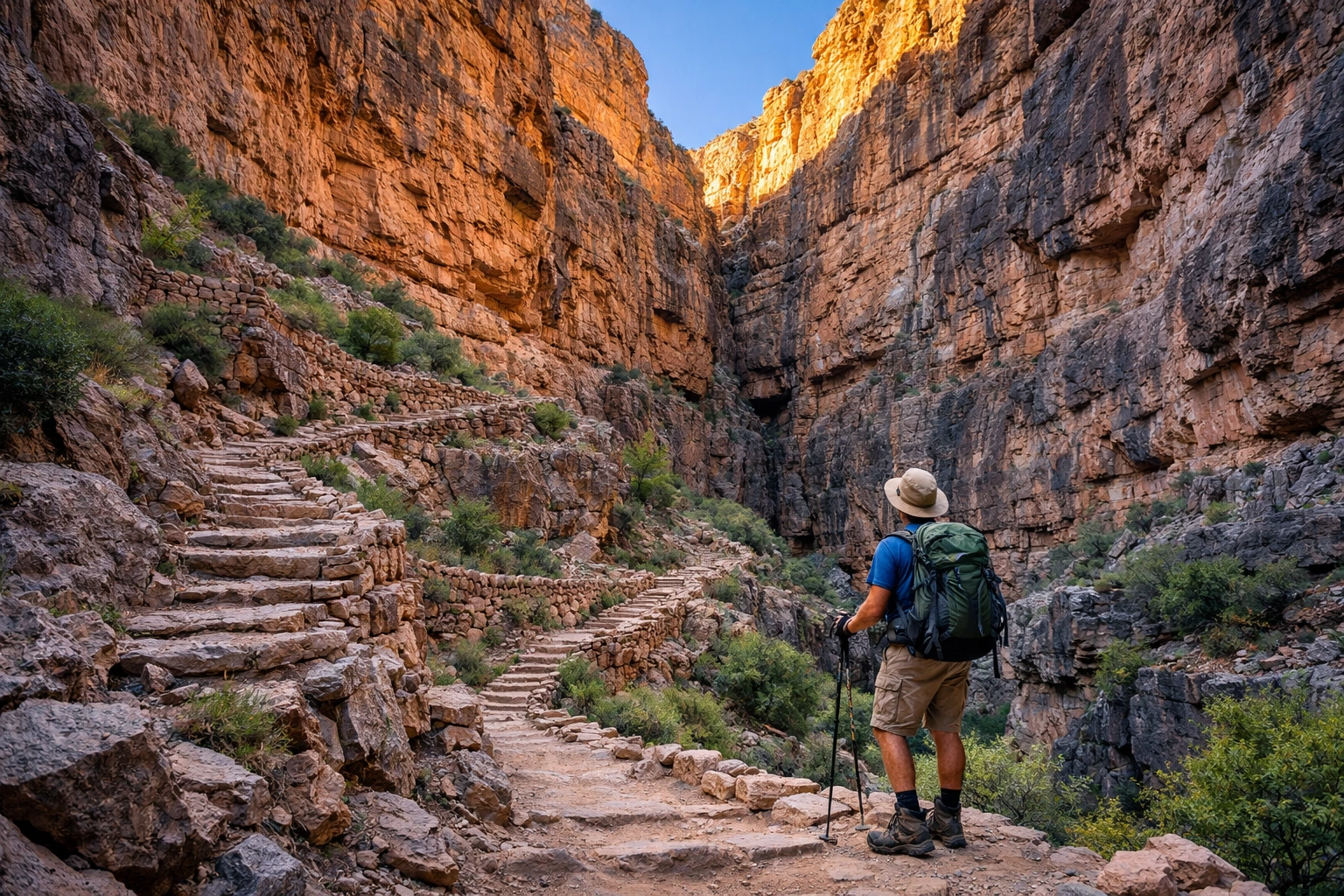
Bright Angel Trail provides the most historically significant, most comprehensively developed, and most genuinely satisfying inner canyon hiking experience on the entire South Rim — a trail used by Indigenous peoples for centuries before becoming the primary tourist descent route that has welcomed millions of visitors into the canyon’s interior since the early twentieth century. Unlike the South Kaibab Trail’s exposed ridgeline route, Bright Angel Trail follows Bright Angel Creek through a natural drainage corridor that provides shade during portions of the descent and critically important water availability at the 1.5 Mile Resthouse and 3 Mile Resthouse during the warmer months when desert hiking conditions make hydration management a genuine safety consideration rather than a casual comfort concern.
Hiking Grand Canyon South Rim on Bright Angel Trail follows the same distance-based decision framework as South Kaibab but with the significant practical advantage of water availability at established rest houses during summer months. The 1.5 Mile Resthouse at 3 miles round trip with 1,120 feet of elevation change provides a genuinely satisfying inner canyon experience with dramatic overhead canyon wall views that the rim perspective simply cannot offer. The 3 Mile Resthouse at 6 miles round trip with 2,112 feet of elevation change delivers a deeply immersive canyon experience reaching the Tonto Platform geological layer with extraordinary views upward toward the rim. Arizona road trip visitors who attempt Indian Garden at 9.2 miles round trip should begin no later than 6am during summer months to complete the most demanding section of the descent before midday heat transforms the lower canyon into a genuinely challenging thermal environment requiring serious preparation and experience.
Planning Your Trip to the Grand Canyon South Rim
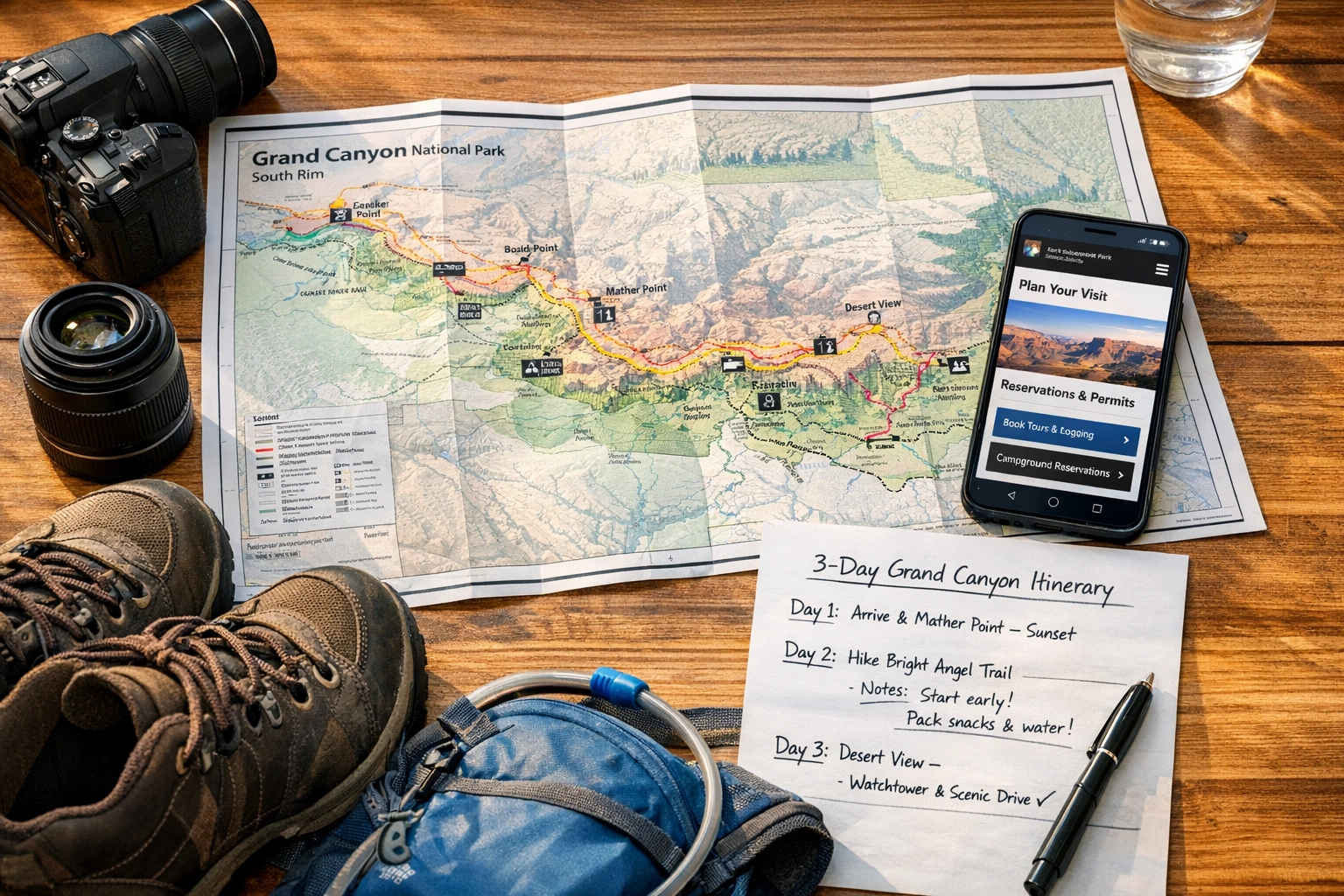
Grand Canyon trip planning requires attention to several practical logistics that significantly affect the quality and comfort of your visit regardless of how well you’ve planned the experiential elements of your three days. Grand Canyon vacation ideas succeed or fail largely on logistics — parking, shuttle navigation, accommodation booking timing, and entrance fee management all require advance attention that visitors who underestimate the park’s visitor volume and infrastructure complexity consistently discover too late to correct without significant inconvenience and frustration during their actual visit experience.
Arizona travel itinerary planning for Grand Canyon should begin with the critical booking reality that Grand Canyon lodging inside the park books up to thirteen months in advance for peak season dates — visitors who discover this fact two months before their intended travel dates face the prospect of staying in Tusayan or Flagstaff and commuting to the park rather than the far more convenient and far more atmospheric experience of staying within the park boundary itself. The Grand Canyon shuttle system — the most practical and most strongly recommended transportation approach within the park — runs multiple routes covering the East Rim Drive, West Rim Drive, and Village area, making private vehicle navigation within the park not only unnecessary but actively counterproductive given limited parking availability at most popular viewpoints and trailheads during peak visitor periods.
What to Bring
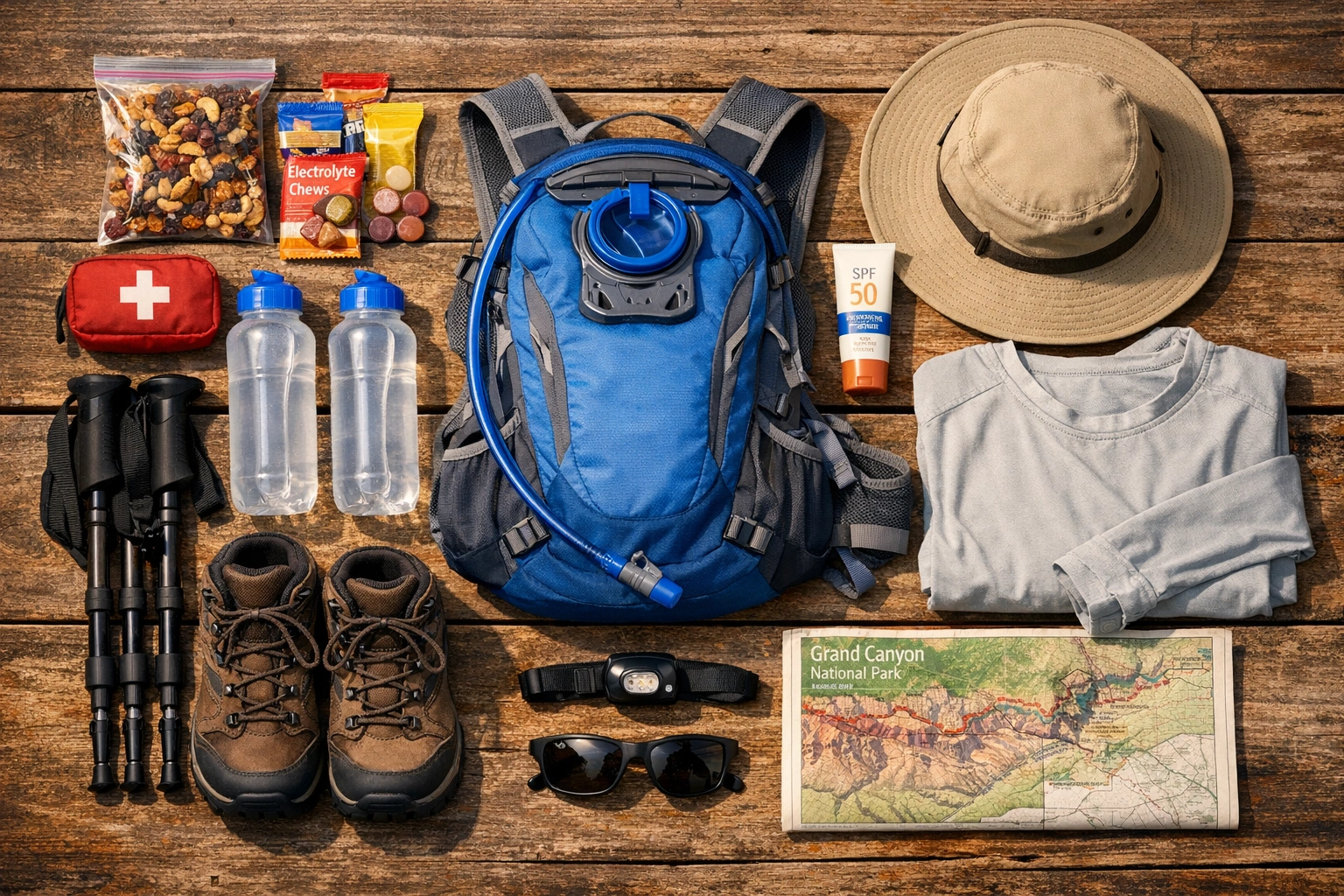
Desert hiking conditions in the Grand Canyon demand preparation that goes significantly beyond what most day hikers bring on typical trail experiences in more temperate environments. Water is the absolute non-negotiable priority — the National Park Service recommends one liter of water per hour of hiking in summer conditions and this recommendation should be treated as a minimum rather than a comfortable target. Food with high salt and electrolyte content replenishes what desert hiking sweats away rapidly. Sun protection including a wide-brim hat, sun-protective clothing, and high-SPF sunscreen is essential throughout the year but becomes critical during summer months when direct sun exposure in the canyon creates genuinely dangerous heat conditions at lower elevations.
Footwear deserves particular attention for Grand Canyon travel guide packing recommendations — trail shoes or hiking boots with ankle support and grippy rubber soles dramatically reduce the genuine injury risk that sandals, flip-flops, and smooth-soled athletic shoes present on the canyon’s rocky uneven trail surfaces. Trekking poles reduce knee strain dramatically on the descent and provide stability on loose rocky sections that challenge balance and confidence particularly during the more demanding return ascent portions of any canyon trail. Layers accommodate the dramatic temperature variation between the rim and inner canyon — it can be 20°F warmer at the canyon bottom than at the rim creating a seasonal shift within a single trail descent that surprises unprepared visitors consistently.
Hotels Near Grand Canyon National Park
In the Park
Grand Canyon lodging inside the park provides unparalleled convenience and the unique experience of being within the national park boundary — waking before dawn to reach sunrise viewpoints without a commute, accessing trailheads immediately, and experiencing the park after day-visitor departure when the canyon’s atmosphere becomes genuinely magical in ways that commuting visitors never experience. El Tovar Hotel is the park’s premier property — a 1905 National Historic Landmark with rustic elegance that has hosted Theodore Roosevelt, Albert Einstein, and countless other notable guests throughout its century of continuous operation overlooking the canyon rim.
Tusayan hotels outside the park southern entrance provide a practical and significantly more available accommodation alternative for visitors who missed the inside-park booking window or prefer the broader lodging options available just four miles from the park entrance. Best Western Premier Grand Canyon Squire Inn, Grand Hotel, and Red Feather Lodge all provide comfortable accommodation with the practical advantage of easier reservation availability than inside-park properties. Grand Canyon trip planning for budget-conscious travelers should also consider Flagstaff accommodation 80 miles south — a vibrant university city with extensive lodging options at lower price points connected to the park by regular shuttle services and scenic highway driving through ponderosa pine forests that create a beautiful transitional experience.
Where to Eat Near Grand Canyon National Park
In the Park
Grand Canyon travel guide dining recommendations inside the park range from El Tovar Dining Room — the park’s premier dining experience serving regional American cuisine in a magnificent 1905 historic log and stone building with canyon-view window seating — to the Canyon Village Market and Deli offering grab-and-go provisions ideal for trail day preparation. Bright Angel Restaurant serves breakfast, lunch, and dinner with reliable American comfort food in a casual atmosphere that doesn’t require advance reservations making it the most practical and most consistently available inside-park dining option for most visitors regardless of their accommodation location or meal timing flexibility.
Outside the Park
Tusayan’s dining options cluster along the highway leading to the park entrance — the Canyon Star Restaurant at the Grand Hotel serves reliable American and regional Southwestern cuisine in a Western-themed atmosphere that families particularly enjoy. Arizona travel itinerary dining outside the park boundary also includes the Plaza Bonita Mexican restaurant in Tusayan offering genuine regional Mexican cuisine at accessible price points that provide a welcome flavor contrast after multiple days of park dining. Williams and Flagstaff offer dramatically broader dining variety — from craft brewery dining and farm-to-table restaurants in Flagstaff’s vibrant downtown to classic Route 66 diner experiences in Williams that perfectly complement the historic highway atmosphere.
What to Expect
Grand Canyon vacation ideas succeed most consistently when visitors arrive with realistic expectations calibrated by honest information about what the experience actually involves rather than the idealized and often physically understated impression that destination marketing materials frequently convey. The Grand Canyon is genuinely one of the most spectacular places on Earth — but it also demands physical preparation, weather awareness, safety consciousness, and logistical planning that visitors who treat it as a casual drive-by destination consistently underestimate with consequences ranging from mild inconvenience to genuine medical emergency in the most extreme cases.
Grand Canyon South Rim itinerary planning should incorporate honest acknowledgment that crowds at the most popular viewpoints — particularly Mather Point and the Bright Angel Trailhead — can significantly impact the quality of the experience during peak season if you visit at peak times without strategic timing adjustments. Things to do in Grand Canyon South Rim extend well beyond the famous viewpoints and hiking trails into ranger-led programs, geology talks, astronomy programs, Junior Ranger activities for children, and the remarkable Yavapai Observation Station geological museum that add educational depth and variety to the three-day experience beyond pure physical exploration.
Grand Canyon National Park Entrance Fees
National park entrance fees for Grand Canyon are managed through several options that accommodate different visitor profiles and trip planning approaches. The standard vehicle entrance fee provides seven consecutive days of access for one private non-commercial vehicle and all its occupants — representing exceptional per-person value for families and groups traveling together in a single vehicle. The America the Beautiful Annual Pass at $80 provides unlimited access to over 2,000 federal recreation sites for twelve months making it the obvious value choice for visitors who plan additional national park visits within the same calendar year.
| Pass Type | Cost | Valid For | Best For |
|---|---|---|---|
| Private Vehicle | $35 | 7 consecutive days | Single vehicle groups |
| Individual Entry | $20 | 7 consecutive days | Cyclists and pedestrians |
| Motorcycle | $30 | 7 consecutive days | Motorcycle travelers |
| America the Beautiful | $80 | 12 months all federal sites | Frequent national park visitors |
| Senior Pass | $80 lifetime | Lifetime all federal sites | US citizens 62 and older |
| Access Pass | Free | Lifetime all federal sites | Permanent disability |
When to Visit Grand Canyon National Park
Grand Canyon South Rim itinerary timing significantly impacts every dimension of the experience from trail conditions and crowd levels to wildlife activity and photographic opportunities across the canyon’s dramatically variable seasonal character. Spring — specifically April through early June — represents the optimal balance of comfortable temperatures, manageable crowd levels, and spectacular visual conditions with occasional snow on the rim creating extraordinary atmospheric compositions and lower canyon temperatures that make hiking conditions genuinely pleasant throughout the day.
Summer from late June through August brings the park’s maximum visitor volume alongside the most challenging desert hiking conditions with inner canyon temperatures regularly exceeding 110°F during midday hours making any trail hiking beyond the rim viewpoints genuinely dangerous without very early morning starts and aggressive hydration management. The famous Arizona monsoon season from mid-July through September brings dramatic afternoon thunderstorms that create spectacular lightning photography opportunities but also genuine flash flood risks in canyon drainage routes. Grand Canyon hiking guide recommendations for summer visits consistently prioritize dawn hiking starts — beginning by 6am to complete significant descents before 10am when canyon temperatures begin their rapid daily ascent.
Exploring the Grand Canyon
Grand Canyon National Park rewards explorers who venture beyond the obvious iconic viewpoints into the park’s less-visited but equally spectacular corners that day-visitors rushing between Mather Point and the South Kaibab Trailhead rarely discover. Desert View Drive — the 25-mile scenic highway stretching east from the Grand Canyon Visitor Center to the park’s eastern Desert View entrance — accesses spectacular canyon overlooks including Grandview Point, Moran Point, and Lipan Point that offer dramatically different canyon perspectives from the western viewpoints that most visitors prioritize.
South Rim travel itinerary enrichment beyond hiking and viewpoints includes the remarkable Desert View Watchtower — a 1932 stone tower designed by architect Mary Colter that rises 70 feet above the rim offering 360-degree panoramic views stretching across the canyon, the Painted Desert, and the distant San Francisco Peaks near Flagstaff on clear days. Arizona road trip visitors who arrive via historic Route 66 and Williams experience the Grand Canyon Railway’s theatrical arrival at the historic depot complete with cowboy entertainment — an experiential approach that frames the Grand Canyon within the broader context of American Southwest history and mythology that Route 66 travel evokes so powerfully and so memorably for every traveler fortunate enough to experience it authentically.