The Ultimate Guide to a Door County Fish Boil
Introduction
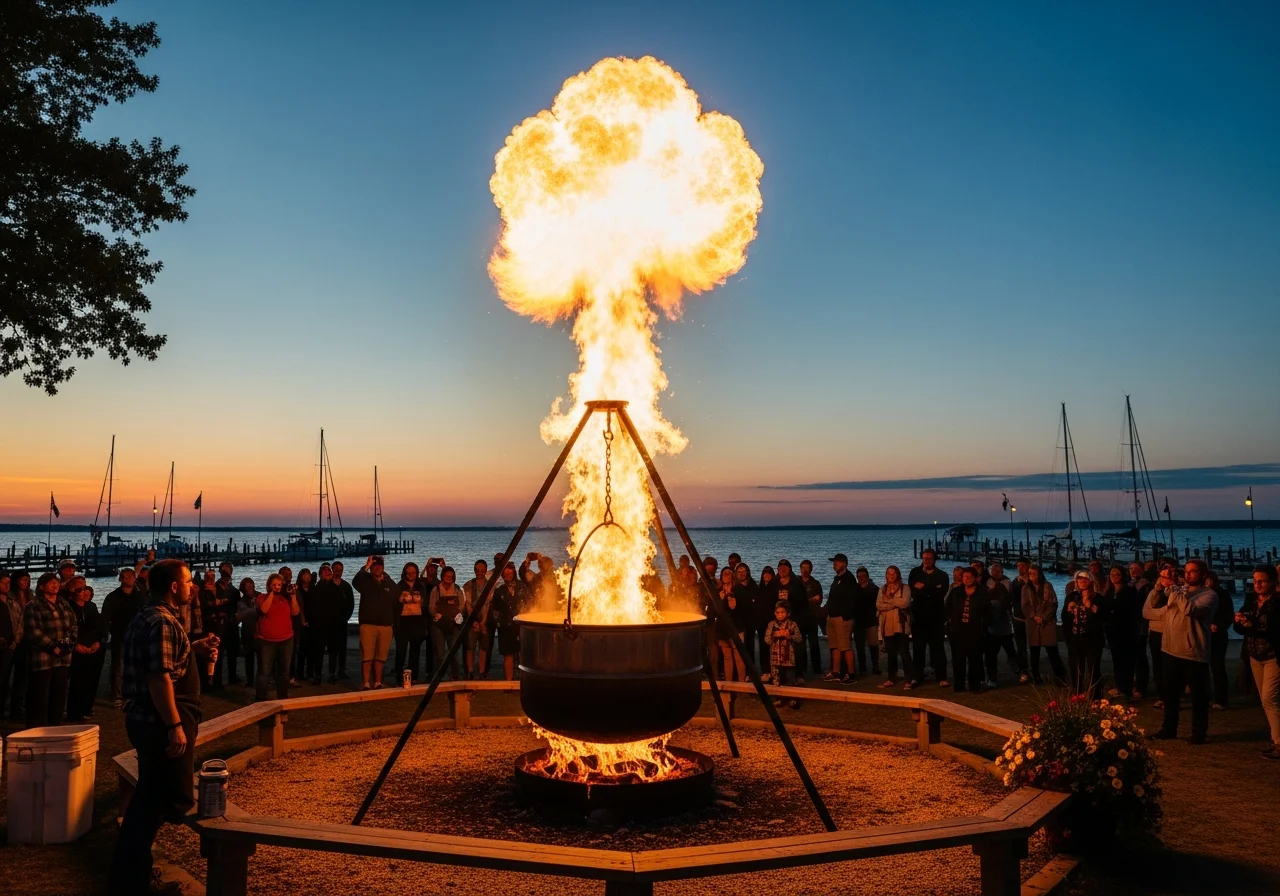
A Door County fish boil isn’t just a meal. It’s a shared moment shaped by fire, water, and tradition along the shores of Wisconsin. As evening settles in, people gather near a giant kettle / metal cauldron, watching steam rise from salted boiling water while stories drift through the air. This famous dinner and a show blends simple food with unforgettable drama, ending in a brief fireball finale that lights up faces and waterfront skies. Rooted in local history and still beloved today, the experience brings together fresh ingredients, careful timing, and a sense of community that turns dinner into something far more memorable than what’s on the plate.
Few meals in America unfold like a story told with heat, light, and anticipation. In northern Door County, dinner often begins outdoors, near water, where a crowd gathering forms around a giant kettle / metal cauldron set above an open flame. This is the Door County fish boil, a ritual that blends nourishment with theater and turns eating into an event you feel in your chest.
The draw isn’t novelty alone. A traditional fish boil reflects local history, regional ingredients, and a pace that invites you to slow down. As the fire grows and the lake breeze shifts, the experience earns its nickname as a dinner and a show. It’s communal. It’s dramatic. And it’s rooted in Door County Wisconsin in a way that no other place can replicate.
What Is a Door County Fish Boil?
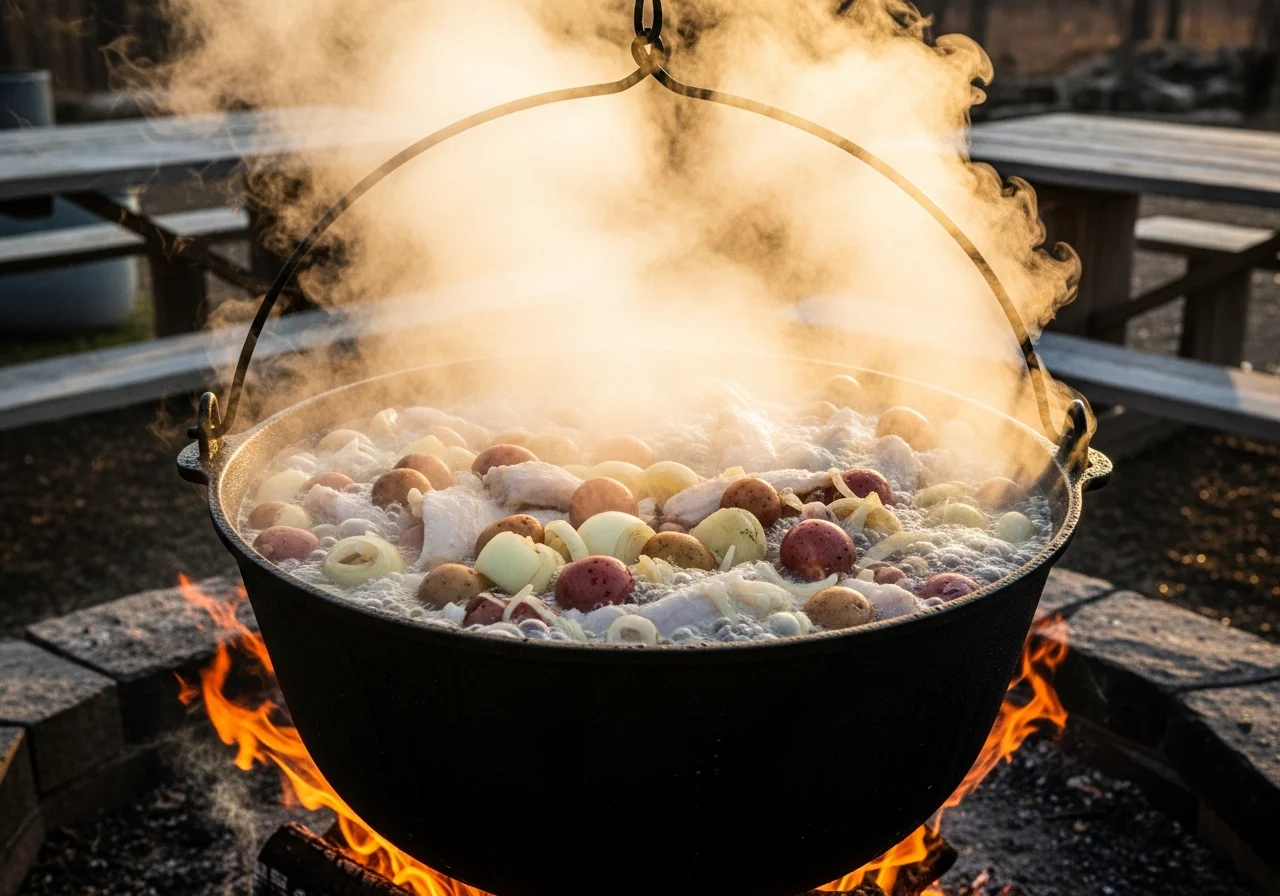
At its core, a Door County fish boil is a communal meal prepared outdoors in a large pot of salted boiling water, where Lake Michigan whitefish cooks alongside baby red potatoes and sweet onions. The pot rests above an open flame, watched closely by a Master Boiler / Boilmaster who times each step with care. When the moment arrives, a brief burst of fuel creates a controlled boil over that cleans the pot and signals dinner.
The reason people call it a dinner and a show becomes clear during the fireball finale. The kerosene fireball isn’t for flair alone. It forces the pot to overflow, carrying away impurities as fish oils rising skim off the surface. That flash of flame, reflected in waterfront views at dusk, explains why this Wisconsin fish boil feels inseparable from its setting and why the fish boil Door County experience can’t be copied elsewhere.
The Origins of the Fish Boil (A Tradition Born of Necessity)
Scandinavian Roots and Early Fishing Communities
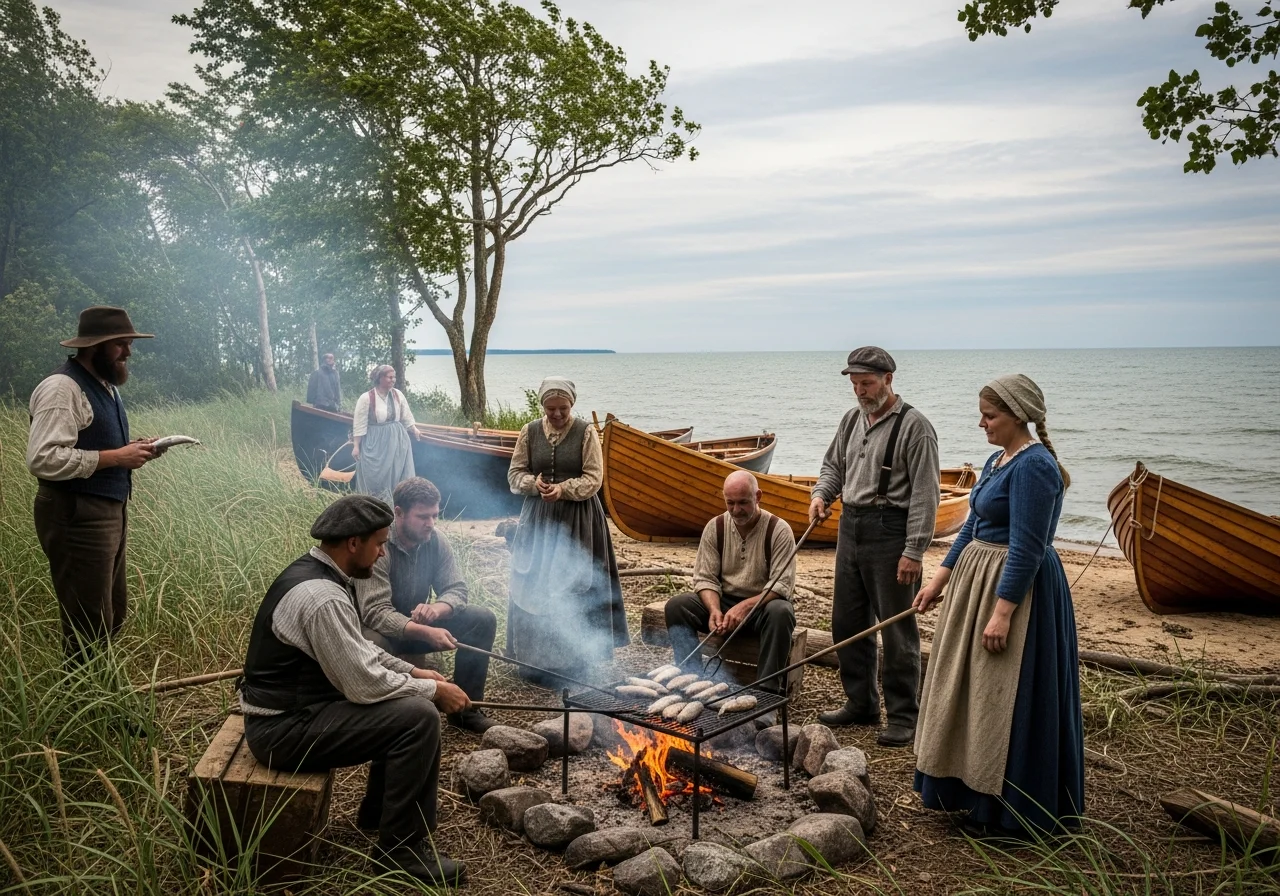
Long before tourism shaped the peninsula, Scandinavian settlers relied on efficient ways to feed many people using what the land and water provided. Whitefish from Lake Michigan offered a steady protein source, while potatoes stored well and cooked quickly. The earliest fish boil history reflects practicality rather than performance.
Those early meals formed habits that endured. Cooking in a single pot conserved fuel. Seasoning stayed simple. Community mattered more than presentation. Over time, the method became a marker of identity, linking foodways to place and turning necessity into heritage.
From Lumber Camps to Community Gatherings
As logging expanded, lumberjacks joined commercial fishermen at shared meals. Large crews needed to eat fast and together. A boiling pot met that need. The routine encouraged conversation, jokes, and storytelling, long before any audience gathered for entertainment.
These gatherings strengthened ties. Families and neighbors adopted the method for celebrations. Weddings, harvests, and reunions featured the same pot and the same rhythm. What began as workday fuel evolved into a Wisconsin food tradition with social weight.
How the Fish Boil Became a Tourist Tradition in the 1960s
Tourism surged when roads improved and summer visitors arrived. Restaurants recognized that the old method carried spectacle as well as flavor. In the early 1960s, the Viking Grill, now a historical reference, served one of the first public boils. Soon, other kitchens followed, shaping the modern fish boil tradition.
By pairing history with performance, the meal became a destination. Visitors didn’t just eat. They watched. They listened. And the Door County dining experience gained a signature that still defines the region today.
How a Door County Fish Boil Works (Step-by-Step)
The Ingredients (And Why There Are So Few)
A whitefish boil succeeds because restraint rules the pot. Fresh Lake Michigan whitefish cooks gently with baby red potatoes and sweet onions in salted boiling water. Salt seasons the food and raises the boiling point, helping everything cook evenly.
Simplicity matters. Fewer ingredients mean cleaner flavors. The fish stays mild and flaky. Potatoes absorb salt without turning heavy. When served with melted butter and lemon wedges, the result feels honest and complete.
The Role of the Boilmaster
Every Door County fish boil depends on the Master Boiler / Boilmaster. This role blends cook, host, and historian. Timing matters because minutes decide texture. Storytelling matters because context deepens enjoyment. Crowd interaction keeps attention focused as heat builds.
The Boilmaster explains the steps, stokes the fire, and reads the pot. Experience guides decisions more than clocks. That human element separates a fish boil experience from ordinary catering.
The Famous Boil-Over Fireball (And Why It’s Necessary)
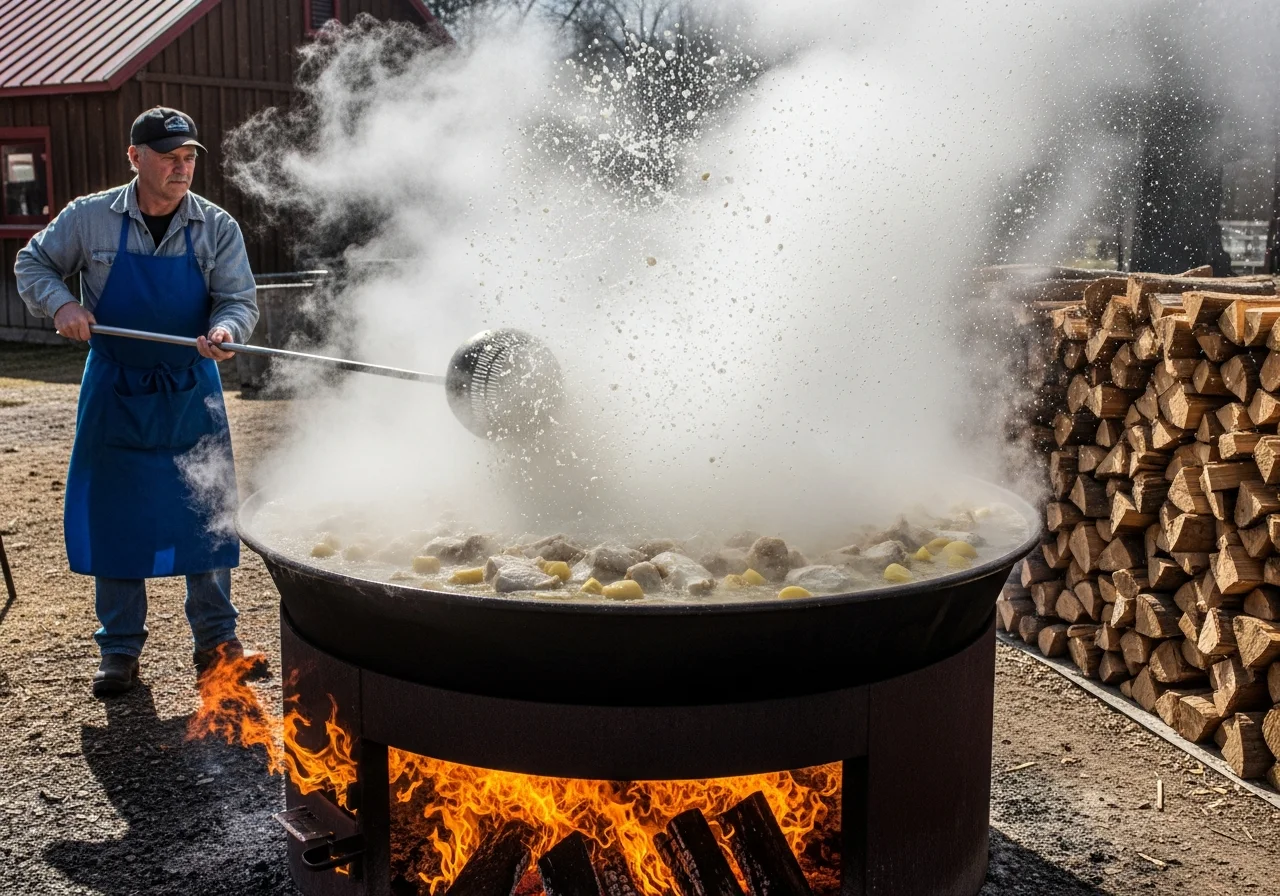
When fish oils rising reach the surface, the Boilmaster adds fuel to the fire. The brief kerosene fireball forces a rapid boil over, spilling foam and oil from the pot. The flames look dramatic, but the goal is clean food.
Safety matters here. The process happens under controlled conditions with distance maintained. The result is fish and potatoes ready to serve immediately, free of residue and full of clean flavor. The spectacle has purpose.
What the Fish Boil Experience Is Really Like
Arriving Early and Getting the Best View
Timing shapes the evening. Arriving early lets you claim a spot near the pot and watch the process unfold. Benches and standing areas fill quickly, especially in summer. Early arrival also means better waterfront views and cooler air before sunset.
Restaurants encourage guests to gather ahead of seating. This pause builds anticipation and turns waiting into part of the event rather than an inconvenience.
The Atmosphere: Crowds, Fire, and Anticipation
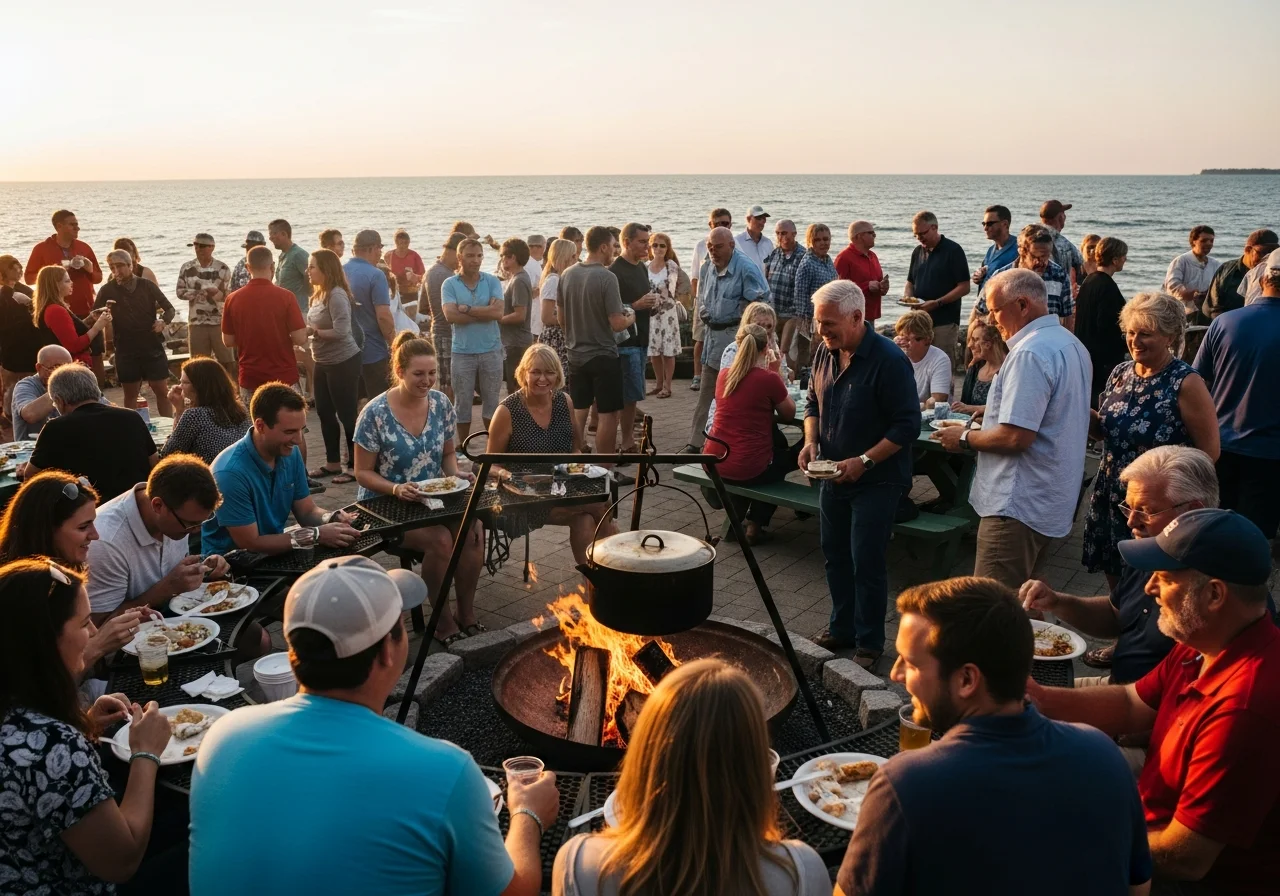
As daylight fades, conversation softens. Flames crackle. The Boilmaster’s voice carries. Phones lower as people watch. The crowd gathering shares a moment of quiet before the flash.
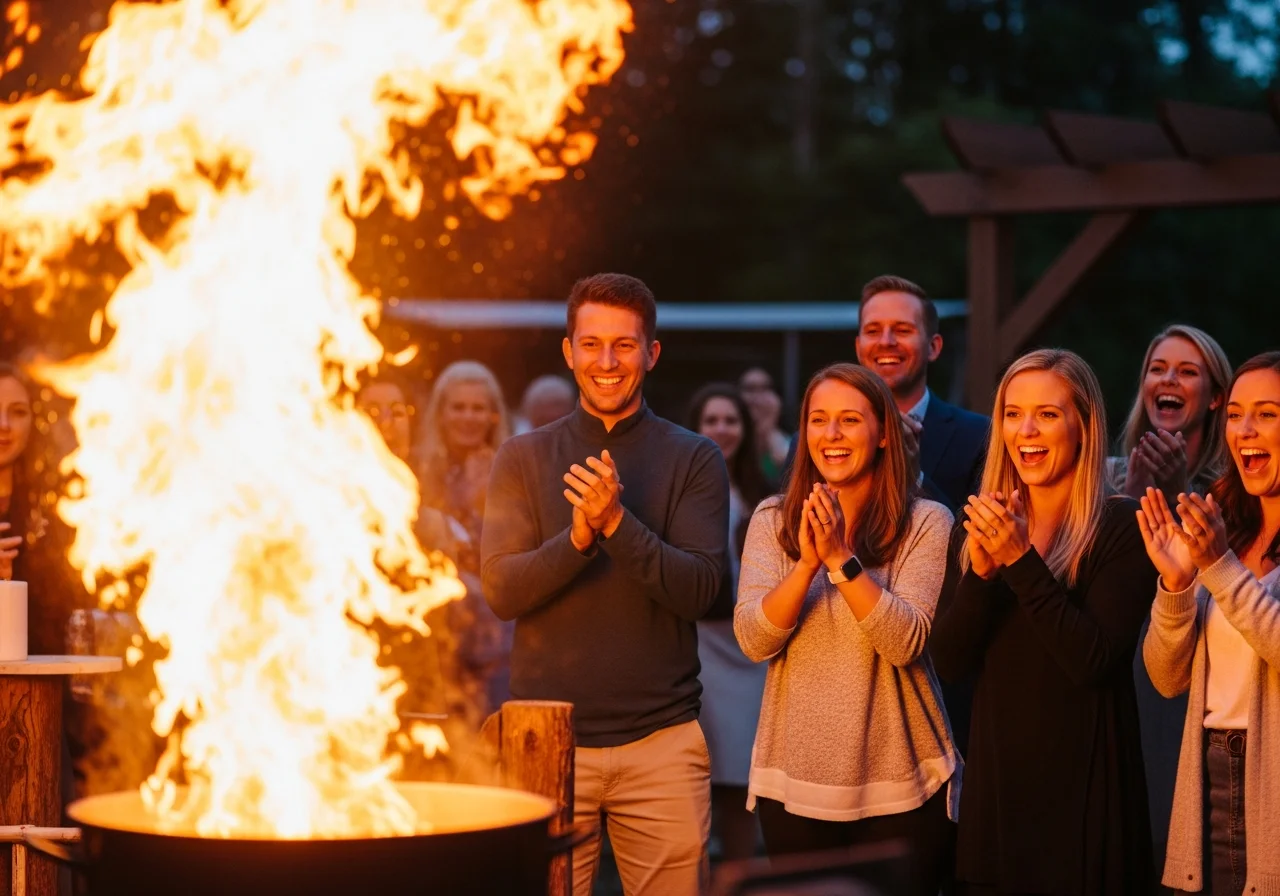
That pause makes the fireball finale feel earned. Heat washes outward. Gasps ripple through the group. Then applause breaks the tension. Few meals deliver that emotional arc.
Is It Kid-Friendly? What Families Should Know
Families often attend together, though awareness helps. The heat spike and sound can startle young children. Standing farther back offers a gentler view while still sharing the moment.
Most venues welcome kids and offer alternatives if fish isn’t a fit. With preparation, families enjoy the ritual without stress.
What Does a Door County Fish Boil Taste Like?
Flavor, Texture, and Freshness
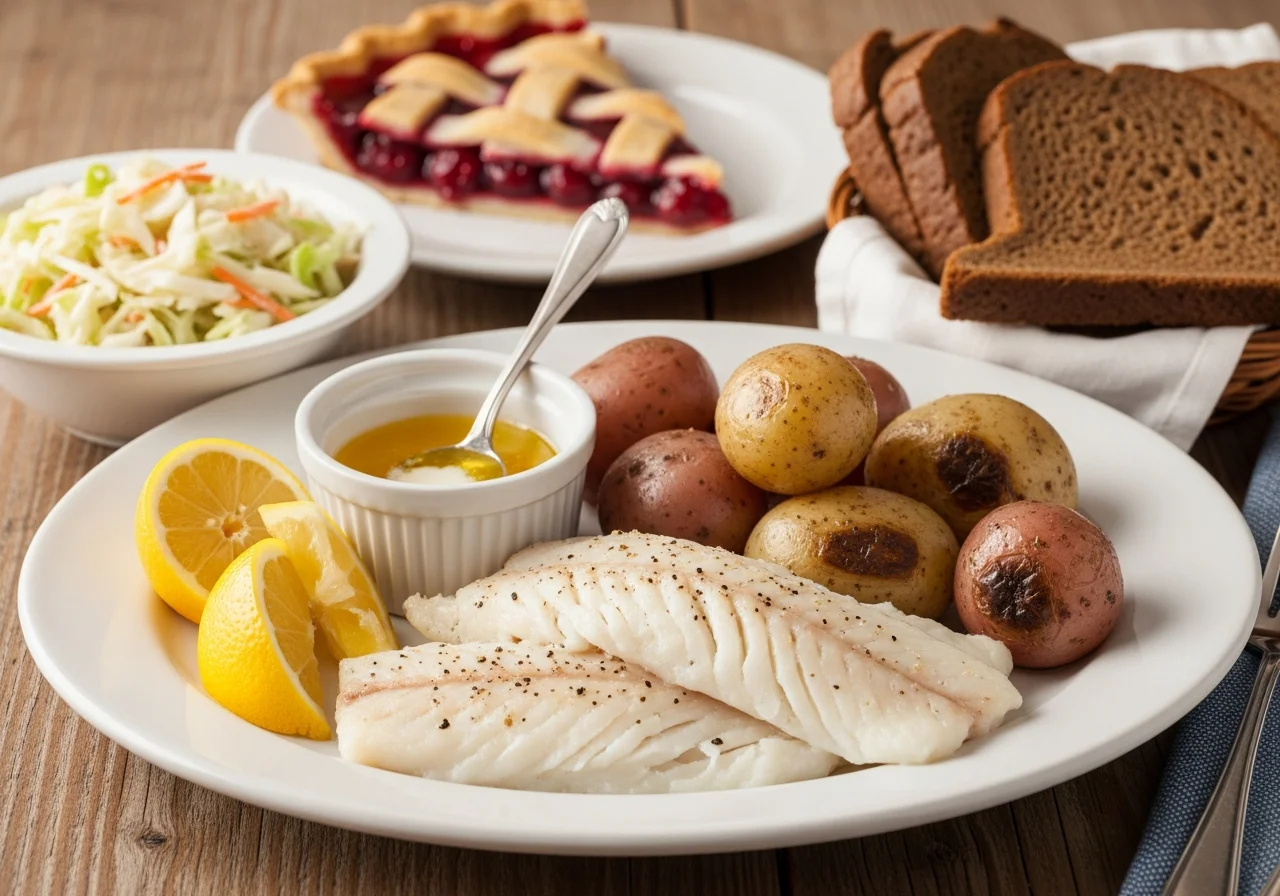
A Door County fish boil tastes cleaner than many expect. The fish stays mild, never oily. Texture remains flaky, not mushy. Potatoes emerge tender, seasoned through rather than coated.
Condiments matter. Melted butter adds richness. Lemon wedges brighten the plate. Together, they highlight freshness rather than masking it.
Common Misconceptions (Especially for Non-Fish Eaters)
Many assume boiled fish tastes bland or strong. The opposite proves true here. Removing oils during the boil over keeps flavors light. Even skeptics often finish their plates.
For those unsure, tasting a small piece first helps. The simplicity surprises most diners in a good way.
What’s Included in a Traditional Fish Boil Dinner
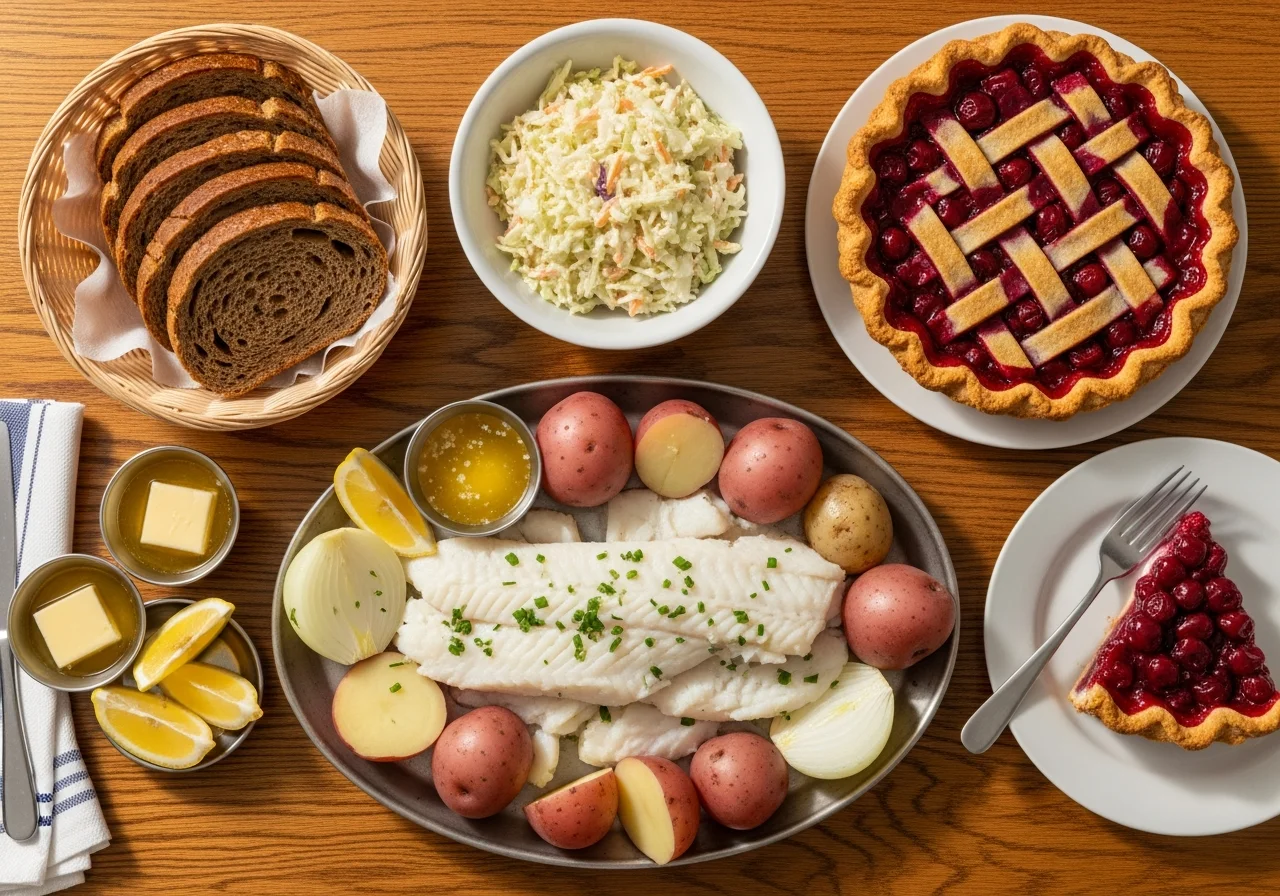
A traditional fish boil arrives as a complete plate. Fish and potatoes anchor the meal. Coleslaw adds crunch and contrast. Rye bread offers a hearty companion for butter.
Dessert often features Door County cherry pie, a nod to local orchards. The sequence feels balanced, seasonal, and rooted in place.
How Much Does a Fish Boil Cost in Door County?
Average Prices (Adults, Kids, Alternatives)
Pricing reflects both food and performance. Adult meals typically range from twenty-five to thirty-five dollars, depending on venue and season. Child portions cost less. Alternative dinners, such as chicken, often sit slightly below fish pricing.
The fish boil cost includes the show, seating, and service. Comparing it to standard entrees misses the broader value.
Is a Fish Boil Worth the Price?
Value depends on expectations. For travelers seeking a unique evening, the answer leans yes. Few meals combine history, community, and drama so seamlessly.
Those focused solely on portion size may hesitate. Those open to experience rarely regret attending.
What to Wear to a Fish Boil
Casual vs Date Night
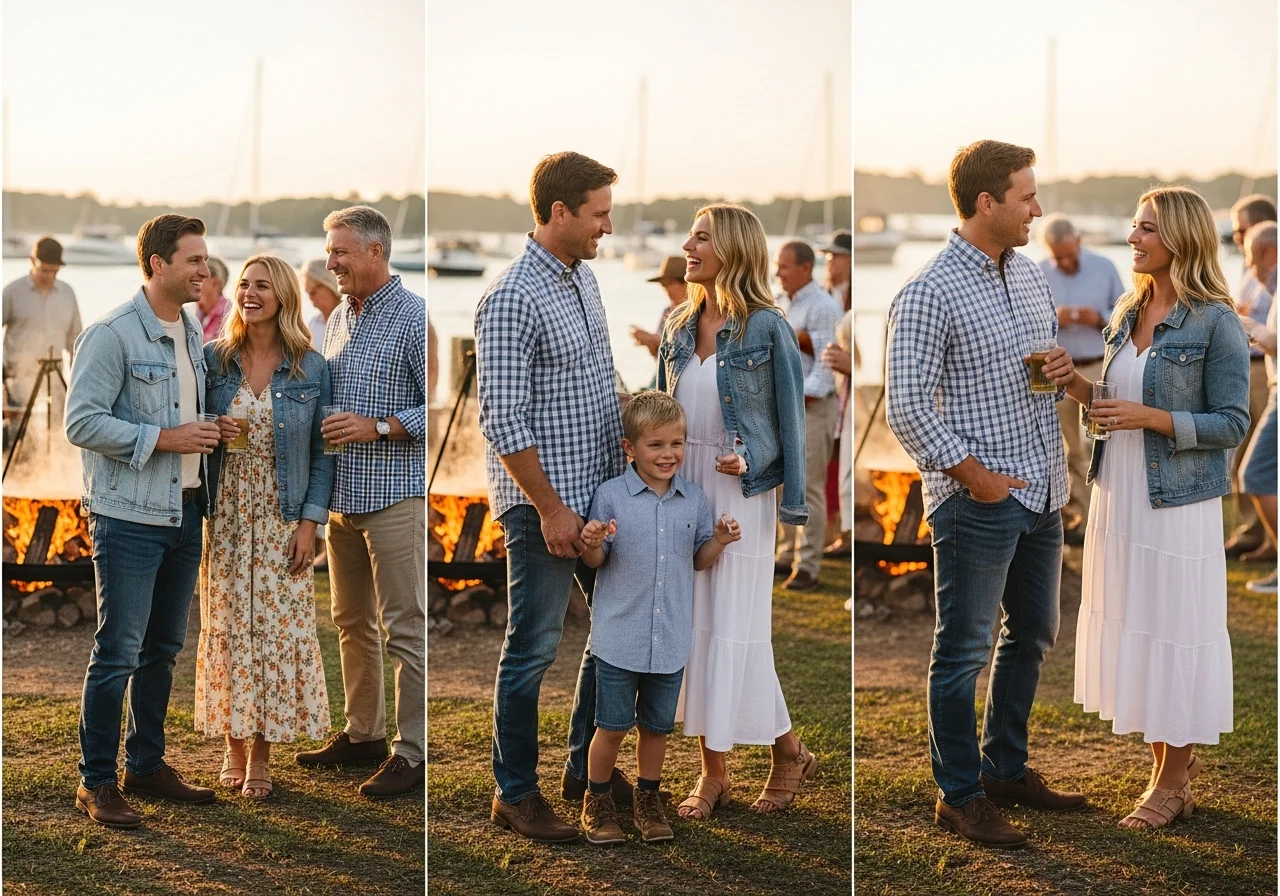
Clothing choices stay flexible. Some guests dress casually after beach days. Others arrive ready for sunset dining. Comfortable layers suit shifting temperatures.
Shoes matter more than style. Standing near fire and gravel calls for stability over fashion.
Outdoor Seating Considerations
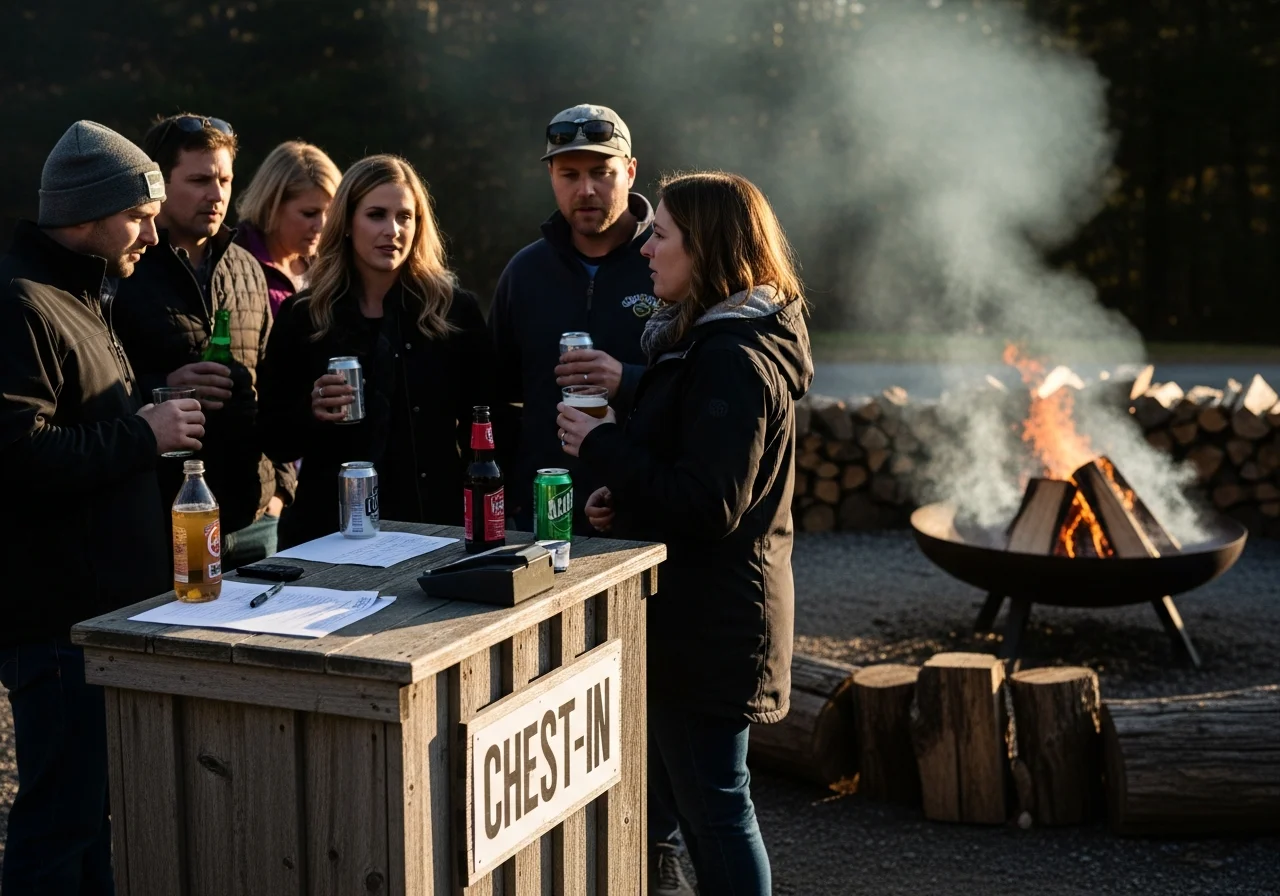
Outdoor seating places you closer to heat and smoke. Natural fibers handle sparks better than synthetics. Wind can carry warmth or chill, depending on weather.
Checking forecasts helps. A light jacket often proves useful even in summer.
What Not to Wear
Loose fabrics and dangling accessories invite trouble near flames. High heels struggle on uneven ground. Dark colors hide ash better than white.
Practical choices let you focus on the moment rather than your outfit.
Reservations, Timing, and Planning Tips
Do You Need Reservations?
In peak season, fish boil reservations become essential. Summer weekends fill quickly. Calling ahead secures preferred seating and times.
Shoulder seasons offer more flexibility, though popular venues still recommend booking.
Best Time of Year to Go
Late spring through early fall delivers the classic experience. Warm evenings and longer daylight enhance the show. Autumn adds cooler air and earlier sunsets.
Winter boils exist at select spots, trading outdoor drama for cozy interiors.
Best Time to Arrive Before Your Seating
Arriving thirty to forty-five minutes early balances comfort and view. Earlier arrival increases proximity to the pot. Later arrival risks missing context.
That window turns waiting into participation.
The Best Places to Experience a Door County Fish Boil
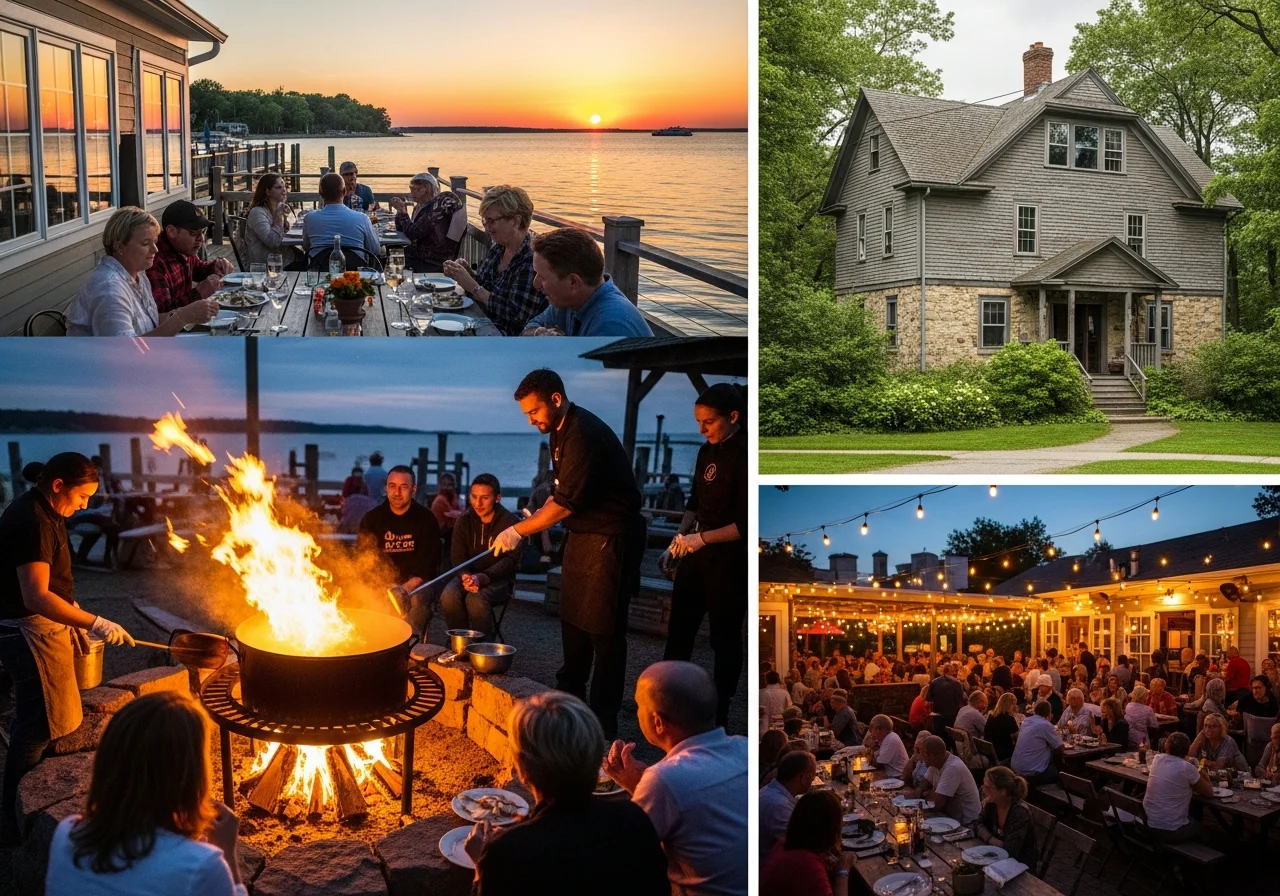
White Gull Inn (Fish Creek) – The Classic Experience
The White Gull Inn anchors tradition with consistent technique and storytelling. Its reputation draws repeat visitors and first-timers alike.
Old Post Office Restaurant (Ephraim) – Best Views & Storytelling
At the Old Post Office Restaurant, location enhances the evening. Harbor views and seasoned Boilmasters deepen the narrative.
Pelletier’s Restaurant (Fish Creek) – Family-Friendly Favorite
Pelletier’s Restaurant balances efficiency with warmth. Families appreciate pacing and approachable service.
Waterfront Mary’s Bar & Grill (Sturgeon Bay) – Casual & Year-Round
For relaxed vibes, Waterfront Mary’s Bar & Grill offers a looser take. Year-round availability broadens access.
| Venue | Location | Season | Vibe |
|---|---|---|---|
| White Gull Inn | Fish Creek | Spring–Fall | Classic |
| Old Post Office Restaurant | Ephraim | Spring–Fall | Scenic |
| Pelletier’s Restaurant | Fish Creek | Spring–Fall | Family |
| Waterfront Mary’s Bar & Grill | Sturgeon Bay | Year-Round | Casual |
Fish Boil Alternatives (If You Don’t Love Fish)
Alternatives exist for hesitant diners. Many venues offer chicken or other entrees. Local menus highlight regional fare beyond fish.
Even without eating fish, attending still makes sense. The spectacle and community energy stand on their own.
Is a Door County Fish Boil Worth It?
Who Will Love It
Travelers drawn to culture, history, and shared moments connect quickly. First-time visitors often rank it among trip highlights.
Who Might Skip It
Those seeking quick meals or quiet dining may prefer other options. Sensitivity to heat or crowds can also influence decisions.
Why Most Visitors Are Glad They Went
Memories linger. Photos capture flame. Stories retell the night. The experience resonates beyond taste.
How a Fish Boil Fits Into a Door County Trip
Evenings work best. Scheduling the meal near sunset aligns timing with atmosphere. Nearby towns like Fish Creek, Ephraim, and Sturgeon Bay offer shops and shoreline walks before dinner.
Pairing the event with daytime exploration creates balance. The meal becomes a natural close to the day.
Conclusion
A Door County fish boil lasts because it honors place and people. The method values simplicity. The setting invites connection. The dinner and a show format transforms food into memory.
Across decades, the ritual remains beloved. Fire still flares. Pots still boil. And in Wisconsin, this tradition continues to gather strangers into a shared circle of light.
![Dare to Enter? Why Nightmare on Chicago Street in Elgin, Illinois is the Halloween Event of the Year! [2026]](https://officetooutdoorr.com/wp-content/uploads/2026/01/feature-image-11-768x419.webp)