The Essential Personal Item Packing List
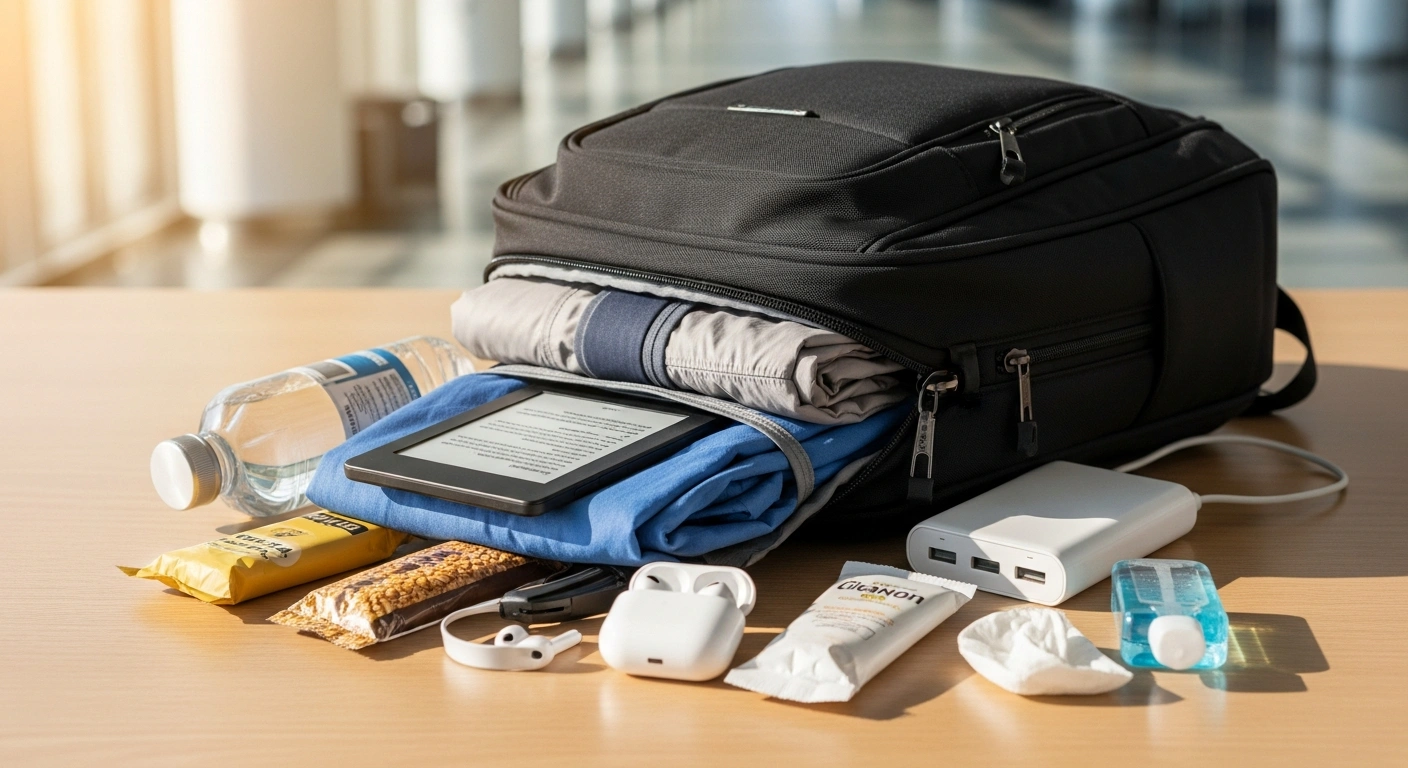
Every traveler knows that sinking feeling at the gate. Your bag is too big. The agent flags it. You scramble to repack right there in front of everyone. That moment is completely avoidable. A smart personal item packing list changes everything about how you fly. The right personal item bag essentials keep you prepared without overpacking. Whether you’re a weekend warrior or a seasoned business traveler, knowing exactly what to pack — and how — saves you money, time, and a whole lot of stress. This guide answers what to pack in a personal item for a flight once and for all. This guide breaks down every essential item you should toss into your personal item bag before your next flight across the United States. It also covers the exact size rules for seven major airlines. Use this as your go-to travel packing list before every single trip. Whether you’re building your first personal item packing list or refining one that’s already been working for you, this guide has everything you need.
What Is a Personal Item and Why Does It Matter?
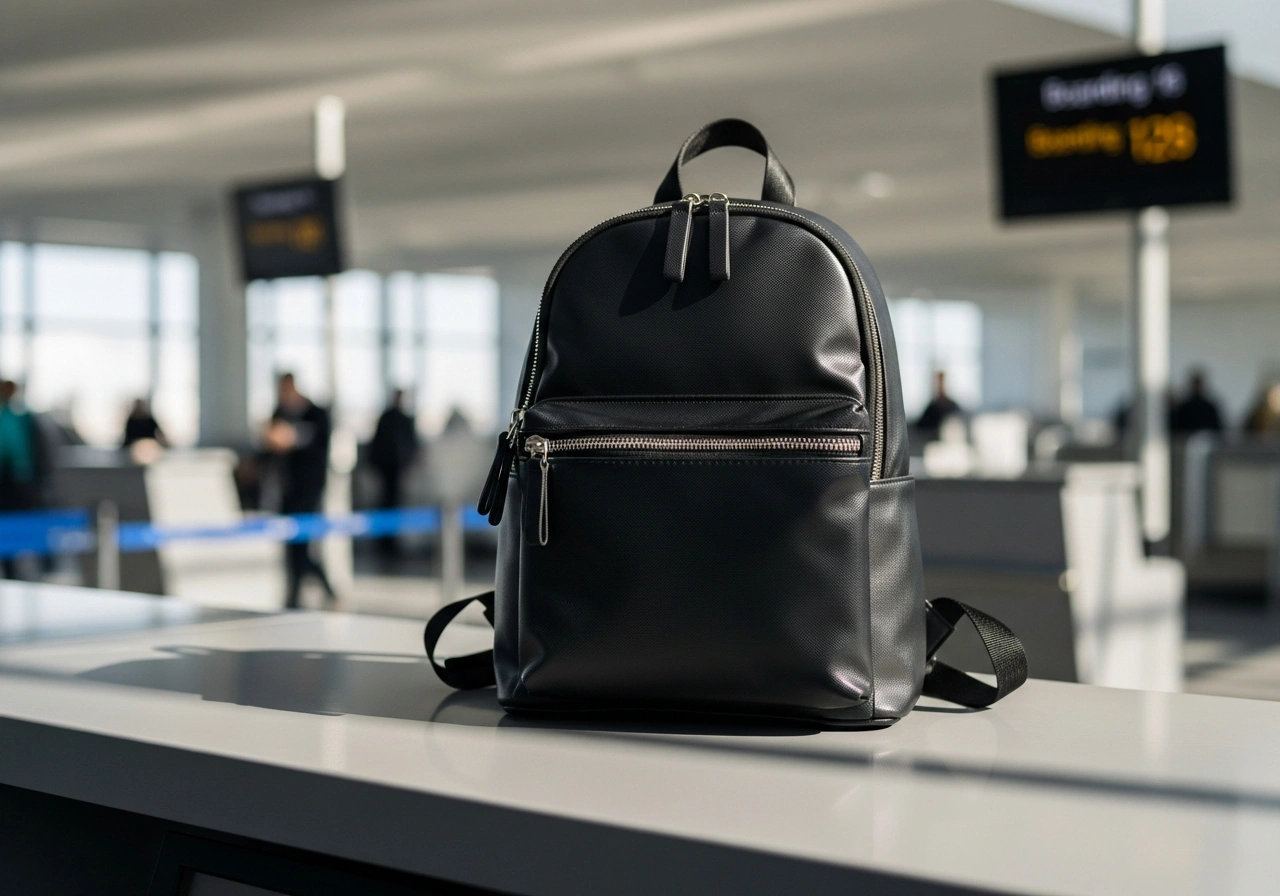
A personal item is the smaller bag you bring onto the plane alongside your carry-on. It goes under the seat in front of you. Think purses, small backpacks, laptop bags, or compact duffel bags. Every major U.S. airline lets you bring one for free. That’s the beauty of it. But here’s the catch — each airline defines “personal item” a little differently. Some publish exact dimensions. Others just say it must fit under the seat. Understanding the difference between a carry-on vs personal item is critical. A carry-on goes in the overhead bin. Your personal item stays below you. Getting this wrong means extra fees or delayed boarding. This guide covers what personal items are allowed on US airlines so you never get caught off guard. Budget airlines like Spirit and Frontier are especially strict. They charge you the moment your bag doesn’t fit their sizer. Full-service carriers tend to be more relaxed. Still, knowing the rules puts you ahead of the game every single time.
you may also like this:Dare to Enter? Why Nightmare on Chicago Street in Elgin, Illinois is the Halloween Event of the Year! [2025]
Personal Item Size Limits By Airline
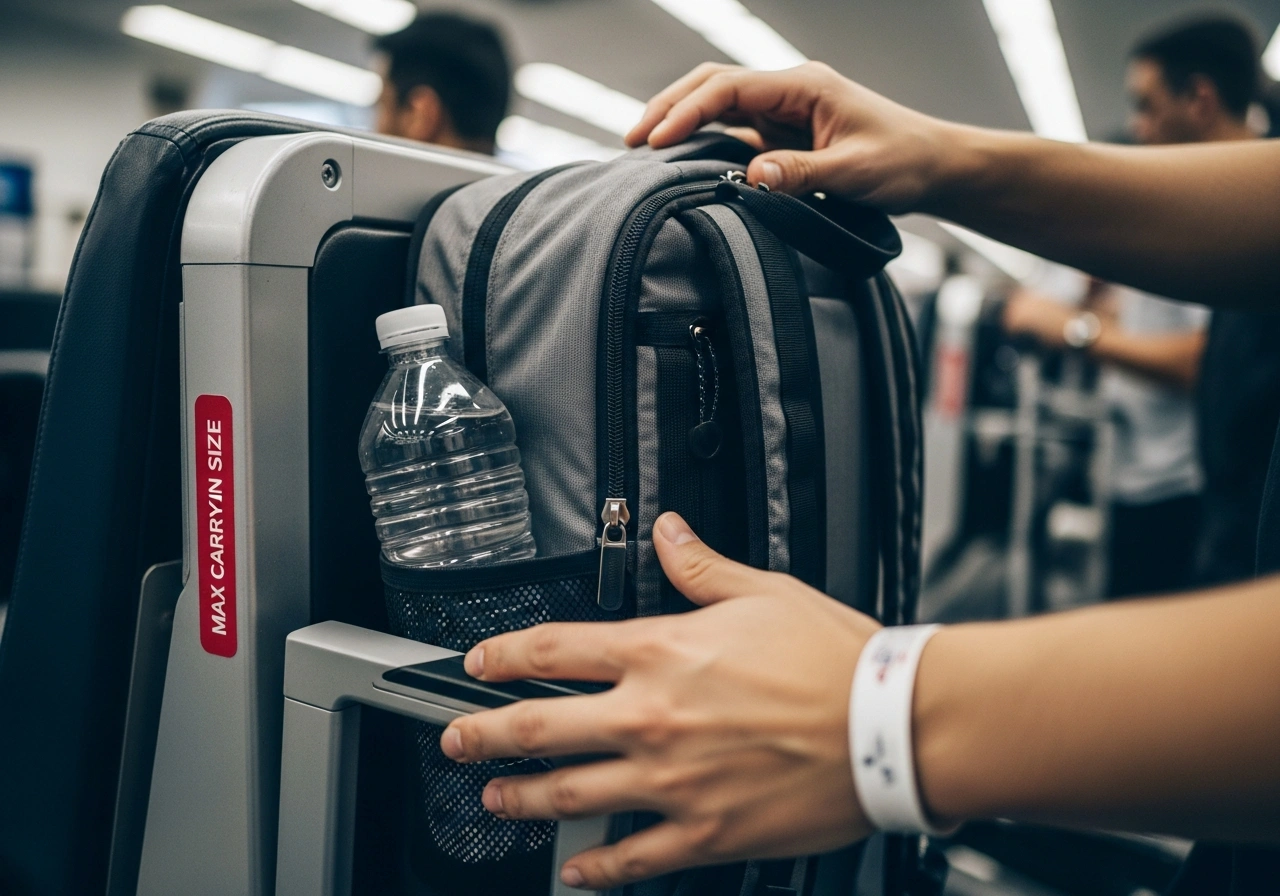
Not every airline plays by the same rules. Some are generous. Others will charge you on the spot. Here’s exactly what each of the seven biggest U.S. carriers allows when it comes to personal item packing list compliance. Always measure your bag before you fly. Include handles, wheels, and straps in your measurements. These numbers are current as of early 2026. Double-check with your airline before booking, because airline personal item rules can shift without much warning.
Alaska
Alaska Airlines keeps things relatively simple. They don’t publish a strict numerical limit for personal items specifically. Instead, they define a personal item as a purse, briefcase, or laptop computer. The key rule? One of your two bags must fit under the seat in front of you. Your carry-on is capped at 22 x 14 x 9 inches. Alaska is one of the more relaxed carriers when it comes to personal item enforcement. That said, a safe bet is to keep your under-seat bag around 18 x 14 x 8 inches or smaller. That way you won’t run into trouble at the gate. Alaska also doesn’t list a weight limit for personal items. Just make sure you can manage the bag comfortably on your own.
American
American Airlines gives you clear numbers to work with. Your personal item must not exceed 18 x 14 x 8 inches (45 x 35 x 20 cm). That includes everything — handles, wheels, straps, side pockets. It must fit entirely under the seat in front of you. American is one of the more consistent airlines when it comes to enforcement. As of late 2025, gate sizers have been removed at many locations. Size checks now rely mostly on staff judgment during boarding. Formal sizers are still available at check-in counters if you want to verify your bag ahead of time. One handy perk: diaper bags don’t count toward your personal item limit. Parents get a small break here.
Delta
Delta takes a slightly different approach. They don’t publish exact personal item dimensions on their website. Their policy simply states your personal item should be a purse, laptop bag, or item of similar size that fits under the seat. However, most travel experts recommend treating Delta’s limit as roughly 17 x 13 x 9 inches to be safe. Delta’s carry-on cap is the standard 22 x 14 x 9 inches. Enforcement on personal items tends to be moderate. Gate agents generally won’t stop you unless your bag is obviously oversized. Still, don’t push it. A bag that barely fits under the seat will cause problems during takeoff and landing when everything needs to be secured.
Frontier
Frontier is where things get serious. This ultra-low-cost carrier enforces personal item rules more strictly than almost any other airline in the U.S. Your personal item must be no larger than 18 x 14 x 8 inches (45 x 35 x 20 cm). That includes handles, wheels, and straps. Frontier gate agents actively use sizing frames during boarding. If your bag doesn’t fit, you’re paying for a carry-on on the spot. That fee can run $40 to $75 depending on when you pay. The smart move? Measure your bag at home first. Soft-sided bags work better here because they compress slightly to fit the sizer. Frontier is the one airline where packing light isn’t just smart — it’s essential.
Southwest
Southwest Airlines is one of the most generous carriers in the country when it comes to personal items. Your personal item can measure up to 18.5 x 13.5 x 8.5 inches (47 x 34 x 22 cm). Some sources cite a slightly smaller figure of 16.25 x 13.5 x 8 inches for under-seat storage. Either way, Southwest gives you noticeably more room than budget carriers. Their carry-on allowance is also bigger than most: 24 x 16 x 10 inches. Southwest also lets you bring extras like jackets, umbrellas, canes, and food without counting them as part of your allowance. That flexibility makes Southwest a favorite for travelers who like to pack a little more comfortably.
Spirit
Spirit Airlines runs on a strict, no-nonsense system. Your personal item must fit within 18 x 14 x 8 inches (45 x 35 x 20 cm). It must fit entirely in the smaller bin at the airport, handles and wheels included. Anything larger gets classified as a carry-on — and you’ll pay for it. Spirit charges for carry-on bags unless you purchased a bundle that includes one. The personal item is truly the only free bag you get with a basic fare. Spirit’s enforcement is legendary among budget travelers. Gate agents check bags regularly. A well-packed backpack or small duffel within these dimensions is your best strategy. Don’t risk it with a bag that’s even slightly oversized.
United
United Airlines sets one of the tighter personal item limits among major carriers. Your bag must not exceed 17 x 10 x 9 inches (43 x 25 x 23 cm). That’s noticeably smaller than what American or Frontier allow. It must fit under the seat in front of you. United’s basic economy fare only allows a personal item — no carry-on unless you upgrade or hold Premier status. MileagePlus credit card holders with certain cards can also bring a carry-on on basic economy. United’s enforcement varies by airport and how busy the flight is. But don’t gamble with an oversized bag. The dimensions are published clearly, and gate agents do check.
Airline Personal Item Size Comparison Table
| Airline | Personal Item Max Size (inches) | Carry-On Max Size (inches) | Free Personal Item? | Enforcement Level |
|---|---|---|---|---|
| Alaska | ~18 x 14 x 8 (not officially published) | 22 x 14 x 9 | Yes | Moderate |
| American | 18 x 14 x 8 | 22 x 14 x 9 | Yes | Moderate |
| Delta | ~17 x 13 x 9 (not officially published) | 22 x 14 x 9 | Yes | Moderate |
| Frontier | 18 x 14 x 8 | 24 x 16 x 10 | Yes | Strict |
| Southwest | 18.5 x 13.5 x 8.5 | 24 x 16 x 10 | Yes | Relaxed |
| Spirit | 18 x 14 x 8 | 22 x 18 x 10 | Yes | Strict |
| United | 17 x 10 x 9 | 22 x 14 x 9 | Yes | Moderate |
Travel Bag
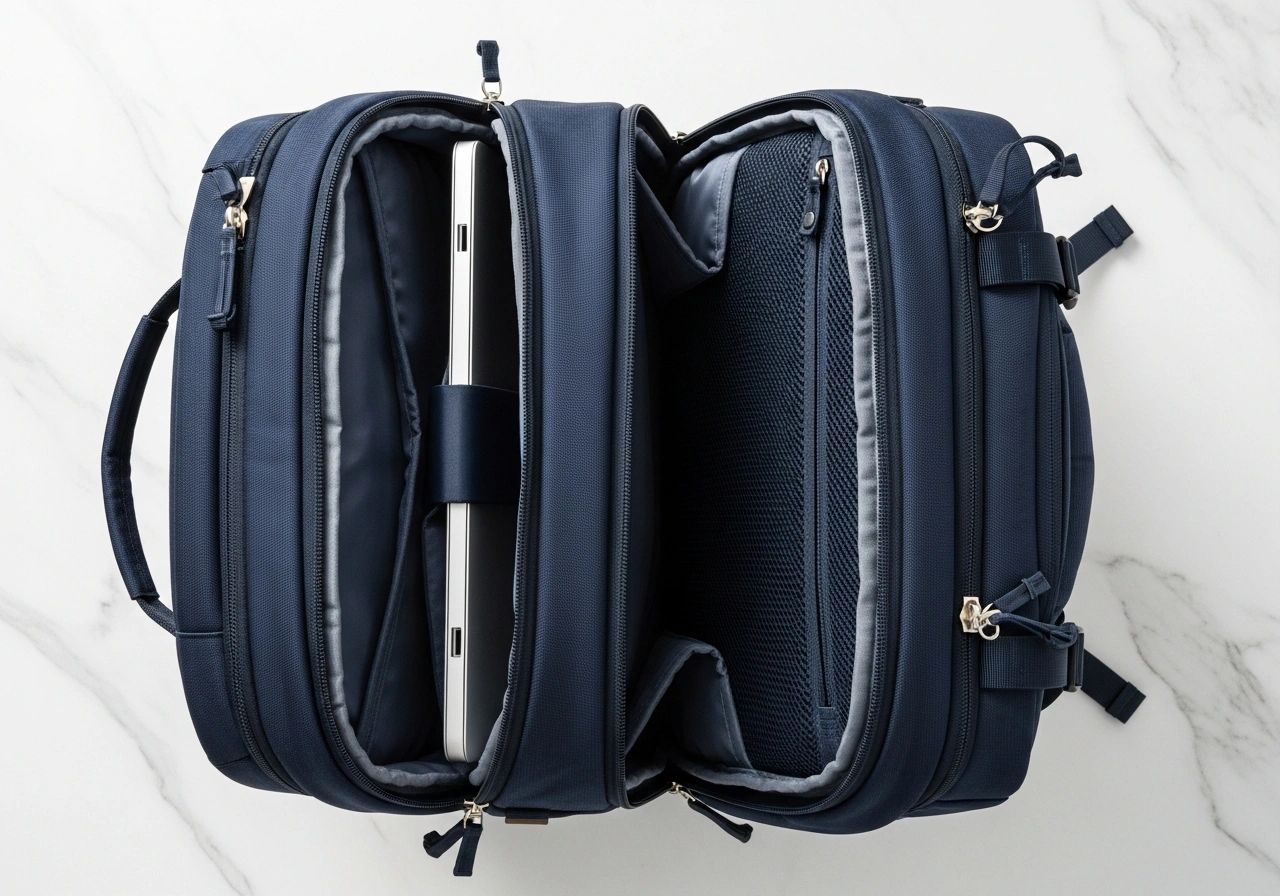
Picking the right travel bag is the foundation of every smart personal item packing list. You need something compact, durable, and airline-approved. A travel backpack with multiple compartments works best for most travelers. Look for bags measuring around 18 x 14 x 8 inches — that size works across American, Frontier, Spirit, and several other carriers. Soft-sided bags are your best friend here. They compress under pressure, which means they fit more easily into airline sizers and under-seat spaces. Avoid rigid cases for your personal item. They take up the full dimension no matter what, leaving zero wiggle room. Travel backpack must-haves include a laptop sleeve, a front pocket for quick-access items, and a water-resistant exterior. Budget around $30 to $80 for a quality personal item bag that will last you dozens of flights. Mastering how to pack a travel backpack efficiently means using every inch of space without stuffing it to the point of bursting.
Laptop
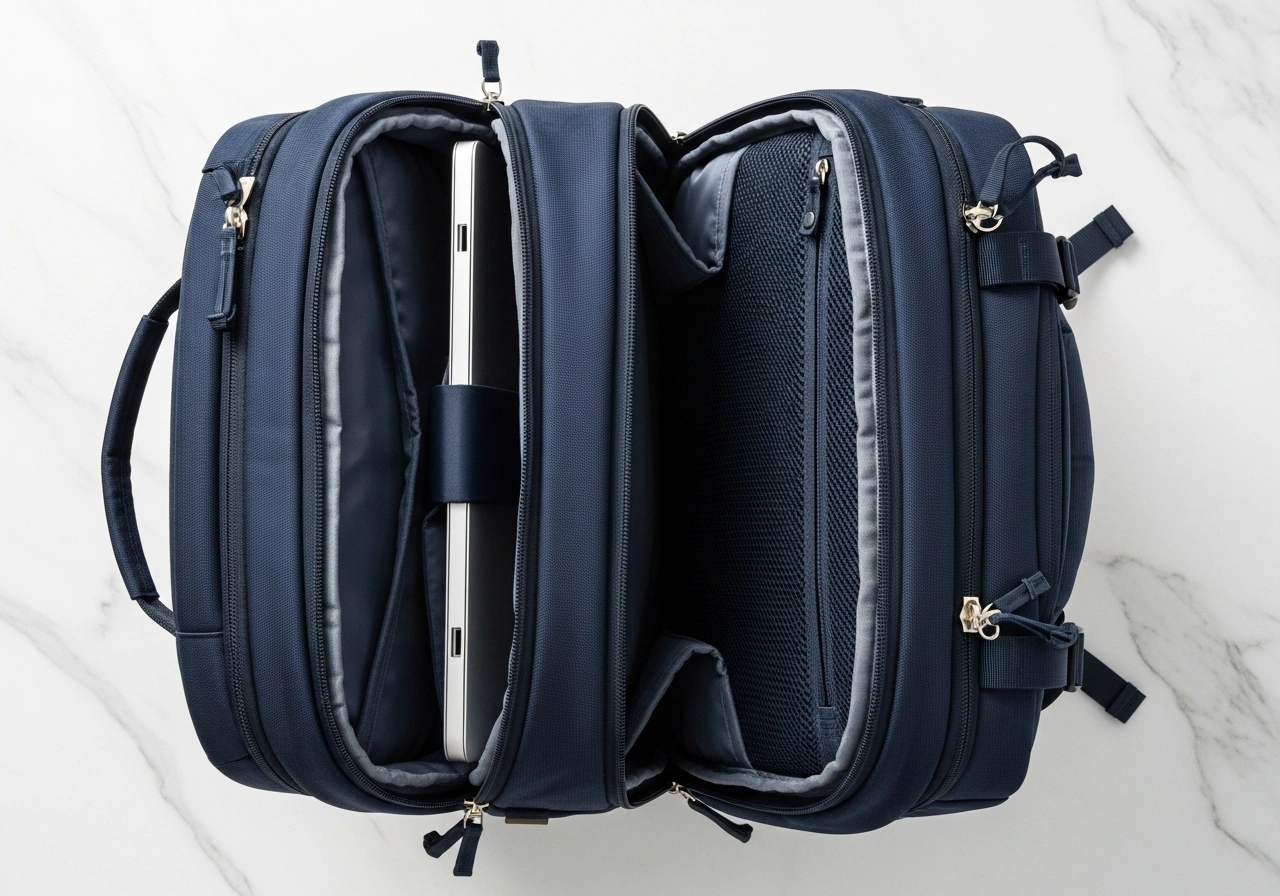
Your laptop deserves a dedicated spot in your personal item. It’s one of the most valuable things you own, and it needs protection during transit. A laptop sleeve or padded compartment inside your backpack keeps the screen and keyboard safe from scratches and pressure. TSA requires you to remove your laptop from your bag and place it in a separate bin during screening — unless your airport uses advanced CT scanners. Keep that in mind when you pack. Place the laptop in the most accessible section of your bag. How to protect your laptop while traveling starts with choosing a bag that has a built-in sleeve. Hard-shell cases offer maximum protection but eat up valuable space. A slim padded sleeve strikes the perfect balance. Keep your charger nearby too. Flights get delayed. Airports drain batteries faster than you’d expect.
Reading Materials (Books, Kindle, Magazines, etc.)
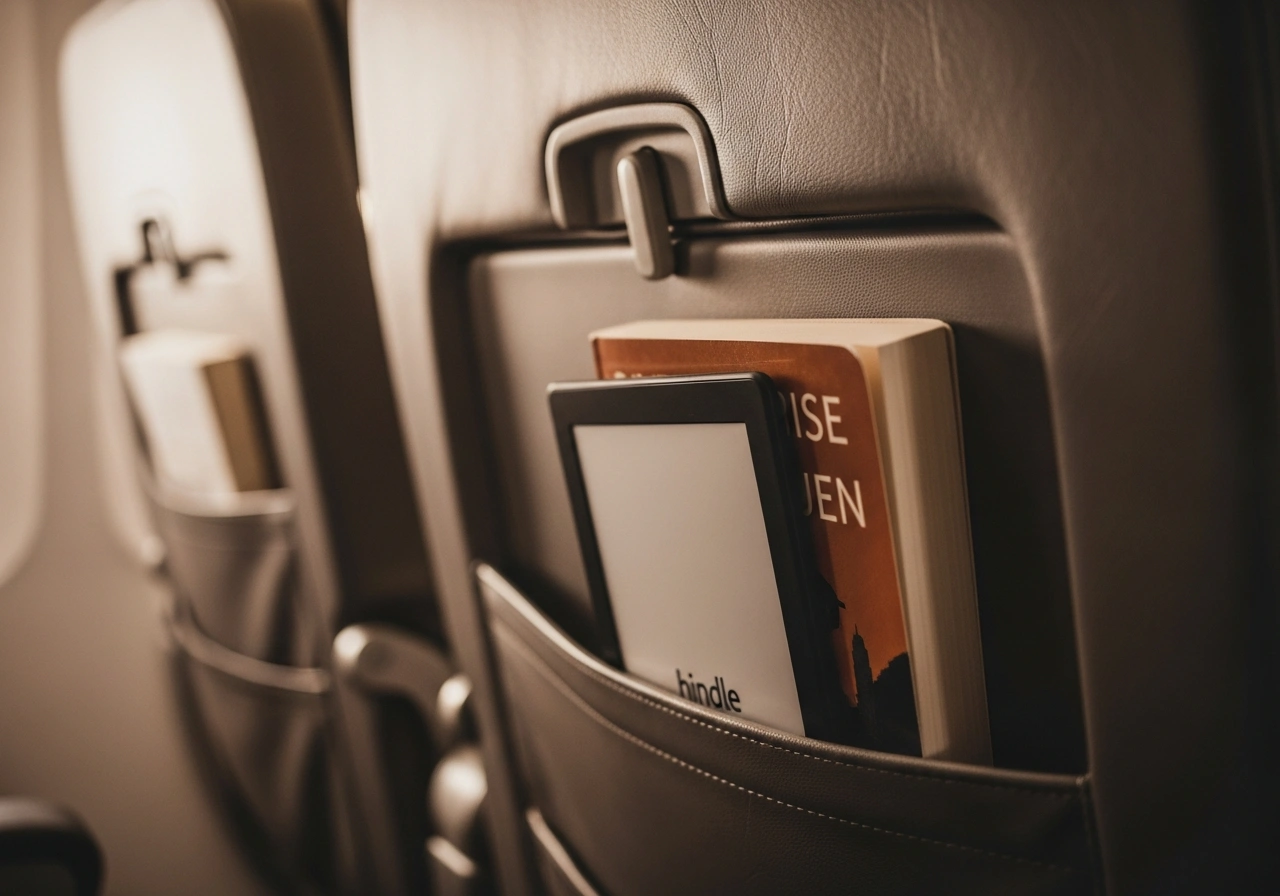
Long flights feel shorter when you have something to read. Physical books are fine, but they take up real estate in your bag. A Kindle or e-reader for flights solves that problem instantly. One slim device holds thousands of titles. It weighs almost nothing. The battery lasts weeks on a single charge. If you prefer print, go with one paperback or a folded magazine. Magazines are surprisingly space-efficient. Tuck them flat against the side of your backpack where they won’t crowd your other gear. Lightweight travel is all about making smart swaps like this. Digital reading eliminates the weight entirely while still giving you hours of entertainment during layovers and flights. It’s one of the easiest upgrades any traveler can make.
Headphones/Earbuds
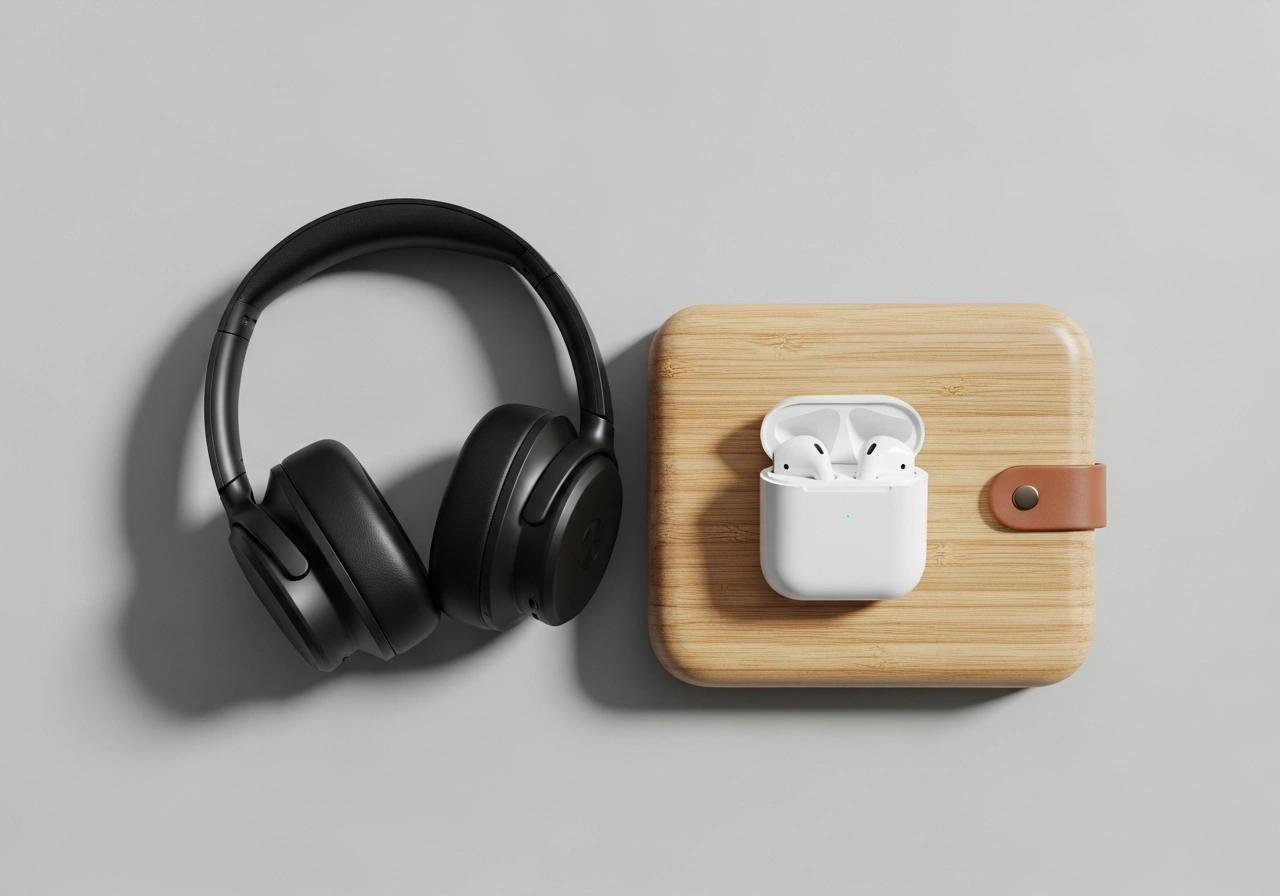
Nothing beats a good pair of headphones on a long flight. They block out crying babies, engine noise, and chatty neighbors. Noise-canceling headphones for planes are worth every penny if you fly regularly. Over-ear models like Sony WH-1000XM5 or Apple AirPods Pro deliver incredible sound and serious noise reduction. But they take up space. For a personal item bag, compact wireless earbuds are the smarter choice. They weigh almost nothing and pack into a tiny case. Whatever you choose, make sure you have a backup plan. Some flights still use older entertainment systems with 3.5mm jack ports. A small adapter costs a few dollars and saves you from silence. These are essential in-flight travel accessories that belong in every traveler’s kit. They’re also among the best travel accessories for long flights.
Extra Sweatshirt/Jacket
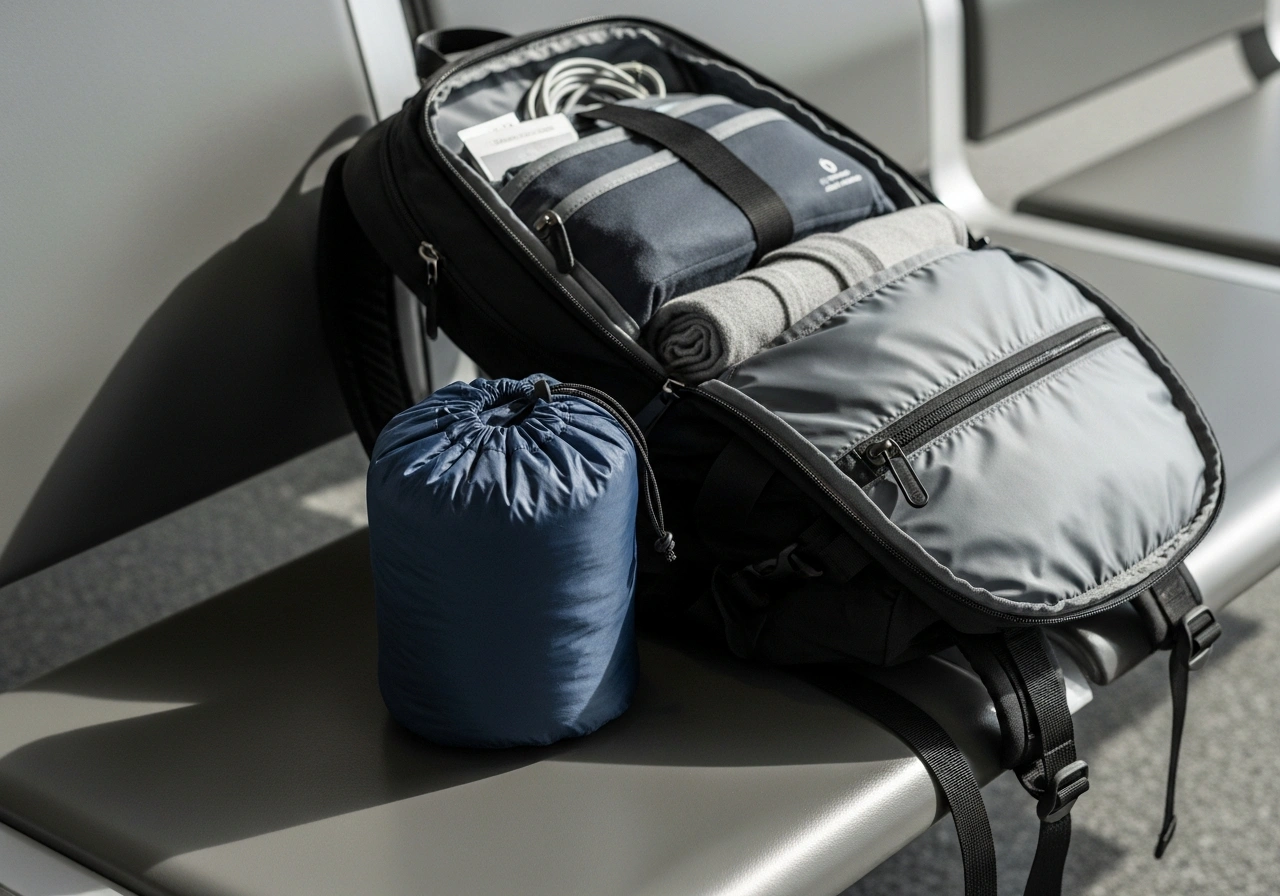
Airplane cabins are unpredictable. One minute you’re sweating. The next, you’re shivering under a thin blanket. A lightweight travel jacket or sweatshirt solves this instantly. Pack something that compresses small — a zip-up hoodie or a packable windbreaker works perfectly. These fold down to the size of a paperback book. Wear your bulkier layers onto the plane instead of packing them. That frees up serious space in your personal item. Airlines don’t count jackets as part of your carry-on or personal item allowance on most carriers. Southwest, Alaska, and United all explicitly exclude outerwear from your bag limits. This is one of the easiest ways to bring more without technically overpacking. Lightweight jackets and sweatshirts for flights keep you comfortable no matter what the cabin temperature does. It’s a simple trick that helps reduce stress while flying.
Medications
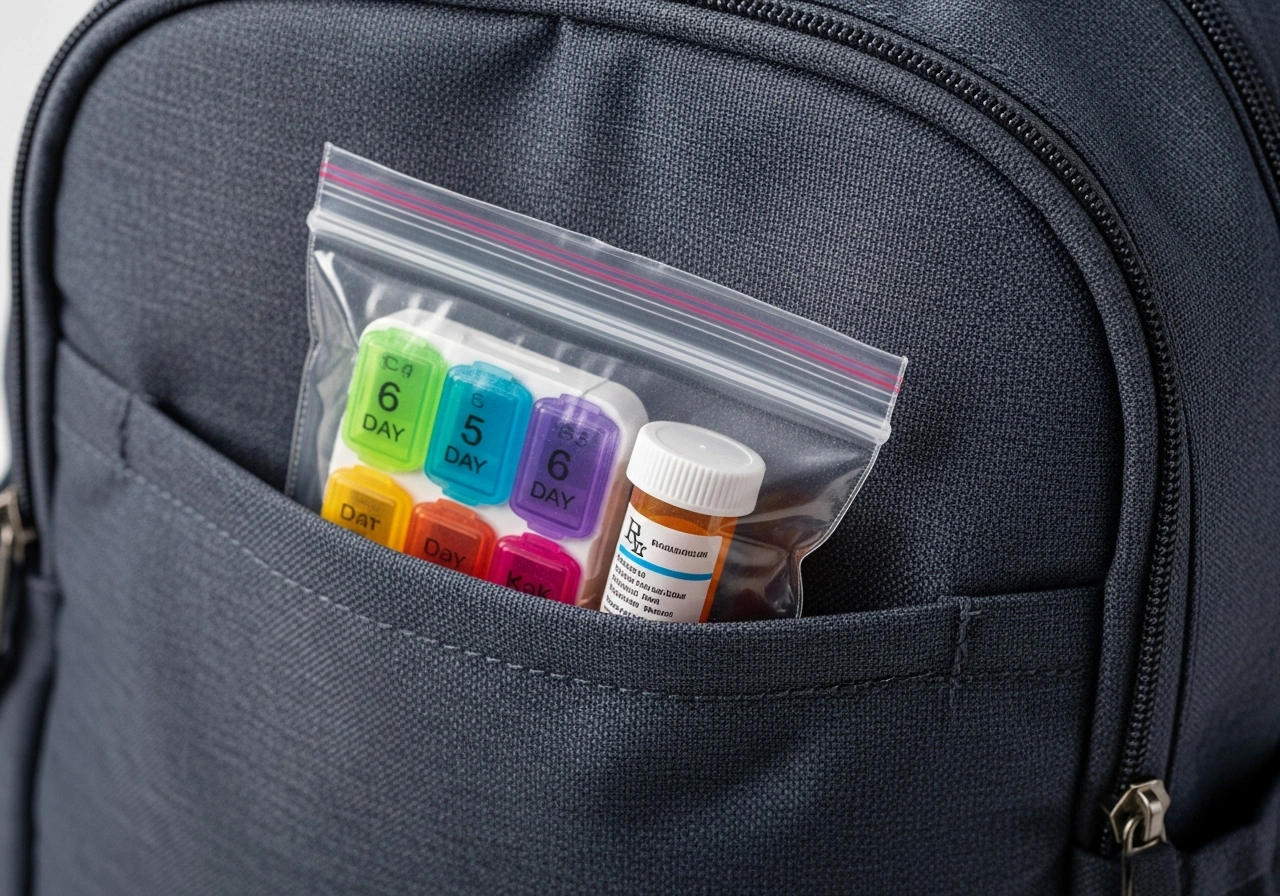
Never underestimate how important it is to pack your medications correctly. Travel-friendly medication kit planning starts well before you reach the airport. TSA allows prescription and over-the-counter medications in carry-on bags. Liquid medications are actually exempt from the standard 3.4-ounce rule — but you must declare them at the security checkpoint. Place them in a separate bin for screening. Keep medications in their original packaging whenever possible. That makes identification easier and avoids questions from security officers. Pill organizers work great for vitamins and supplements. They save space and keep everything sorted by day. Tips for packing medication and snacks in carry-on bags mean keeping both in the most accessible pocket. You want to grab them quickly during a long layover or flight without digging through everything else. This is especially important for must-have items for business or leisure flights where you need to stay focused and healthy.
Snacks
Airport food is expensive and often mediocre. Packing your own flight-ready snacks saves you real money. A single meal at an airport can run $15 to $25 easily. TSA allows most solid foods through security without issue. Great options include trail mix, granola bars, nuts, dried fruit, cheese crackers, and protein bars. Avoid anything messy or smelly. Peanut butter technically counts as a liquid under TSA rules — it must be 3.4 ounces or less in your carry-on. Travel tips for avoiding airport food expenses start with packing snacks before you leave home. Fill a small zip-lock bag or a compact snack container. These take up almost no space in your personal item. Keep them in an outer pocket for easy access during the flight. Smart snacking keeps your energy up and your wallet intact. Essential items for a comfortable plane ride always include something to eat.
Water Bottle
Staying hydrated on a plane matters more than most people realize. Cabin air is extremely dry — humidity often drops below 10 percent at cruising altitude. That dries out your throat, skin, and sinuses fast. A compact travel water bottle is an absolute must-have. Here’s the key rule: you cannot bring a filled water bottle through TSA security. Bring an empty one instead. Fill it up at a water fountain or filtered water station after you clear the checkpoint. Most major airports now have free bottle-filling stations. How to stay hydrated on a plane is simple — drink more water than you think you need. Aim for at least 8 ounces per hour of flight time. A reusable bottle with a leak-proof cap and a capacity of 16 to 20 ounces hits the sweet spot for most flights. Staying hydrated is one of the best ways to stay comfortable during a flight.
Portable Charger/Power Banks
Dead phones and laptops are a traveler’s worst nightmare. A portable charger keeps everything alive between outlets. The FAA and TSA have specific rules about power banks on planes. They must travel in your carry-on — never in checked luggage. As of March 2025, lithium-ion power banks are explicitly banned from checked bags. Power banks rated up to 100 watt-hours are allowed without any special permission. Banks between 101 and 160 watt-hours require airline approval before boarding. Most standard phone chargers fall well under that limit. Look for a compact, lightweight power bank in the 10,000 to 20,000 mAh range. That’s enough juice to charge a phone twice or a tablet once. Power banks and portable chargers are essential travel gadgets for flights that no one should skip. Knowing what gadgets should be in a personal travel bag starts right here — a power bank is always at the top of the list.
Lotion
Airplane cabins strip moisture from your skin within hours. Low humidity hits your hands and face the hardest. A small bottle of lotion in your personal item fixes this fast. TSA’s 3-1-1 rule applies here — your lotion container must be 3.4 ounces (100 ml) or less. Pack it in a clear quart-sized zip-lock bag along with any other liquids like lip balm or hand cream. Travel-size containers are widely available at every drugstore. Buy a few and keep them stocked in your go-to travel bag. This way you never have to remember to repack them before a trip. Moisturized skin feels better. It also heals faster after long hours in dry, recycled cabin air. It’s a small item that makes a surprisingly big difference in your overall comfort.
Hand Sanitizer/Wipes
Airplanes are shared spaces. Hundreds of hands touch the same armrests, tray tables, and seat belts before yours. Hand sanitizer and antibacterial wipes are two of the smartest things you can throw into your personal item. Hand sanitizer must follow the 3.4-ounce rule in your carry-on. A small travel-size bottle works perfectly. Wipes have no liquid restriction — pack as many as you want. Use them on tray tables, seat belts, and headrest covers before you settle in. Studies have consistently shown that tray tables carry more bacteria than airplane toilets. That fact alone justifies packing a small sleeve of wipes. These are essential flight comfort items that protect your health without adding any real weight to your bag.
Tissues
Tissues might seem like an afterthought. But once you need them mid-flight, you’ll wish you had packed them. Dry cabin air irritates your nose and throat. Allergies flare up in recycled air. A small travel pack of tissues handles all of it. They weigh almost nothing. A single pocket-sized pack takes up less space than a credit card wallet. Tuck one into the outer pocket of your personal item where you can grab it instantly. You won’t have to fumble through your bag or ask a flight attendant for one. Must-have items for business or leisure flights always include something for nose and throat comfort. Tissues also come in handy for cleaning up spills, wiping down surfaces, or dealing with unexpected messes during layovers. They’re one of those quiet essentials that every experienced traveler keeps on hand.
Final Thoughts
A well-packed personal item packing list is one of the easiest ways to fly smarter. You don’t need a massive suitcase to be prepared. Everything on this list fits comfortably inside a single under-seat bag. Start with the right travel bag. Add your electronics, comfort items, and snacks. Follow your airline’s size rules to the inch. And you’ll board every flight feeling ready for whatever comes next. This personal item packing list works for every major U.S. airline. Travel doesn’t have to be stressful. It starts with knowing exactly what to bring — and exactly how much space you have to bring it in.