Your Complete Guide to Exploring Rock Island State Park [Wisconsin]
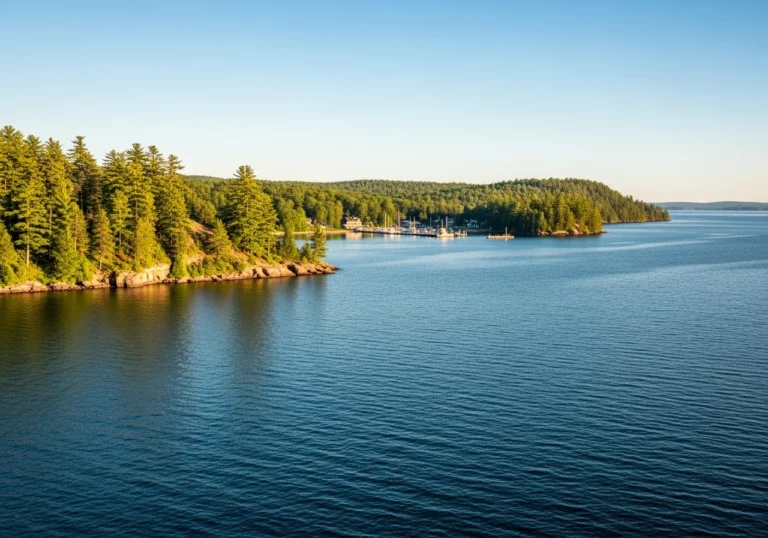
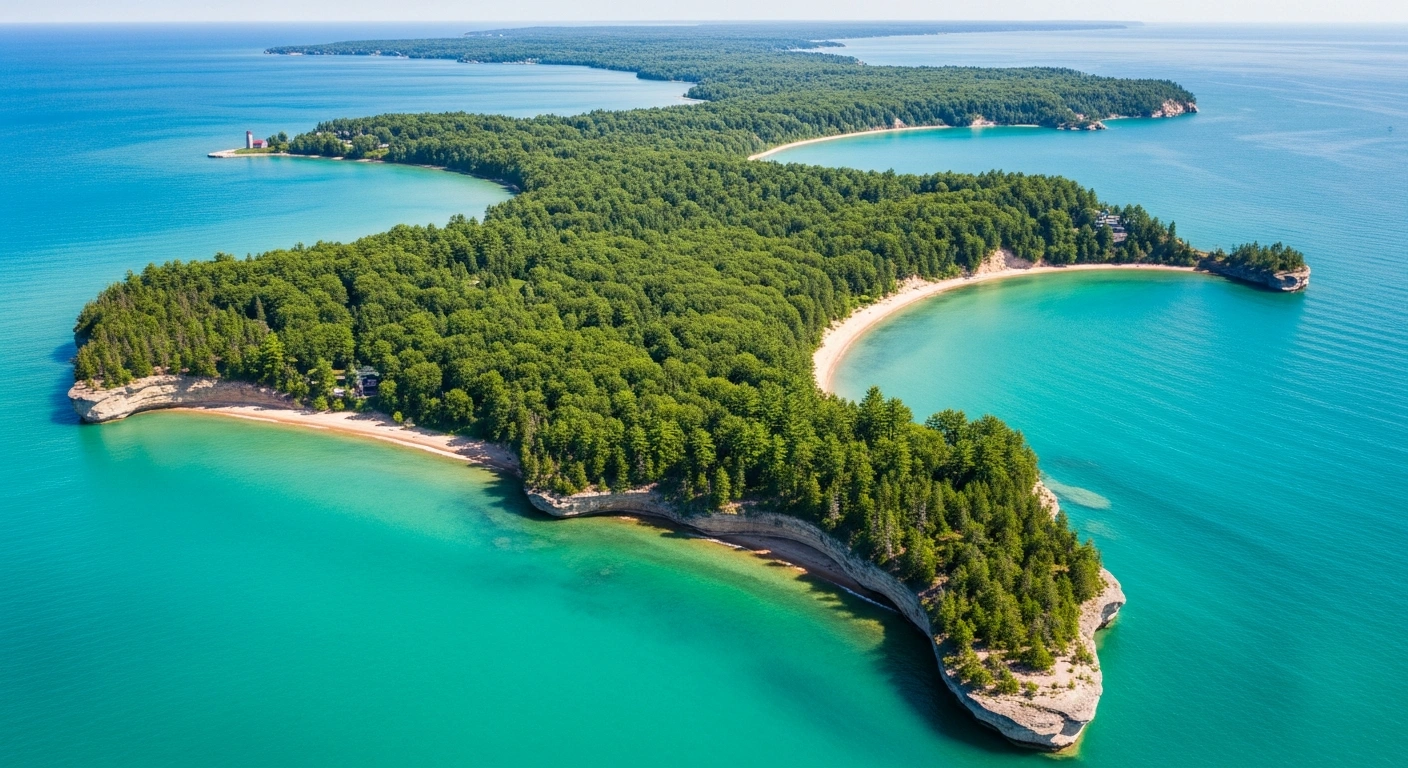
Imagine stepping onto an island where cars don’t exist and nature reigns supreme. Rock Island State Park Wisconsin offers precisely this extraordinary escape. Located off the tip of Wisconsin’s Door County, this remote and primitive island beckons adventurers seeking solitude. The car-free island experience transforms your visit into something magical. Waves crash against limestone cliffs while ancient forests whisper secrets. This peaceful and quiet destination sits beyond Washington Island, accessible only by ferry. For those curious about exploring the broader region, “Washington Island Wisconsin: The Ultimate Travel Guide for First-Time Visitors, Families & Slow Travelers” provides detailed tips for making the most of your time on this nearby gem. You’ll discover Wisconsin’s oldest lighthouse standing sentinel over Lake Michigan’s azure waters. Whether you’re planning a Rock Island day trip or extended camping adventure, this guide unlocks everything you need.
The journey to Rock Island Wisconsin requires commitment, yet rewards exceed expectations. No restaurants, gift shops, or WiFi distract from raw wilderness beauty. Instead, you’ll find scenic hiking trails weaving through cedar forests and along pristine beaches. The overnight camping experience connects you with nature’s rhythms. Stars blaze overhead without light pollution obscuring their brilliance. Mornings arrive with birdsong instead of alarm clocks. This comprehensive guide walks you through history, logistics, accommodations, and activities. By the end, you’ll possess insider knowledge to craft an unforgettable Door County outdoor activities experience. Let’s embark on this adventure together.
History of Rock Island State Park
Rock Island State Park Wisconsin carries centuries of fascinating human stories within its 912 acres. Native American peoples first inhabited these shores over a millennium ago, fishing Lake Michigan’s abundant waters and gathering island resources. Archaeological evidence reveals seasonal encampments where indigenous communities thrived in harmony with nature. French explorers later charted these Lake Michigan islands during their 17th-century voyages, noting the strategic location for trade routes. By the 1830s, Icelandic fishermen established temporary settlements, drawn by whitefish populations teeming in surrounding waters. The island’s historic preservation efforts now protect these layered cultural narratives, ensuring future generations understand the depth of human connection to this land.
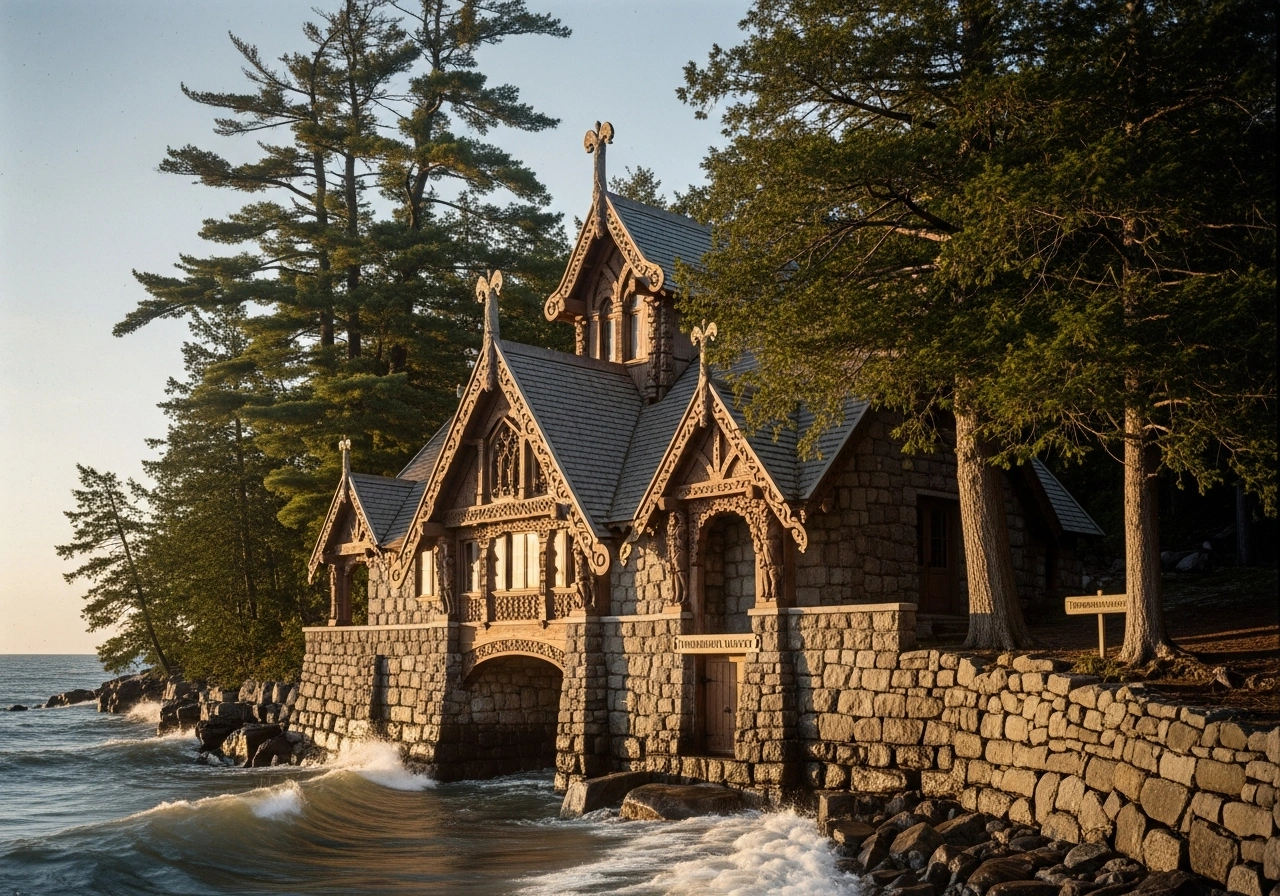
Chester Hjortur Thordarson transformed Rock Island’s destiny during the early 20th century. This Icelandic-born inventor and electrical engineer purchased the island in 1910, envisioning a private retreat celebrating his heritage. Thordarson commissioned the construction of Viking Hall, a magnificent boathouse embodying Icelandic architecture with intricate carvings and stonework. He planted European trees, built pathways, and created a sanctuary reflecting Old World aesthetics. Following Thordarson’s death, Wisconsin acquired the property in 1965, establishing it among Door County state parks. The park establishment prioritized natural beauty preservation while honoring the inventor’s legacy. Today, visitors explore remnants of Thordarson’s vision alongside wilderness that predates human habitation, experiencing a unique temporal collision.
How to Get To Rock Island State Park
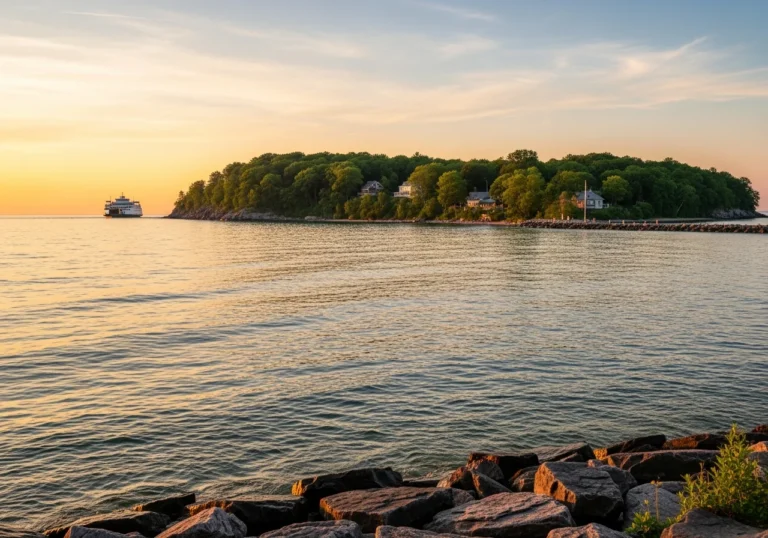
Reaching Rock Island State Park Wisconsin requires a two-ferry journey that heightens anticipation with each nautical mile. Your adventure begins on the mainland, where you’ll board a ferry from Northport Pier or Gills Rock to Washington Island Wisconsin. Multiple ferry companies operate this route, with crossings taking approximately thirty minutes across Death’s Door strait. Vehicles can accompany passengers on this initial leg, though you’ll park once reaching Washington Island. The crossing offers spectacular views of Door County’s limestone cliffs and sapphire waters. Ferry schedules vary seasonally, with more frequent departures during summer months. Reservations aren’t typically required for this mainland connection, but arriving early prevents disappointment during peak weekends.
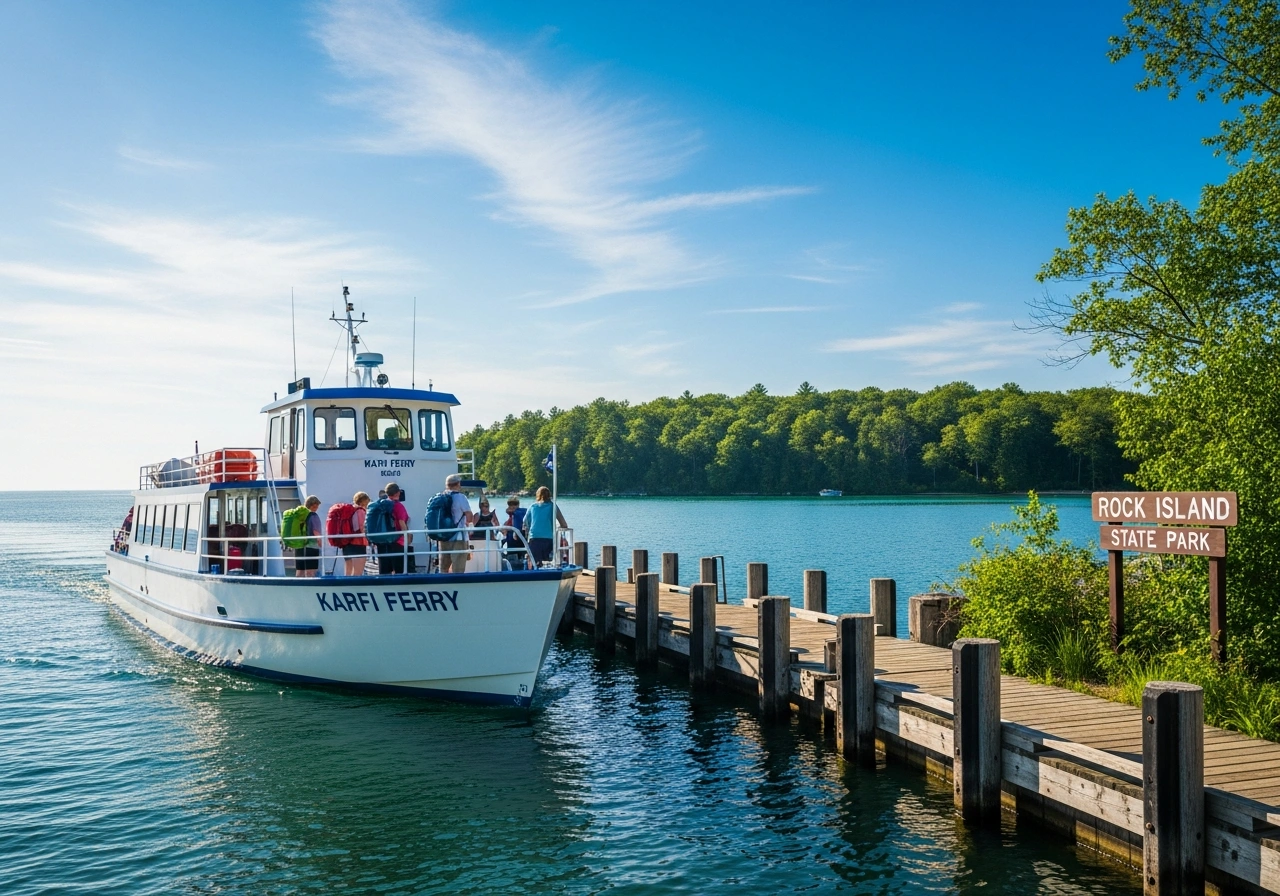
The second leg involves transitioning to the Karfi Ferry, a passenger-only vessel departing from Jackson Harbor on Washington Island’s northern shore. This ferry access only approach to Rock Island maintains the park’s pristine character by prohibiting vehicles. The Rock Island ferry operates from late May through Columbus Day weekend, weather permitting. Crossings occur several times daily, with the ten-minute voyage providing your final approach to wilderness. No advance reservations exist for the Karfi, operating on a first-come basis with nominal fees. Passengers must carry all gear and supplies, as no services exist on the island. The ferry schedule and access information updates annually, so checking Wisconsin DNR’s website before departing ensures accurate timing. Planning your departure times around these schedules becomes crucial for seamless island access.
| Ferry Route | Duration | Vehicle Access | Season | Reservation |
|---|---|---|---|---|
| Mainland to Washington Island | 30 minutes | Yes | Year-round | Recommended peak season |
| Washington Island to Rock Island | 10 minutes | No | Late May – October | Walk-on only |
Where to Stay on Rock Island
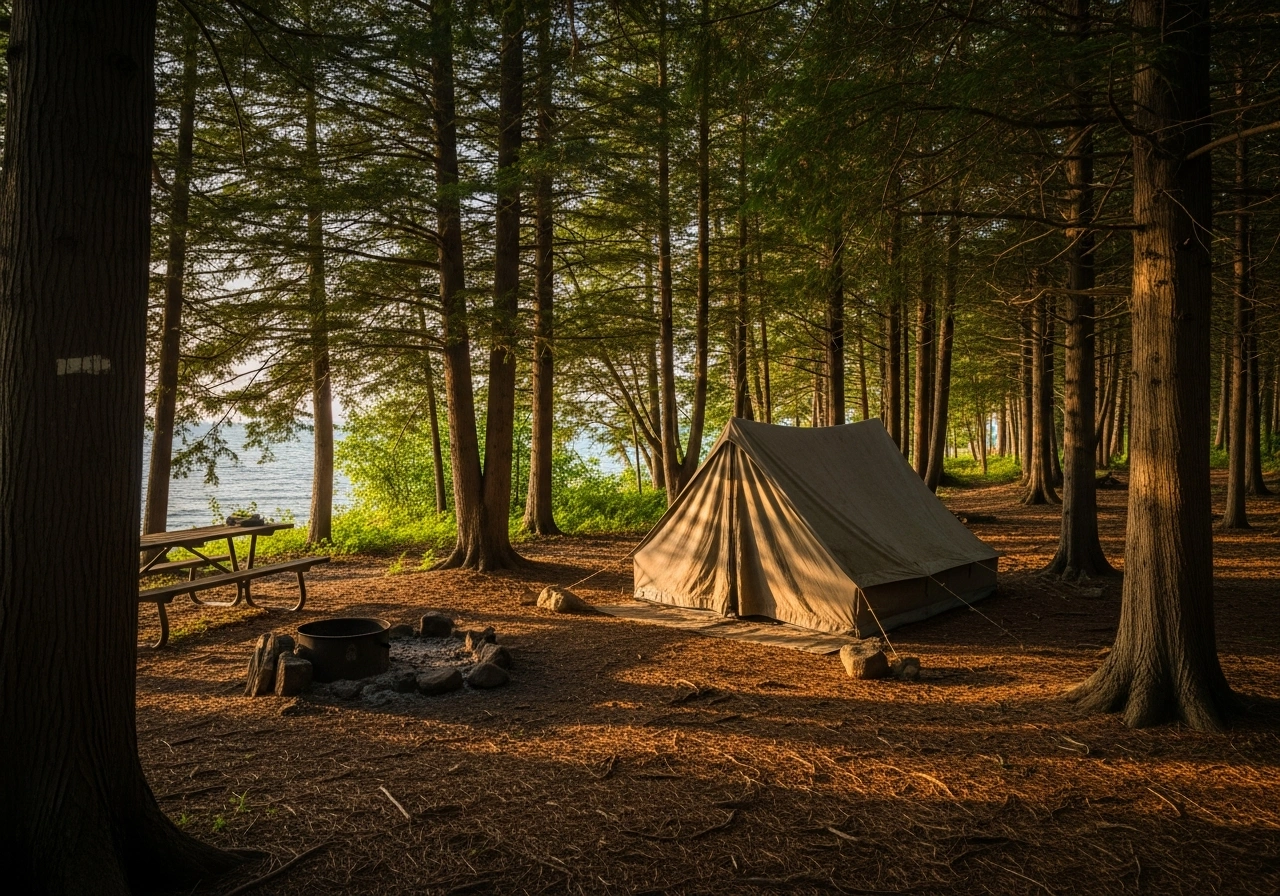
Rock Island camping epitomizes the primitive state park Wisconsin experience, offering forty lakefront campsites scattered across the island’s southern and eastern shores. These backcountry camping spots range from beachfront locations with stunning sunrise views to forested sites providing shade and shelter. Each campsite features a fire ring and picnic table, yet amenities end there. No electricity, showers, or modern conveniences interrupt your wilderness immersion. The rustic accommodations philosophy embraces simplicity, allowing nature’s soundtrack to replace urban noise. Reservations through Wisconsin’s state park system become essential during summer weekends, as these coveted tent sites fill quickly. Group camps accommodate larger parties, though individual sites suit most visitors perfectly.
Distance from the ferry landing to various camping zones varies considerably, influencing gear-carrying logistics. Nearest sites sit roughly a quarter-mile from the dock, while remote locations require hiking up to two miles with full packs. The Rock Island campground layout deliberately spaces sites for privacy, preventing crowded conditions. Water availability comes from a single fresh water spigot near the ranger station, necessitating containers for transporting to your site. Pit toilets serve campers, strategically positioned throughout camping areas. Those preferring off-grid camping with zero amenities will find paradise here. Alternatively, visitors uncomfortable with primitive conditions might choose Washington Island Wisconsin lodging options, making Rock Island day trip excursions instead. Several B&Bs, inns, and vacation rentals on Washington Island provide comfortable bases for exploring Rock Island without overnight camping commitment.
What to Bring to Rock Island
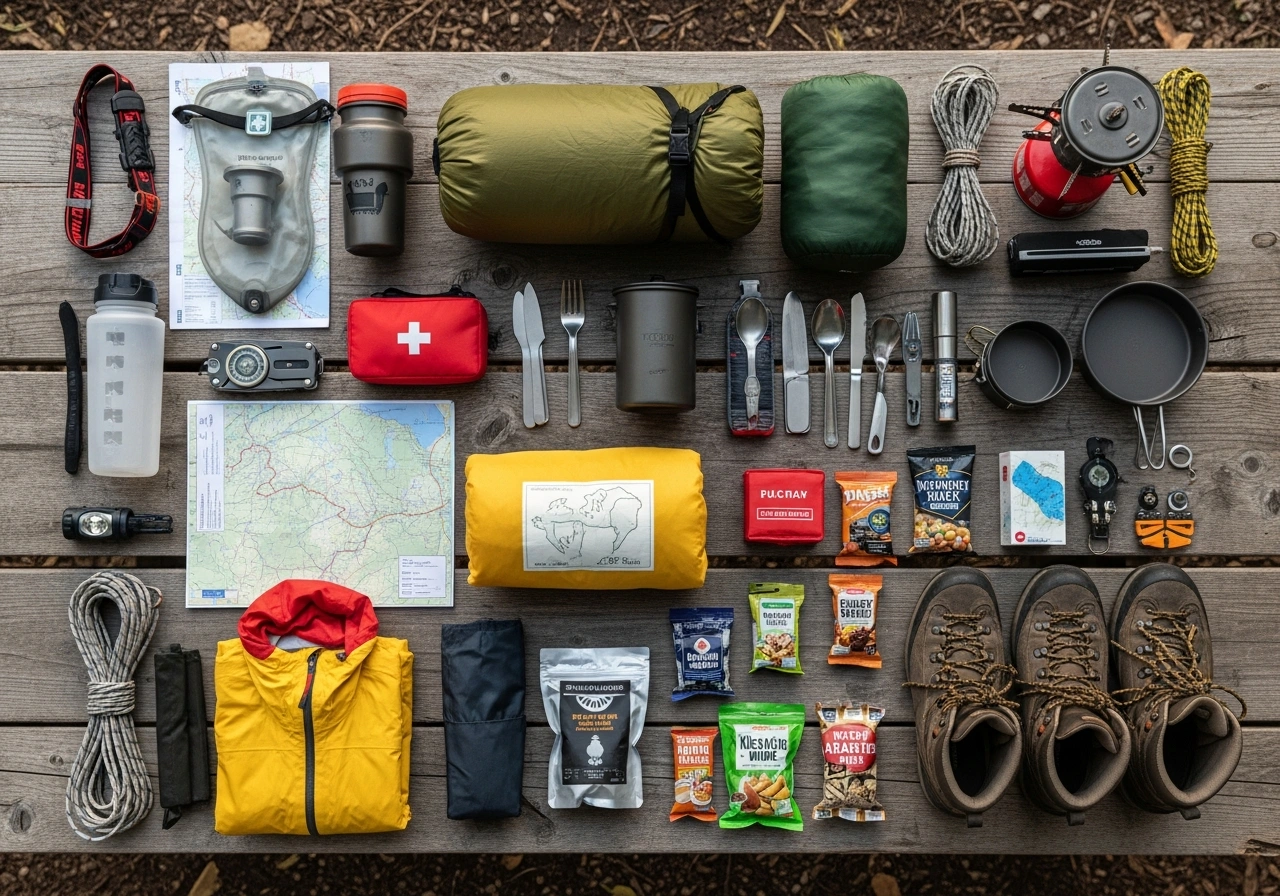
Packing appropriately for Rock Island State Park Wisconsin separates comfortable adventures from miserable ordeals. Essential gear begins with a quality tent capable of withstanding Lake Michigan’s unpredictable weather patterns. Sudden storms blow across the water, bringing wind and rain within minutes. Sleeping bags rated for temperatures ten degrees below forecasts provide insurance against chilly nights. Cooking equipment must be portable yet functional—backpacking stoves work better than campfires during fire bans. Your camping checklist should include waterproof matches, cookware, utensils, and biodegradable soap. Layered clothing proves invaluable, as temperatures fluctuate dramatically between sunny afternoons and cool evenings. Rain gear belongs in every pack, regardless of optimistic forecasts.
Water management demands particular attention since potable water comes from a single source. Collapsible water containers allow transporting sufficient quantities to your campsite without excessive weight. Many experienced campers bring water purification tablets or filters as backup, though the provided water remains safe. Food storage requires bear-safe practices despite black bears being uncommon on the island. Hanging food bags or using sealed containers prevents curious wildlife from investigating your provisions. Navigation tools including detailed maps and compasses complement GPS devices, as cell service remains unreliable. Your wilderness preparation kit must include comprehensive first aid supplies, sunscreen, insect repellent, and any prescription medications. Emergency supplies like whistles, flashlights, and extra batteries could prove lifesaving. Trash bags for packing out all waste demonstrate environmental stewardship that preserves this peaceful and quiet destination for future visitors.
What to do on Rock Island
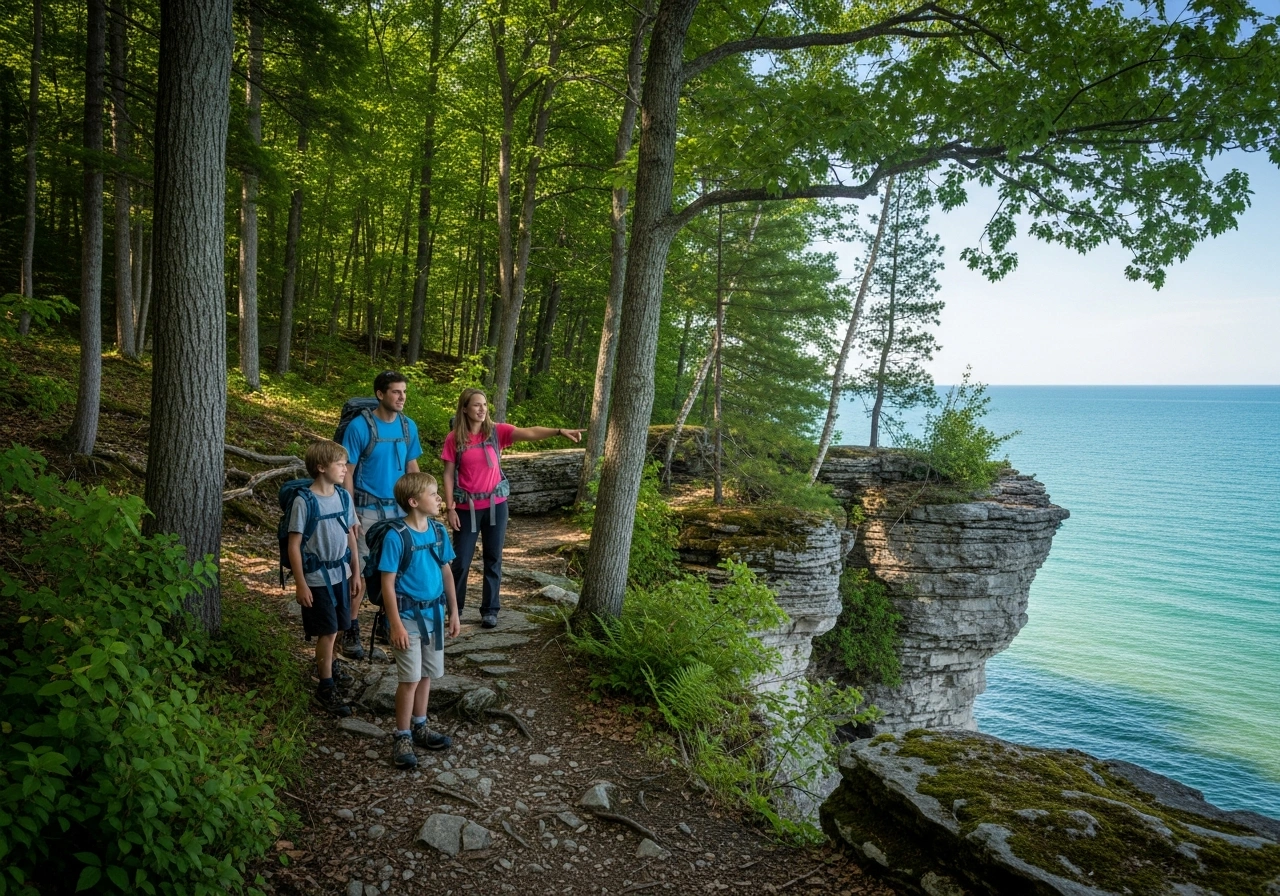
Rock Island State Park Wisconsin transforms visitors into explorers through diverse outdoor recreation opportunities. The island’s compact size—roughly 900 acres—belies the abundance of experiences awaiting discovery. Unlike developed parks offering organized activities, Rock Island rewards self-directed island exploration where you craft your own adventure. Summer months provide ideal conditions for nature activities, with comfortable temperatures and extended daylight hours. Spring and fall offer solitude alongside migrating birds and autumn colors. Each season paints the landscape differently, encouraging repeat visits. The remote islands in Wisconsin character means embracing unplugged experiences without distractions. Digital detoxes happen naturally when smartphones lose signal and entertainment comes from waves, wind, and wildlife.
Planning your days involves balancing active pursuits with relaxation in this family-friendly nature trails environment. Mornings might begin with sunrise beach walks before temperatures climb. Midday heat encourages swimming or shaded rest before afternoon explorations. Evenings bring spectacular sunsets over Lake Michigan, best enjoyed from western shore vantage points. The car-free island experience means walking everywhere, turning simple tasks into mini-adventures. Fetching water from the spigot becomes an opportunity for encountering fellow campers and wildlife. Distances feel amplified when carrying gear, yet the pace aligns perfectly with island rhythms. Whether visiting for a quick Rock Island day trip or extended overnight camping experience, activities blend seamlessly into nature’s flow rather than following rigid schedules.
Hike the Island
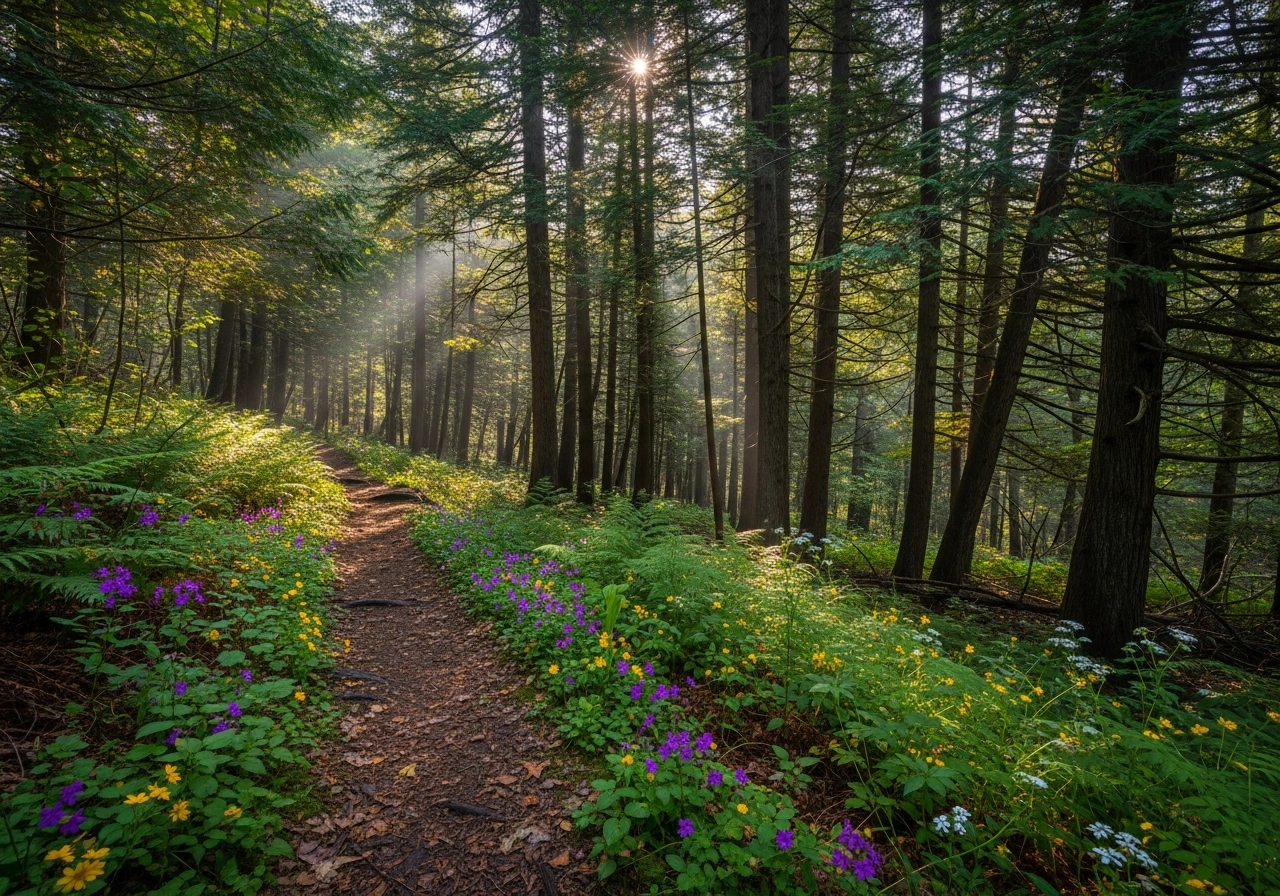
Rock Island hiking trails network spans approximately ten miles of forest and shoreline trails, showcasing diverse ecosystems within compact geography. The Thordarson Loop Trail circles the island’s perimeter, offering hiking along the shoreline where limestone formations meet Lake Michigan’s waves. This five-mile route takes three to four hours at a leisurely pace, with numerous photo opportunities at scenic overlooks. Interior paths cut through dense cedar forests where sunlight filters through canopy, creating cathedral-like atmospheres. Trail conditions range from smooth to rocky, requiring sturdy footwear for ankle support. Markers guide navigation, though junctions occasionally confuse first-time visitors. Carrying maps prevents unintended detours and ensures you discover hidden gems like secluded coves and wildlife viewing spots.
Scenic hiking trails reveal the island’s geological and biological diversity with each step. Wildflowers carpet meadows during spring and summer, attracting butterflies and pollinators. White-tailed deer browse forest edges, surprisingly comfortable with human presence. Birdwatchers identify dozens of species, from eagles soaring overhead to warblers flitting through underbrush. The Lake Michigan shoreline trails present constantly changing vistas as you round each point and bay. Beach walking becomes trail hiking where paths meet sand, blurring recreational boundaries. Winter enthusiasts occasionally visit for snowshoeing adventures, transforming familiar routes into crystalline wonderlands. Regardless of season, these summer hiking destination trails accommodate all fitness levels when hikers choose appropriate distances and pacing.
Take a Tour of Pottawatomie Lighthouse
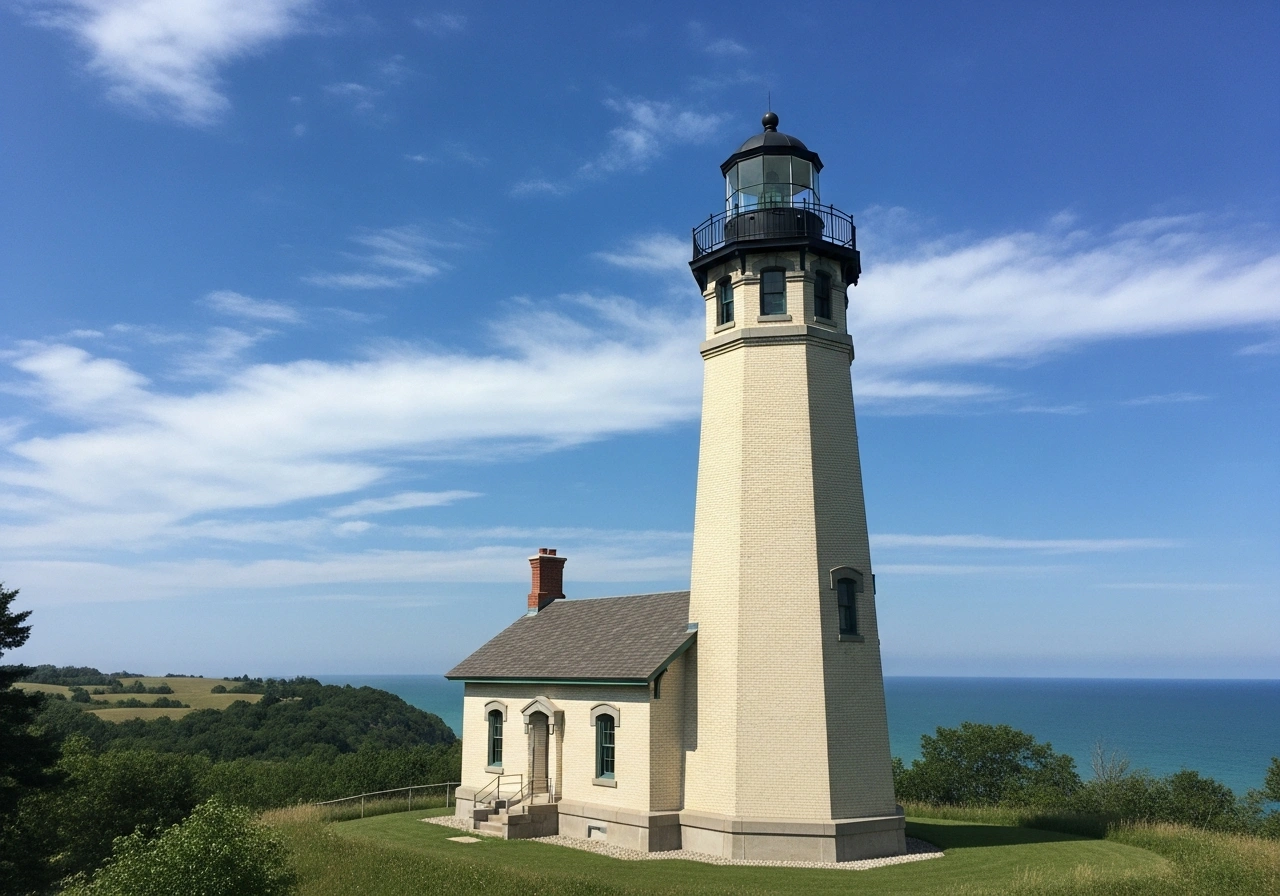
The Pottawatomie Lighthouse stands as Wisconsin’s first lighthouse, constructed in 1836 to guide vessels through treacherous Death’s Door passage. This historic lighthouse tour transports visitors backward through maritime history when Lake Michigan shipping drove regional economies. The original structure—a cream brick dwelling with attached tower—exemplifies functional architecture from America’s early industrial era. Restoration efforts have maintained period authenticity while ensuring structural integrity. Climbing the spiral staircase to the lantern room rewards effort with panoramic views spanning Washington Island, Door County’s mainland, and endless water horizons. The keeper’s quarters display period furnishings and interpretive exhibits explaining lighthouse operations and family life in isolation.
Guided tours operate during summer months, led by knowledgeable volunteers sharing fascinating anecdotes about lighthouse keepers who maintained the beacon through harsh winters. These families endured extreme isolation, with supply deliveries arriving irregularly and medical help days away. The maritime heritage embedded in these walls speaks to human resilience and dedication to saving sailors’ lives. Photography enthusiasts find endless compositions combining architectural details with natural backdrops. The lighthouse area provides perfect picnic spots where you can contemplate island preservation and history while enjoying packed lunches. Access requires a moderate hike from camping areas, making it an excellent half-day excursion. The historic preservation work ensuring this landmark’s survival deserves visitor appreciation and support through modest tour fees funding ongoing maintenance.
Conclusion
Rock Island State Park Wisconsin stands apart from typical vacation destinations through its commitment to wilderness preservation and authentic outdoor escape experiences. This remote and primitive island challenges visitors to disconnect from modern conveniences while reconnecting with nature’s essential rhythms. The car-free island experience eliminates automotive noise and pollution, replacing them with wind through trees and waves on stone. Whether exploring Rock Island hiking trails, touring the Pottawatomie Lighthouse, kayaking transparent waters, or simply lounging on pristine beaches, each moment here feels like a gift. The primitive state park Wisconsin ethos might seem daunting initially, yet most visitors discover that simplicity enhances rather than diminishes enjoyment.
Planning your trip planning starts with checking ferry schedule and access details on Wisconsin DNR’s website, as seasonal variations affect availability. Summer weekends book quickly, so reserving campsites well in advance prevents disappointment. Those new to backcountry camping might consider a Rock Island day trip first, testing comfort levels before committing to overnight stays. Regardless of visit duration, Rock Island rewards preparation, flexibility, and appreciation for unspoiled landscapes. Among Door County state parks and Wisconsin’s many natural treasures, Rock Island holds special status as a place where wilderness still dictates terms. Your Wisconsin getaway here won’t feature luxury amenities or guided entertainment, but it offers something increasingly rare—genuine solitude, natural beauty, and space for personal reflection. Start planning your island adventure today, and discover why those who visit this natural retreat often return year after year.