3-Day Washington DC Itinerary: Best Monuments, Tours, and More
Washington DC is unlike any other city in America. It’s the nation’s living museum — a place where history doesn’t sit behind velvet ropes collecting dust but actively shapes the present moment in ways you can see, touch, and walk through every single day. The Washington DC itinerary you plan here will include free world-class museums, iconic monuments that stop you in your tracks, charming historic neighborhoods, and green parkland that feels miles away from the political machinery humming just blocks away. Whether you’re a first-time visitor or returning to discover neighborhoods you missed before, three days in this extraordinary city rewards every minute of intentional planning.
How to Get to Washington DC
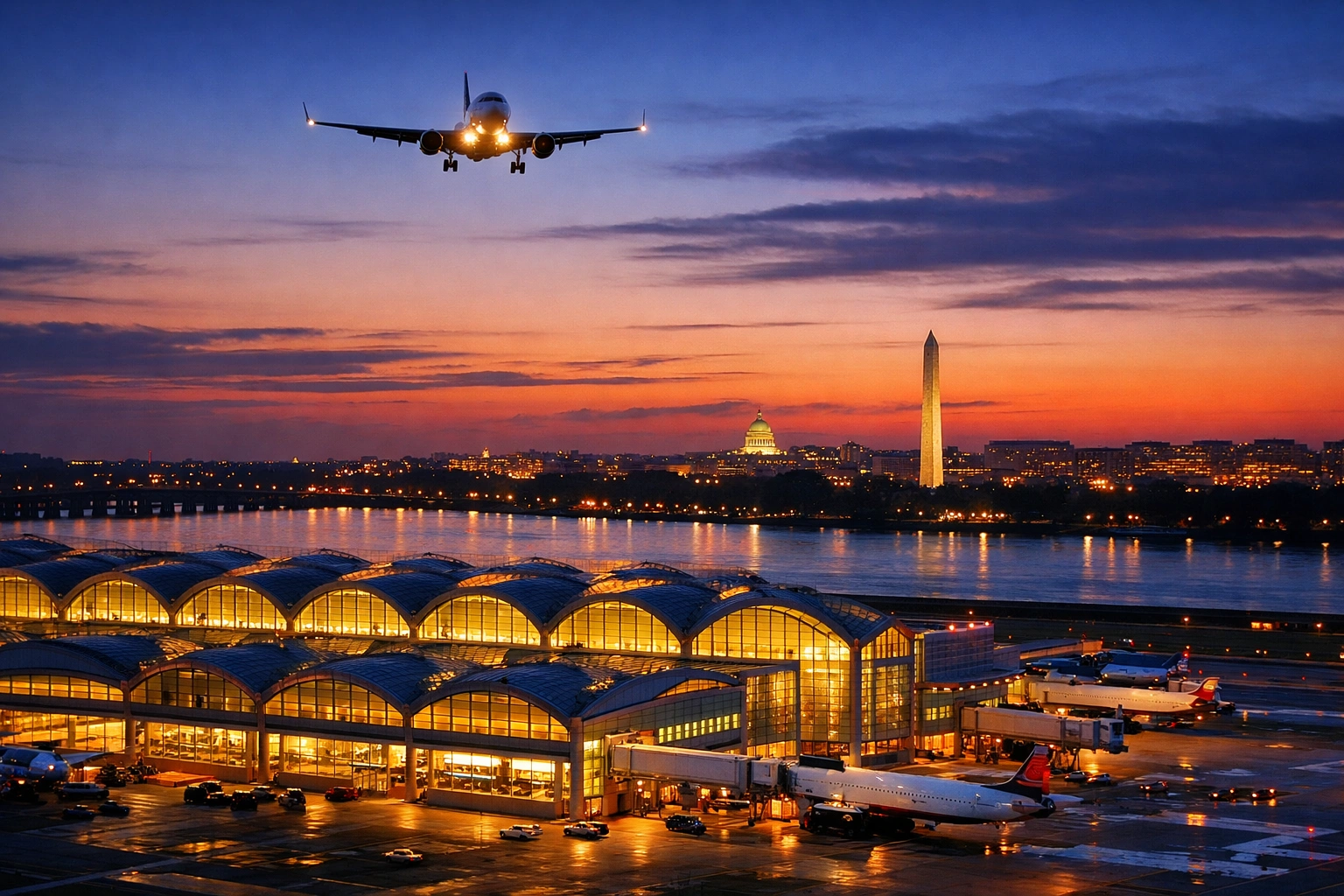
Washington DC is one of the most accessible cities in the entire United States — served by three major airports, two major train stations, an extensive interstate highway network, and reliable long-distance bus services that connect it to virtually every corner of the East Coast. Ronald Reagan Washington National Airport sits just across the Potomac River in Arlington, Virginia — approximately 4 miles from downtown DC — and connects directly to the Metrorail system via the Blue and Yellow lines making it the clear first choice for most domestic travelers. The Washington Dulles International Airport handles most international arrivals and lies approximately 26 miles west of downtown in Loudon County, Virginia — a Silver Line Metro extension now connects Dulles directly to the DC Metro system making the journey considerably more straightforward than the shuttle-and-taxi combination it previously required. Baltimore Washington International Airport serves budget airline travelers arriving on Southwest and Spirit and sits about 32 miles northeast — MARC commuter rail and Amtrak provide convenient connections to Union Station Washington DC for approximately $9 one-way.
For travelers arriving from the Northeast Corridor — New York, Philadelphia, Boston — Amtrak train service represents a genuinely superior alternative to flying. The Acela Express from New York Penn Station reaches Union Station Washington DC in approximately 2.5 hours with zero airport security theater involved and drops you directly in the heart of Capitol Hill with immediate Metrorail connection to every DC neighborhood. The Washington DC transportation guide for road trip arrivals is straightforward: Interstate 95 connects from the north and south while I-66 and I-70 serve western approaches — but parking in DC is expensive, limited, and genuinely unnecessary given the Metro system’s quality and coverage. Big Bus Tours and Old Town Trolley Tours offer hop-on-hop-off options for visitors who prefer guided transportation between major attractions rather than navigating independently.
Where to Stay in Washington DC
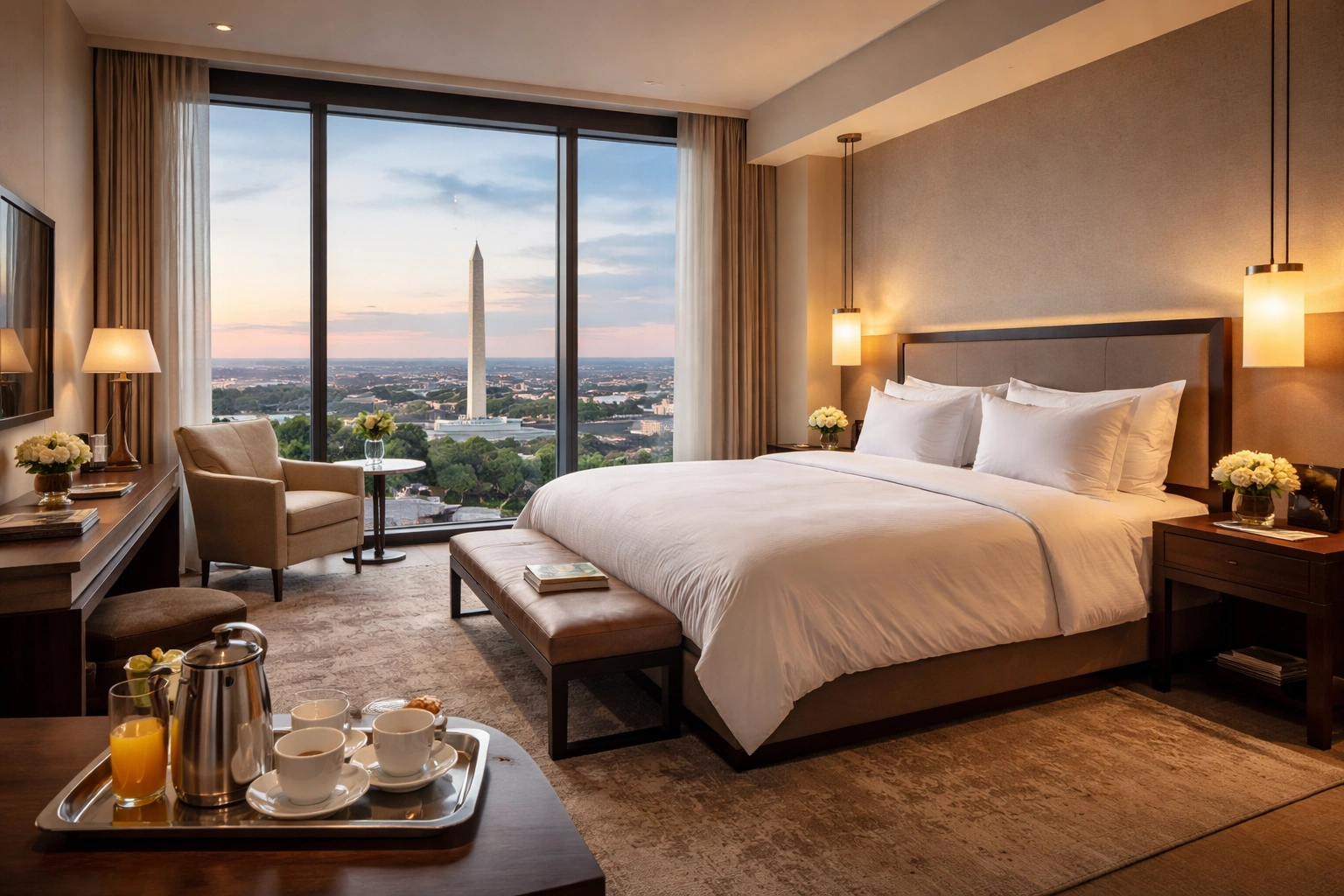
Location selection in Washington DC carries more weight than in almost any other American city because the city’s geography clusters different attraction types in distinct neighborhoods that are genuinely inconvenient to reach from each other without transportation planning. Downtown DC — the area immediately surrounding the White House, Washington Monument, and the National Mall — provides the most convenient base for monument and museum-focused visitors. The Willard InterContinental at $350 to $500 per night puts you two blocks from the White House in one of the most historically significant hotels in American history — presidents, dignitaries, and world leaders have stayed here since 1818. The Kimpton Hotel Madera in Dupont Circle runs $180 to $260 per night and delivers boutique charm in a walkable neighborhood with excellent restaurant access. Pod DC provides budget-conscious travelers with clean, well-designed compact rooms from $120 per night in a Penn Quarter location ideal for Washington DC sightseeing.
you may also like this:5 Festive Things to Do in Janesville, WI During the Holiday Season (2024)
| Neighborhood | Best For | Nightly Rate | Key Attractions Nearby |
|---|---|---|---|
| Downtown DC | First-timers, monuments | $180–$350 | White House, National Mall |
| Capitol Hill | History enthusiasts | $150–$280 | US Capitol, Union Station |
| Georgetown | Charm, dining, shopping | $200–$380 | C&O Canal, Potomac River |
| Dupont Circle | Local feel, nightlife | $140–$260 | Metro connected, restaurants |
| The Wharf DC | Waterfront, modern | $220–$400 | Potomac waterfront, dining |
How to Get Around Washington DC
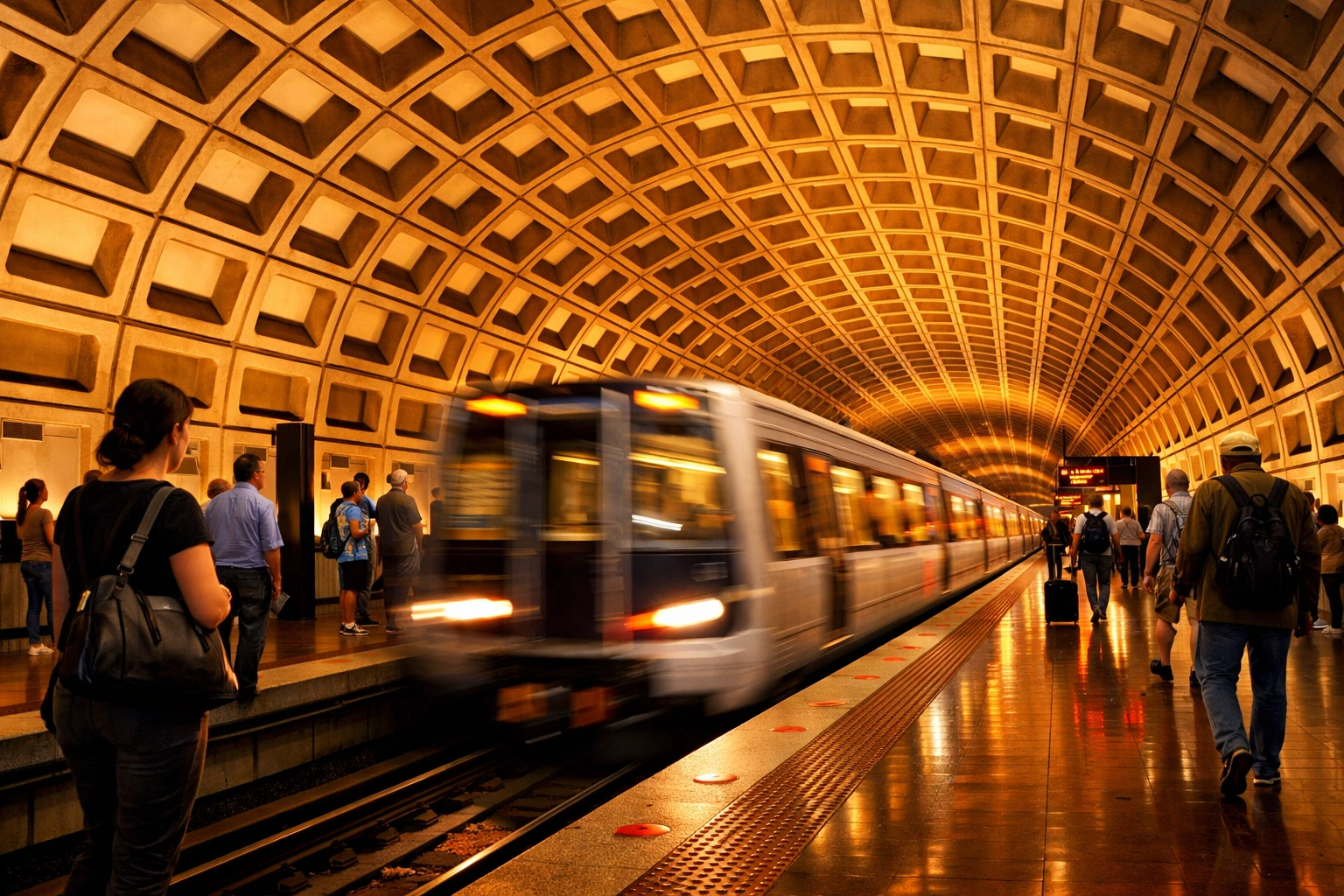
The Washington DC metro system — officially called Metrorail — is one of the cleanest, safest, and most architecturally beautiful subway systems in America. Six color-coded lines serve the city and its Virginia and Maryland suburbs with stations at every major tourist destination. A SmarTrip card loaded with $20 to $30 handles a full day of Metrorail travel — purchase one at any station entrance for $2 plus the initial load amount. The Washington DC public transport system’s key stations for tourists include Metro Center (transfers between Red, Blue, Orange, and Silver lines), Smithsonian (National Mall museums), Capitol South (US Capitol area), Foggy Bottom (Lincoln Memorial area), and Woodley Park (National Zoo). Metrobus extends the network into neighborhoods the rail lines don’t reach directly and the DC Circulator — a dedicated tourist-focused bus system — runs circular routes connecting Georgetown, the National Mall, the Union Station Washington DC area, and The Wharf DC for just $1 per ride.
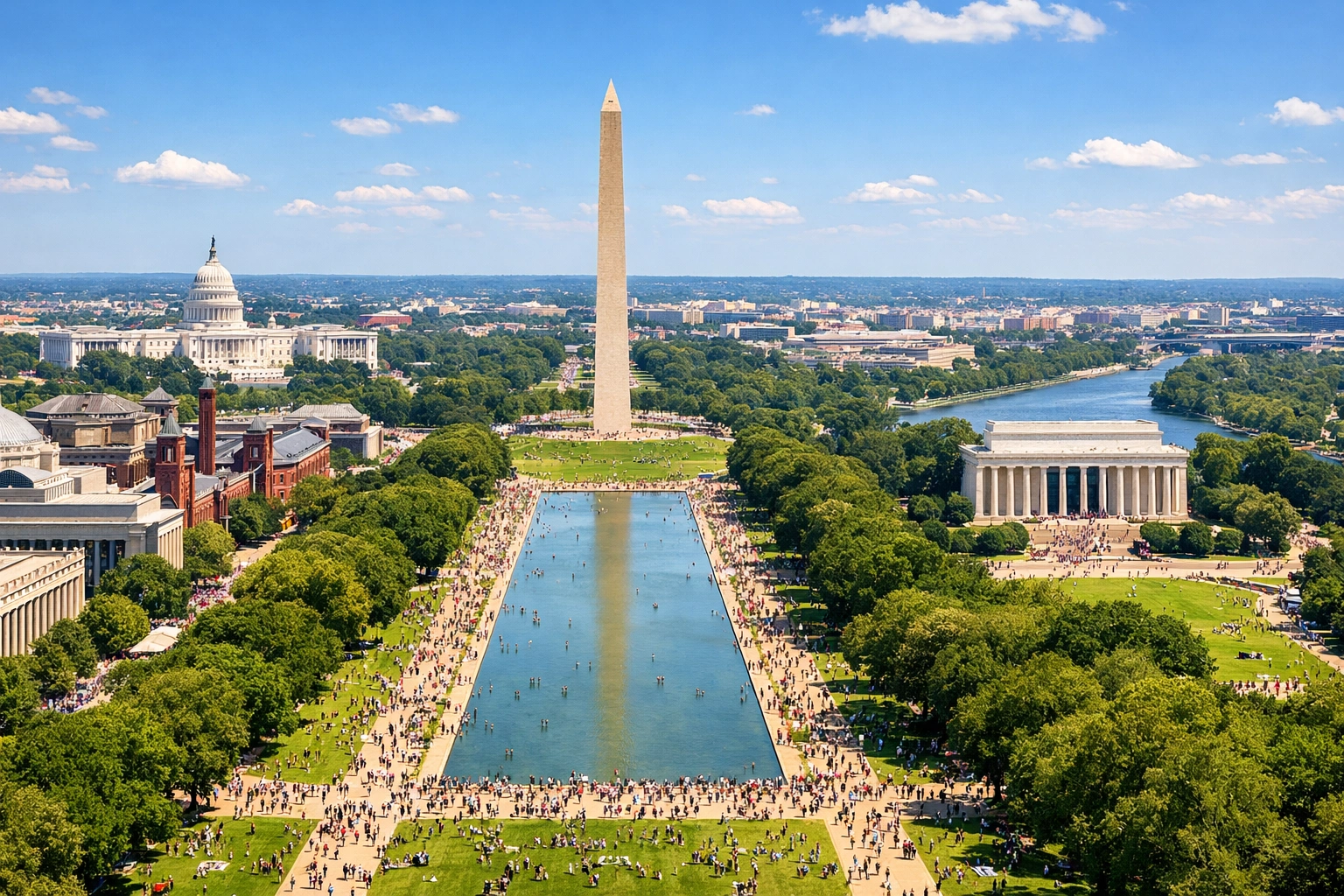
Walking deserves particular emphasis in any Washington DC transportation guide because the National Mall — the two-mile greensward connecting the United States Capitol to the Lincoln Memorial — is entirely walkable and walking it is genuinely one of the finest urban experiences America offers. The distance from the Capitol steps to the Lincoln Memorial covers approximately 1.9 miles of flat, well-maintained pathway passing the Washington Monument, World War II Memorial, and Reflecting Pool along the way. Capital Bikeshare stations dot the city providing affordable short-trip cycling for visitors comfortable on two wheels — day passes cost $8 and unlock bikes from any of the 700+ docking stations citywide. Uber and Lyft serve DC extensively for neighborhoods outside the convenient Metro radius but the Washington DC metro system reaches most tourist destinations so efficiently that rideshares become genuinely necessary only for Rock Creek Park visits and Georgetown evening returns.
3-Day Washington DC Itinerary
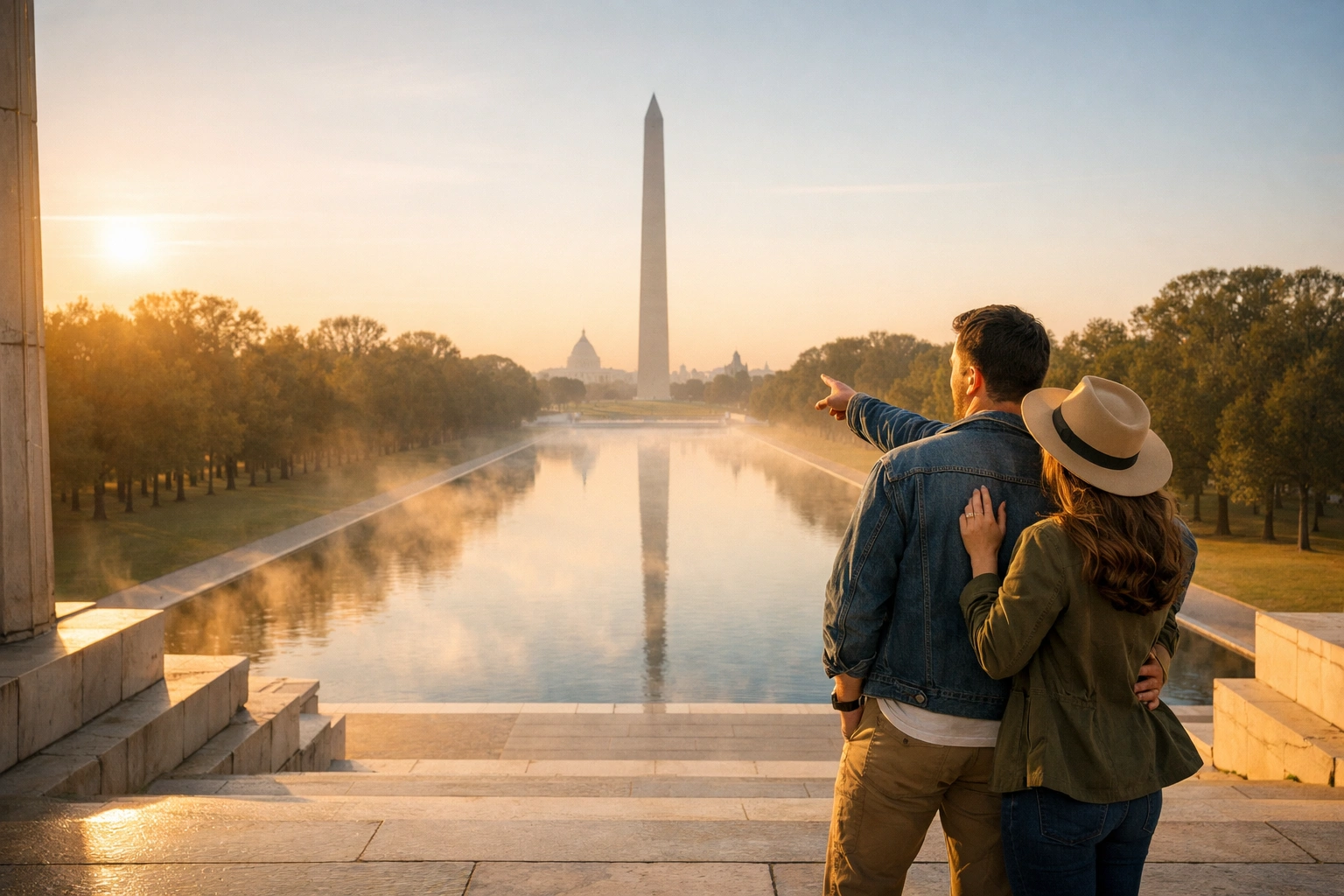
Three days in Washington DC requires strategic planning to balance the iconic sightseeing that first-time visitors rightly prioritize with the neighborhood exploration and genuine local experiences that transform a good trip into an exceptional one. This 3 day Washington DC itinerary sequences the city’s greatest experiences in a logical geographic pattern — grouping monuments and museums on Day 1, pivoting to Georgetown’s charms on Day 2, and escaping to green parkland on Day 3. Washington DC day wise itinerary planning works best with early starts — the National Mall monuments photograph most beautifully in morning light and the Smithsonian Museums’ most popular galleries fill with crowds by 11am. Comfortable walking shoes are non-negotiable. The Washington DC walking tour distances covered daily on this itinerary average 5 to 7 miles — your feet will earn their rest each evening.
Washington DC vacation ideas built around this three-day framework give equal attention to history, neighborhood culture, outdoor experience, and dining — because Washington DC rewards visitors who look beyond the monuments to discover the authentic city that surrounds them. The National Park Service manages most of the National Mall monuments and all of DC’s major parks — entry to every monument and most major Smithsonian museums is completely free, making Washington DC one of the most extraordinary value destinations in the entire United States. Restaurant reservations at popular dinner spots — particularly in Georgetown, Penn Quarter, and The Wharf DC — should be booked 3 to 7 days in advance especially for Friday and Saturday evenings.
Day 1: Downtown DC – Monuments & Museums
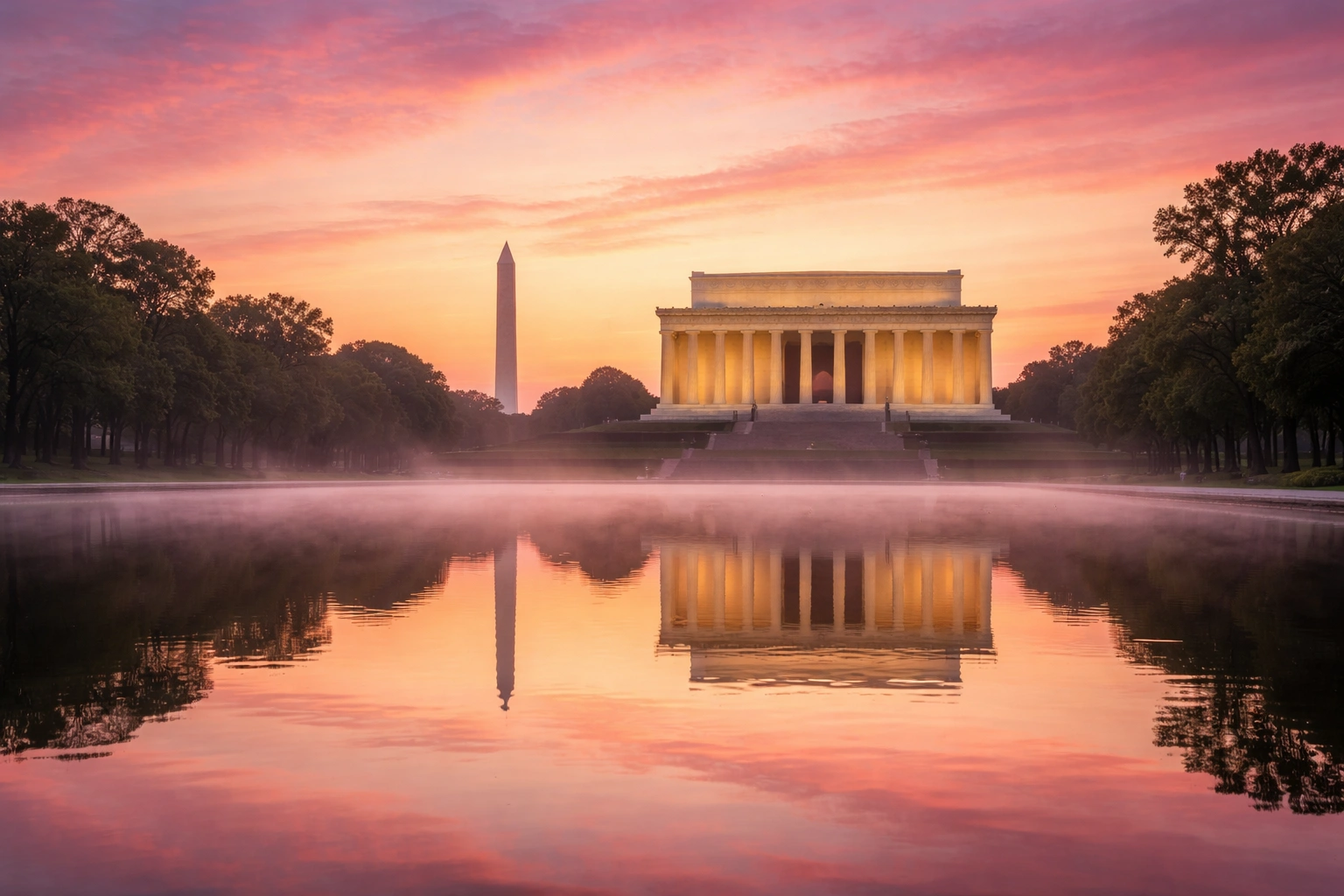
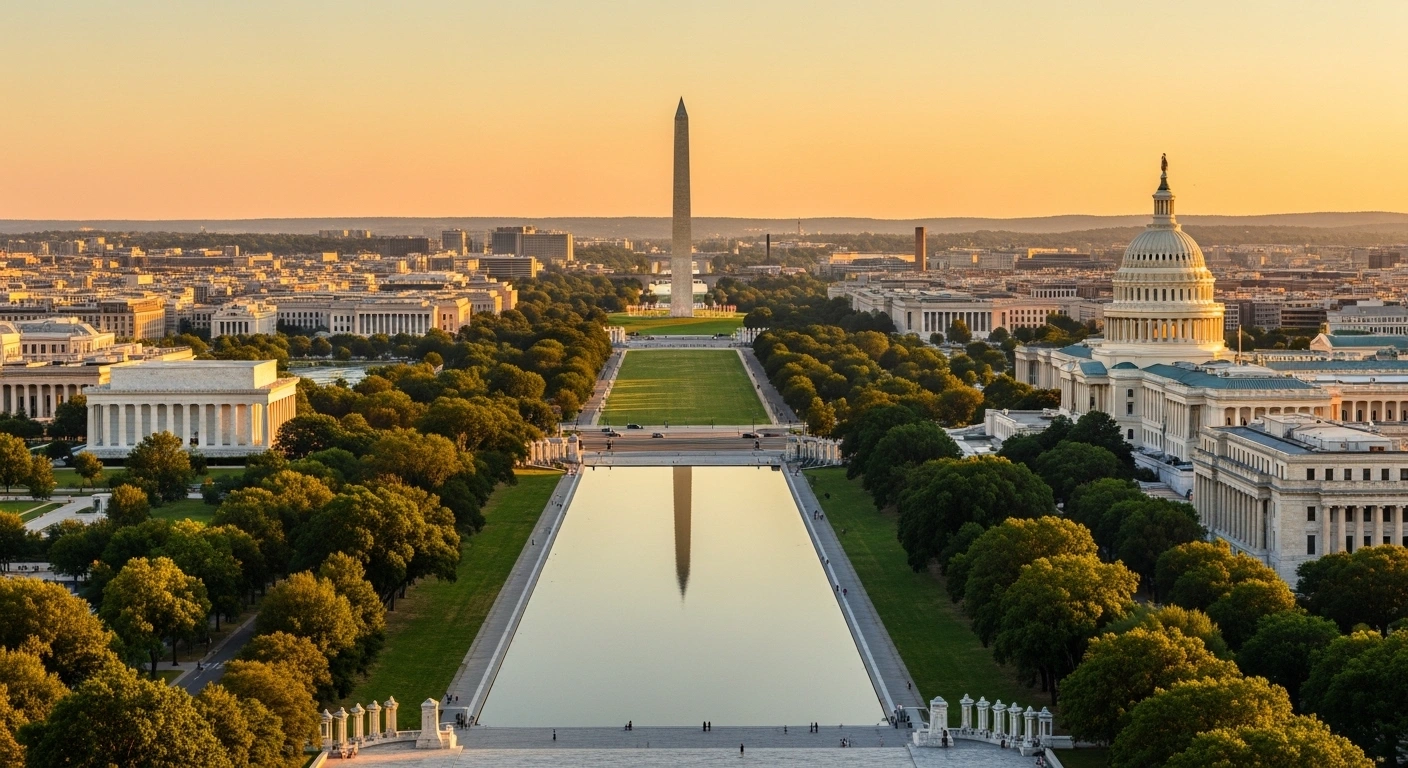
Begin Day 1 at the Lincoln Memorial at 8am when the morning light falls perfectly across Daniel Chester French’s monumental seated figure and the Reflecting Pool below catches the sky in a mirror image that stops every visitor cold regardless of how many times they’ve seen it in photographs. The Vietnam Veterans Memorial sits just northeast of the Lincoln Memorial — Maya Lin’s masterpiece of reflective black granite bearing 58,000 names creates an emotional impact that photographs cannot prepare you for. The Korean War Veterans Memorial and Martin Luther King Jr Memorial lie within a short walk completing the western end of the Mall’s memorial circuit. Walk east along the Reflecting Pool to the World War II Memorial — the massive circular monument with its 56 granite pillars representing each state and territory — before approaching the Washington Monument for the full Mall panorama photograph that defines the DC travel experience. The Smithsonian Museums lining the Mall’s north and south sides offer afternoon refuge — the National Museum of Natural History suits families while the National Museum of American History resonates deeply with anyone interested in the country’s cultural story. Evening dinner in the Penn Quarter neighborhood surrounding the Verizon Center puts you in one of DC’s best restaurant districts — José Andrés’s Jaleo and Zaytinya both deliver extraordinary dining experiences within blocks of each other.
Day 2: Georgetown – Shopping, The Potomac, & A Canal Tour
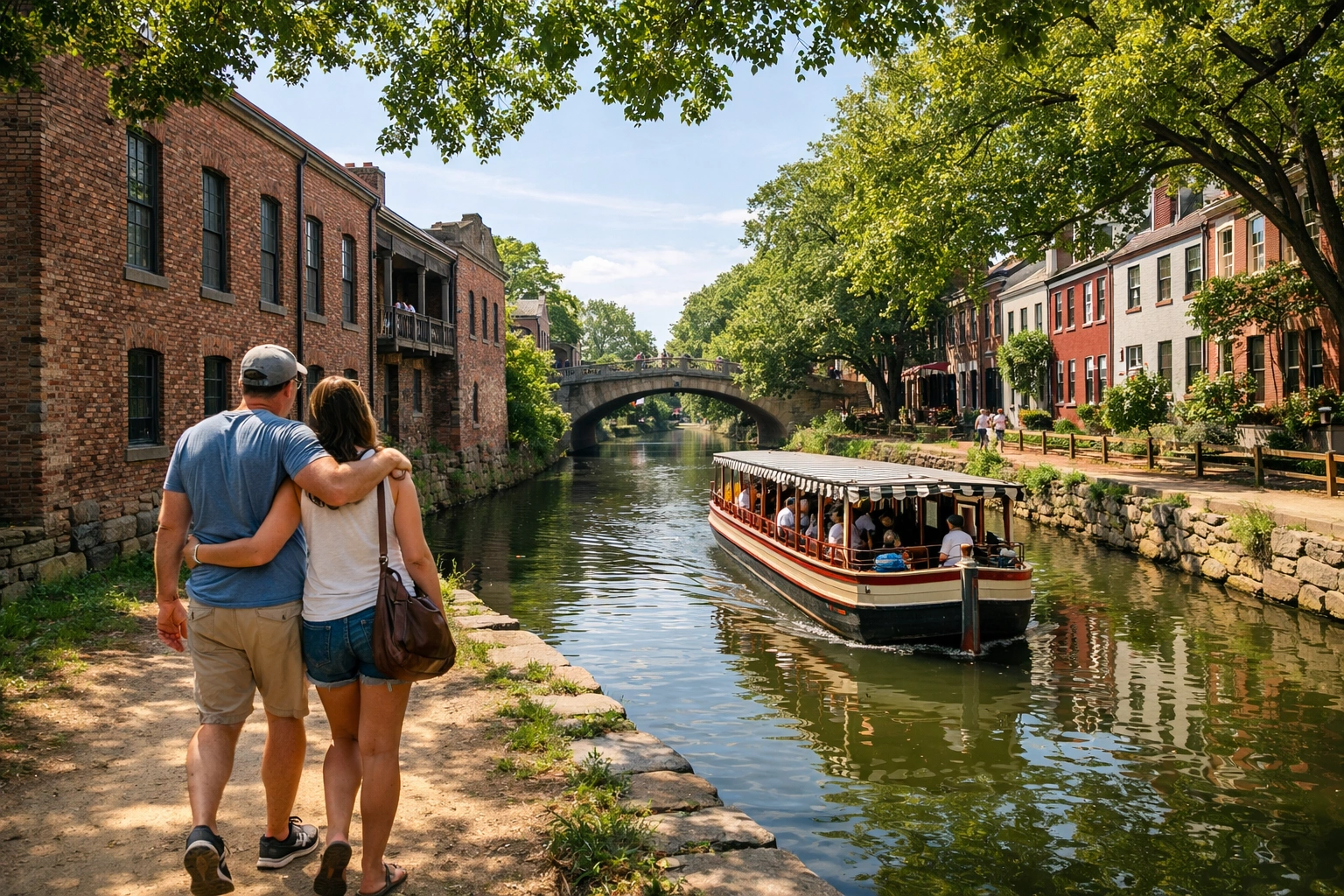
Georgetown Washington DC rewards an entire day of unhurried exploration — this historic neighborhood predates the capital itself and its brick rowhouses, cobblestone side streets, and M Street Georgetown retail corridor provide a visual character completely unlike the monumental grandeur of the National Mall. Start the morning with a Georgetown bakery breakfast — Baked & Wired on Thomas Jefferson Street is the neighborhood institution — before exploring the boutiques and independent shops along M Street Georgetown and Wisconsin Avenue. The C&O Canal towpath begins in Georgetown and stretches 184.5 miles northwest toward Cumberland, Maryland — even a one-hour walk along the towpath through the canal’s historic lock houses and leafy waterway provides genuine escape from the urban environment. Afternoon canal boat tours operated by the National Park Service provide guided historical context about the canal’s role in 19th-century American commerce — a genuinely educational and enjoyable 90-minute experience. Washington Harbour on the Potomac River provides the perfect waterfront dinner setting — Tony and Joe’s Seafood Place and Farmers Fishers Bakers both deliver excellent riverside dining with views across the Potomac toward Virginia.
Day 3: Rock Creek Park
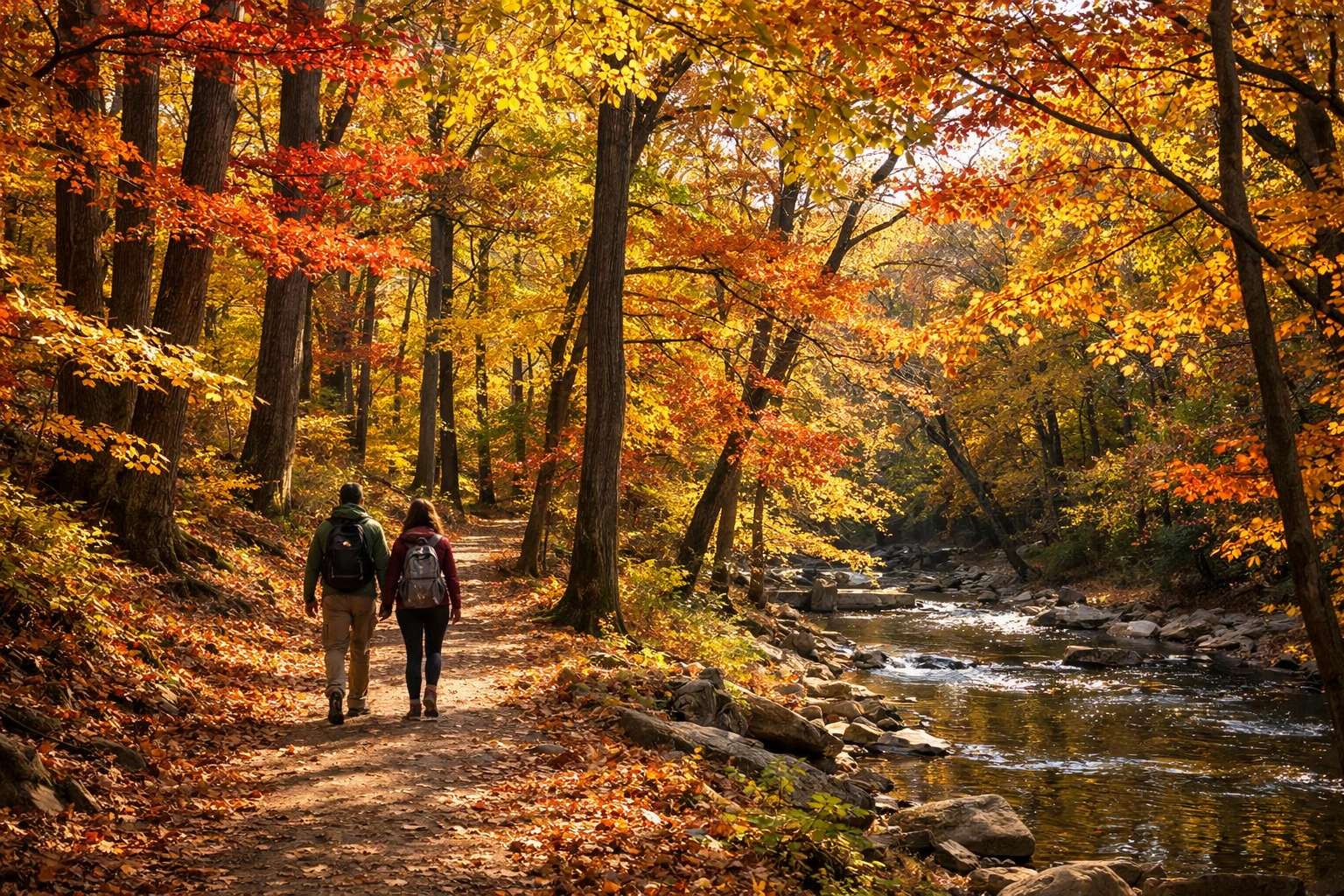
Rock Creek Park Washington DC surprises most visitors who don’t realize that a 2,000-acre forested national park runs through the heart of the city from the Potomac River to the Maryland state line. The park’s 32 miles of hiking trails range from easy flat riverside paths to moderate forested ridge trails — all free to access and remarkably peaceful even on busy weekend mornings. The National Zoo — officially the Smithsonian’s National Zoological Park — sits along the park’s southern edge in the Woodley Park neighborhood and offers completely free admission to over 2,700 animals representing 390 species including giant pandas, African elephants, and Sumatran tigers. Afternoon exploration of the Cleveland Park neighborhood surrounding the zoo reveals one of DC’s most charming residential areas with excellent independent coffee shops and bookstores. Meridian Hill Park — 12 acres of formal Italian and French park design with a dramatic cascading fountain — provides a beautiful late afternoon respite before heading south to the U Street Corridor for DC’s finest evening dining and live music experience. Lincoln Theatre and the Howard Theatre both host regular performances on the historic corridor that once made Washington DC one of America’s great jazz and blues destinations.
Washington DC FAQs
First-time visitors arrive in Washington DC with consistent questions about population, weather timing, and safety — all of which significantly influence trip planning decisions. The Washington DC travel guide that ignores these practical questions leaves visitors unprepared for realities that shape the daily experience of the city. Things to do in Washington DC vary significantly by season and understanding the city’s annual rhythms helps visitors choose their timing strategically rather than accidentally. The answers below reflect current conditions and should be verified against real-time sources for the most up-to-date information since conditions change.
Washington DC tourist attractions operate year-round with consistent access to the free Smithsonian Museums, National Mall monuments, and major outdoor parks regardless of season. Cherry blossom season and summer school vacation periods represent the city’s peak tourism demand — both deliver extraordinary experiences alongside significantly elevated hotel rates and attraction crowd levels that require earlier starts and more patient queueing than off-peak visits demand.
What is the population of Washington DC?
Washington DC’s residential population sits at approximately 678,000 people within the formal district boundaries — a figure that dramatically understates the city’s actual daily population. The greater DC metropolitan area encompasses over 6.3 million residents across the District, Maryland, and Northern Virginia making it the sixth-largest metropolitan area in the United States. An additional 400,000 commuters enter the district daily for federal government employment, adding to the millions of annual tourists who visit each year. DC’s unique political status as a federal district rather than a state means its residents pay federal taxes but have no voting representation in the Senate and only limited representation in the House — a civic reality that DC residents note with characteristic wry humor on their license plates which read “Taxation Without Representation.”
What is the best time to visit Washington DC?
Best time to visit Washington DC depends entirely on what matters most to you — crowds, weather, cost, or specific events. Cherry blossom season in late March through early April delivers Washington DC at its most visually spectacular — the Japanese cherry trees surrounding the Tidal Basin near the Jefferson Memorial bloom in extraordinary pink and white clouds that draw over 1.5 million visitors annually. However the crowds and hotel premium pricing this season commands make it simultaneously the most beautiful and most challenging week to visit. Fall — September through November — represents the genuine best time for most visitors: comfortable temperatures between 55°F and 75°F, significantly fewer crowds than summer peak, stunning foliage in Rock Creek Park, and hotel rates running 20 to 30 percent below cherry blossom and summer peaks. Summer brings families in enormous numbers during school vacation — the free museums and monuments remain accessible but require early arrival to beat the crowds and midday heat.
Is Washington DC a safe city to visit?
Washington DC’s tourist areas are genuinely safe and heavily policed — the National Mall, Georgetown Washington DC, Capitol Hill, Dupont Circle, and The Wharf DC all maintain excellent safety records and benefit from the substantial security infrastructure that protecting the nation’s capital requires. Standard urban common sense applies throughout: keep phones and valuables secured rather than visibly displayed, stay in well-lit areas after dark, and remain aware of your surroundings in the same way you would in any major American city. The neighborhoods immediately surrounding the tourist corridor — particularly areas east of the Capitol and north of U Street — have improved dramatically over the past decade but still warrant research before independent evening exploration. DC’s Metro stations are well-monitored and safe to use throughout operating hours. The National Park Service maintains a substantial uniformed presence on the National Mall that contributes meaningfully to the area’s safety and accessibility for all visitors.
![Dare to Enter? Why Nightmare on Chicago Street in Elgin, Illinois is the Halloween Event of the Year! [2025]](https://officetooutdoorr.com/wp-content/uploads/2026/01/feature-image-11-768x419.webp)