Best Budget Hiking Gear Under $50 in 2026: 10 Essentials That Punch Above Their Price
# Best Budget Hiking Gear Under $50 in 2026
Walk into any outdoor store and you could easily believe that hiking requires a second mortgage. Wall-to-wall $300 shells, $200 packs, and gadgets you cannot pronounce. It is intimidating, and it keeps too many office workers on the couch.
Here is the good news: your first season of day hiking does not require any of that. The items that actually determine whether a beginner has a safe, comfortable hike, good socks, reliable light, water treatment, rain protection, and a way to carry it all, are available for under $50 each. Some for under $20. The expensive stuff matters later, when you know exactly what you need and why.
This guide rounds up the best budget hiking gear under $50 in 2026: ten essentials that deliver real performance at beginner-friendly prices. For each one, you will learn what to look for, what a fair price looks like, and where the cheap version genuinely competes with the premium one.
How We Picked These Items
Every item on this list had to clear three bars. First, it must be genuinely useful on a beginner's day hike, not a gadget that looks fun in the store. Second, it must be available from a reputable brand or in a proven generic form at a real street price under $50 (prices fluctuate by retailer and season, so treat the ranges below as typical, not guaranteed). Third, it had to be something where the budget option performs close enough to the expensive one that a beginner will never notice the difference.
The 10 Best Budget Hiking Essentials Under $50
1. Merino Wool Hiking Socks
If you buy one thing from this list, make it good socks. Blisters end more beginner hikes than any other gear failure, and the single biggest blister prevention tool is a proper hiking sock. Look for a merino wool blend in a micro crew height that rises just above your boot collar, with cushioning underfoot and a seamless toe.
The classic example is the Darn Tough Hiker Micro Crew Cushion: a merino wool blend with midweight cushioning, made in Vermont, typically around $25, and backed by Darn Tough's unconditional lifetime guarantee. That guarantee is the budget story in miniature: pay $25 once for socks that get replaced free if they ever wear out, instead of $10 repeatedly for socks that quit.
What to avoid: cotton socks, full stop. Cotton holds moisture against your skin, and wet skin blisters fast. This is the cheapest upgrade in all of hiking.
2. Headlamp
A headlamp is the cheapest safety device in hiking. Trails take longer than planned, sunsets arrive early in fall, and fumbling with a phone flashlight on a dark trail is how ankles get rolled. For day hiking, you do not need a 1000-lumen searchlight. Look for 200 to 300 lumens, simple brightness settings, and either AAA batteries or USB recharging.
The Black Diamond Astro 250 is the benchmark budget pick: up to 250 lumens, runs on three AAA batteries, rated IPX4 against rain and splashes, and typically around $20. That is plenty of light to hike out after sunset or start before dawn.
Pro tip: toss the headlamp in your pack for every hike, even short midday ones. It weighs almost nothing and the one time you need it, you will be very glad it is there. Check the batteries at the start of each season.
3. Water Filter
Carrying all the water you need for a long hike is heavy: a liter weighs over two pounds. A squeeze-style water filter lets you refill safely from streams and lakes, which changes what a full day on the trail feels like. Look for a hollow-fiber membrane filter rated to 0.1 microns, which handles the bacteria and protozoa (like giardia) that matter in North American backcountry water.
The Sawyer Squeeze is the thru-hiker favorite for a reason: a 0.1-micron hollow-fiber membrane, flow rates up to 1.7 liters per minute when clean, a featherweight 3 ounces, and a typical street price around $40. It screws onto standard disposable bottles and refillable pouches, and backflushing with the included syringe restores the flow rate.
One honest caveat: squeeze filters do not remove viruses or chemicals, and they must be protected from freezing, which can crack the fibers. For US day hiking from flowing sources, though, it is the best forty-ish dollars in this entire guide.
4. Lightweight Rain Jacket
Weather forecasts lie, especially in the mountains. A packable rain shell is the difference between a funny story and a miserable, potentially dangerous hike. For beginners, the key specs are simple: genuinely waterproof (not just water-resistant), with a hood, packable into its own pocket or a small stuff sack, and light enough that you will actually carry it.
The budget legend here is the Frogg Toggs Ultra-Lite2 rain jacket: a featherweight, waterproof, breathable jacket with an adjustable hood and full front zipper, typically well under $30. It is not the most durable or breathable shell on the market, and the fabric feels more like science project than fashion, but it keeps rain out and packs down tiny. As a first rain layer, or a backup that lives permanently in your daypack, it is nearly unbeatable value.
When to upgrade later: if you start hiking in sustained rain regularly, a pricier membrane shell with pit zips breathes better on climbs. Until then, Frogg Toggs does the job.
5. Adjustable Trekking Poles
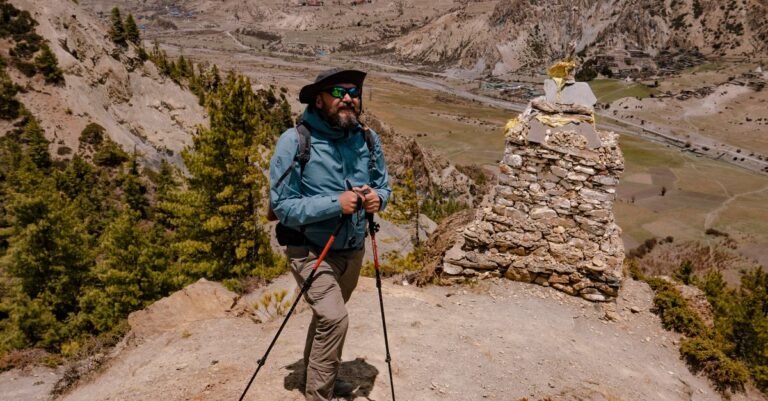
Trekking poles look like old-person gear until you try them on a steep descent, at which point they become the best thing you own. Poles take load off your knees, improve balance on stream crossings and loose terrain, and give your arms something to do on long climbs. For beginners, look for an adjustable aluminum pair with comfortable grips, flick locks (easier and more reliable than twist locks), and carbide tips with rubber tip covers included.
Aluminum adjustable poles from house brands and value labels typically run $20 to $35 a pair, and honestly, cheap aluminum poles work nearly as well as expensive carbon ones for day hiking. Carbon is lighter, but aluminum bends where carbon snaps, which is arguably the better failure mode for a beginner.
Learn the basic technique: opposite arm to opposite leg, plant the pole slightly ahead, and keep your grip relaxed. Within an hour it feels natural.
6. Sturdy Reusable Water Bottle
You need to carry water even if you own a filter, because sources are not always where you need them. Look for a wide-mouth, BPA-free bottle in the 32-ounce (one liter) range with measurement markings and a loop cap you can clip to your pack. Wide mouths are easier to fill from shallow streams and fit most squeeze filters directly.
The classic hard-sided bottles in this style typically cost $10 to $15 and last for years of abuse. That is the whole pitch: nearly indestructible, dishwasher safe, and cheap enough that losing one stings but does not ruin your month. Carry one liter per person as a baseline and more in heat or on long climbs.
Skip the temptation to buy a hydration reservoir as your first system. Reservoirs are great, but they are harder to clean, harder to tell how much you have drunk, and annoying to refill mid-hike. Master the humble bottle first.
7. Daypack (20 to 30 Liters)
Your daypack carries water, layers, food, and the ten essentials, so fit and comfort matter more than features. For day hiking, look for 20 to 30 liters of capacity, padded shoulder straps and a real hipbelt (which transfers weight off your shoulders), a ventilated back panel, side pockets that fit your water bottles, and a rain cover or rain-cover compatibility.
Budget daypacks from reputable value brands typically run $25 to $45, and the honest truth is that a well-fitting $35 pack beats a poorly fitting $150 pack every time. Try it on loaded if you can: the hipbelt should sit on your hip bones, not your waist, and the shoulder straps should not dig.
What you do not need yet: a 50-liter-plus pack, a dozen gear loops, or a detachable brain. Those serve overnight trips. For day hikes, simple and comfortable wins.
8. Basic First-Aid Kit
Every hiker should carry a basic first-aid kit, and beginners especially so, because small problems become big ones faster when you are new. A preassembled hiking first-aid kit in the $10 to $20 range covers the essentials: adhesive bandages in several sizes, gauze pads, adhesive tape, antiseptic wipes, tweezers, and blister treatment like moleskin.
Do not just buy it and forget it. Open the kit at home, learn what is inside, and add two personal items: any medication you need and extra blister supplies, because feet are the number one medical issue on beginner hikes. Check expiration dates once a year and replace anything you used.
The real value of a first-aid kit is psychological: carrying one makes you hike more confidently and handle small setbacks calmly instead of panicking.
9. Small Knife or Multi-Tool
You will not be building shelters or batoning firewood on a day hike, but a small blade earns its place constantly: cutting moleskin to shape, trimming a frayed lace, opening food packaging, or cutting cord for a quick gear repair. Look for something light with a locking or sturdy folding blade, scissors, and tweezers. The whole tool should disappear in a hipbelt pocket.
Simple, well-made folding knives and keychain-size multi-tools typically cost $15 to $30. Resist the giant survival knife with the hollow handle: it is heavy, awkward, and worse at every actual camp task than a small, sharp blade. Small and sharp beats big and impressive.
10. Emergency Bivy or Space Blanket
This is the item you will probably never use, and that is exactly the point. An emergency bivy (a reflective, windproof and waterproof sleeping-bag-shaped sack) or even a simple mylar space blanket weighs a couple of ounces, costs under $10, and can prevent hypothermia if you get lost, injured, or caught out after dark.
Toss one in the bottom of your daypack and forget about it until the day you are grateful beyond words that it is there. Pair it with the knowledge that staying put and staying warm beats wandering in the dark: the bivy buys you the time to make good decisions.
Budget Hiking Gear Comparison
| Item | What to Look For | Typical Price | Why It Matters for Beginners |
|---|---|---|---|
| Merino hiking socks | Wool blend, micro crew, cushioned, seamless toe | Around $25 | Prevents blisters, the top beginner hike-ender |
| Headlamp | 200-300 lumens, simple modes, AAA or USB | Around $20 | Safety net for late finishes and early starts |
| Water filter | 0.1 micron hollow fiber, squeeze style | Around $40 | Lightens your load, extends your range |
| Rain jacket | Waterproof, hooded, packable | Under $30 | Weather changes fast; wet and cold is dangerous |
| Trekking poles | Aluminum, adjustable, flick locks | $20-$35 | Saves knees on descents, aids balance |
| Water bottle | 32 oz, wide mouth, BPA-free | $10-$15 | Simple, durable hydration carry |
| Daypack | 20-30L, padded hipbelt, ventilated back | $25-$45 | Comfort determines whether hiking stays fun |
| First-aid kit | Bandages, gauze, tape, blister care | $10-$20 | Handles the small problems before they grow |
| Knife or multi-tool | Small folding blade, scissors | $15-$30 | Repairs, first aid, food prep |
| Emergency bivy | Reflective, windproof, packable | Under $10 | Ultralight insurance policy |
Where to Save vs Where to Splurge
The under-$50 list above is where you save, confidently. The budget versions of socks, headlamps, filters, rain shells, and poles perform remarkably close to the premium versions for beginner use. Nobody's first twenty hikes were ruined by a $20 headlamp instead of a $60 one.
So where does extra money actually pay off? Boots or trail shoes are the number one splurge category: fit and foot comfort shape every mile, and this is where trying things on in a store earns its keep. A well-fitting daypack is number two, because a pack that hurts your shoulders will quietly kill your motivation. Everything else, upgrade only when you can articulate exactly what limitation you are hitting. "My rain jacket wets out on long rainy climbs" is a reason to upgrade. "This one has more features" is marketing.
Where Beginners Overspend
Watch for these classic budget traps. Gadget overload: GPS watches, satellite communicators, and premium knives are wonderful tools for experienced hikers doing remote trips. For maintained day-hike trails near town, your phone and the items above are plenty. Duplicate layers: you do not need three mid-layers. One insulating layer plus your rain shell handles almost all three-season day hiking. The cooler trap: beginners often buy elaborate camp kitchens before they have done five hikes. Eat at the trailhead or pack simple food until you know your style. Overbuilt packs: buying a 65-liter expedition pack "to grow into" just means carrying extra weight and complexity on every day hike for two years.
The pattern is consistent: beginners overspend on things that look like hiking and underspend on things that feel like hiking. Comfort items (socks, footwear, pack fit) deserve the dollars. Everything else can wait.
What You Can Skip for Now
For your first season of day hikes, you can safely skip: a GPS device (your phone plus a downloaded offline map works), camp stoves and cookware, sleeping bags and pads, water shoes, gaiters, and premium branded everything. None of these make your first ten hikes better. Revisit the list after a season, when you will know from experience what you actually missed.
Frequently Asked Questions
Can I really get decent hiking gear for under $50 per item?
Yes, for day-hiking essentials. Socks, headlamps, water filters, rain shells, trekking poles, and basic safety gear all have proven budget options that perform well. The items that legitimately cost more are footwear, packs with serious suspension, and overnight gear like tents and sleeping bags. For day hikes, the under-$50 tier covers nearly everything else.
What is the most important budget item for a beginner?
Merino wool hiking socks. They are the cheapest item on this list and they prevent the most common reason beginner hikes end early: blisters. Good socks with any reasonable footwear beat expensive footwear with cotton socks.
Should I buy cheap gear or save up for expensive gear?
Buy the cheap version of the right thing now, and upgrade selectively later. Hiking in decent budget gear this weekend beats waiting six months to afford premium gear. Experience will teach you what actually deserves an upgrade, and that knowledge is worth more than any product review.
Where is the best place to buy budget hiking gear?
Start with the big outdoor retailers (REI, Dick's Sporting Goods, Decathlon) for house-brand value, plus Amazon for commodity items like bottles and emergency gear. Check end-of-season sales and outlet sections: last year's colors of quality gear often drop into budget territory. For used gear, REI's used section and local gear swaps are gold mines.
Do I need all ten items before my first hike?
No. For a short, fair-weather hike on a well-traveled trail, you need sturdy footwear, water, snacks, weather-appropriate clothing, and a way to carry it. Add the headlamp, rain shell, first-aid kit, and the rest as your hikes get longer and more adventurous. Build the kit hike by hike rather than all at once.
How long does budget hiking gear last?
Longer than you would expect. Socks with lifetime guarantees, aluminum poles, hard-sided bottles, and simple headlamps routinely last years. Rain shells at the budget end may need replacing sooner, typically after a few seasons of regular use, and filters need occasional backflushing to maintain flow. Take care of your gear (rinse, dry, store properly) and the budget tier holds up fine.
The Bottom Line
You do not need expensive gear to become a hiker. You need dry feet, water you can trust, light when the sun drops, shelter from surprise rain, and a comfortable way to carry it all. Every one of those problems has a solution under $50, and the ten items in this guide will carry you through a full first season of weekend adventures.
Start with socks and a headlamp, add the rest hike by hike, and put any money you save toward the two things that truly deserve it: footwear that fits and experiences on the trail. The gear gets you out there. The trails do the rest.