Hiking Alone for the First Time: Safety Tips That Actually Work
There is a specific kind of Saturday-morning courage required to drive to a trailhead alone, shoulder your pack, and walk into the woods with nobody to talk to. If you are reading this, you are probably somewhere between excited and slightly terrified, and that is exactly the right place to be. Solo hiking is one of the most rewarding things a busy person can do with a weekend, and it is also something you should take seriously.
Here is the honest truth up front: hiking alone is riskier than hiking with a group, but the risks are manageable, well understood, and mostly handled before you ever leave home. Solo hiking safety is not about being fearless. It is about being systematic. This guide gives you the system.
Is It Safe to Hike Alone? An Honest Answer
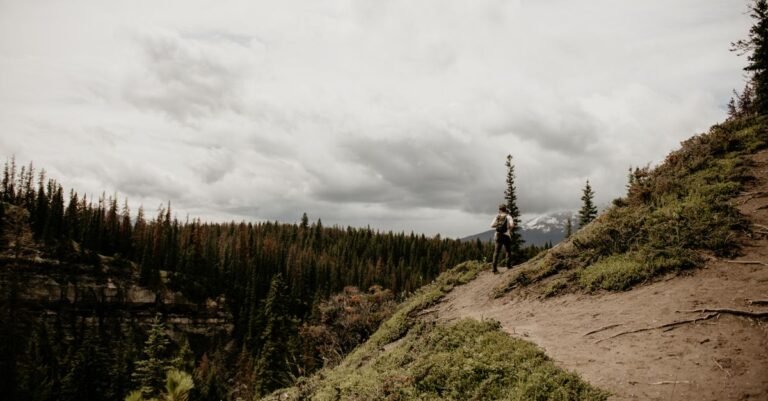
Millions of people hike alone every year without incident, and experienced solo hikers will tell you some of their best days on trail were solo days. The quiet, the freedom to set your own pace, the way your senses sharpen when there is no conversation to lean on: it is genuinely special.
But solo hiking removes your safety net. There is nobody to go for help if you twist an ankle, nobody to notice you took a wrong turn, nobody to share decision-making when weather rolls in. That does not mean you should not go. It means your margin for error is smaller, so your preparation needs to be better. Every tip in this guide exists to widen that margin back out.
One more honest note: it is completely normal, especially for women, to feel uneasy about solo hiking. That unease is not a stop sign; it is useful information. Channel it into preparation, start with the right kind of trail, and build up gradually. Confidence on solo hikes is earned, one well-planned trip at a time.
The Trip Plan: Your Number One Safety Tool
If you take only one thing from this guide, take this: always tell someone exactly where you are going and when you will be back. This single habit has saved lives. If something goes wrong, a person on the outside knows where to send help. Without it, rescuers may not even know you are missing for days.
Your trip plan should include:
- Trail name and trailhead location (plus parking area and a description of your car)
- Your intended route, including any alternate or bailout options
- Start time and expected return time, plus a hard cutoff time: "if you have not heard from me by 6 PM, call the county sheriff / ranger station"
- What you are wearing (jacket color helps searchers spot you)
- Your phone number and confirmation that your phone will be on
Text this to a reliable person, someone who will actually act if you go quiet, not someone who will assume you just lost track of time. Text them again when you start at the trailhead and again when you are safely back at your car. If your plans change mid-hike, update them.
Here is a copy-paste template you can use:
Solo hike today. Trail: [name], trailhead at [location/parking area]. Route: [brief description, e.g., out-and-back to the lake, ~6 miles]. Starting around [time], expect to be back at my car by [time]. If you have not heard from me by [cutoff time], please call [ranger station / sheriff non-emergency number]. Driving a [color/make/model], wearing a [color] jacket and [color] pack. Phone will be on.
Save the ranger station or sheriff's number for your hiking area in your contact's phone too, so they are not Googling it in a panic.
Pick the Right First Solo Hike
Your first solo hike should be boring on purpose. You are practicing the system, not proving anything. Look for:
- Popular, well-traveled trails. On a busy trail you are never truly alone for long, which is perfect training wheels. Check recent trip reports or reviews to confirm the trail gets steady traffic.
- Well-marked and well-maintained. Choose trails with clear signage and obvious tread. Save the faint, unmarked routes for later.
- Modest distance and elevation. Pick something well within your fitness level, ideally a hike you have done before with others. Familiar terrain removes half the variables.
- Daylight with margin. Start early enough to finish with hours of daylight to spare. Solo hikers should never be racing sunset.
- Cell coverage if possible. It is not guaranteed in the mountains, but trails near towns and popular parks often have signal. Do not rely on it, but prefer it while you are learning.
- Good weather window. Check the forecast the night before and the morning of. Your first solo hike is not the day to test yourself against incoming storms.
A busy state park loop or a popular national park day hike on a Saturday morning is ideal. If the parking lot is full, that is a good sign, not a bad one.
The 10 Essentials, Solo-Hiker Edition
The classic 10 Essentials list was designed for exactly this situation: the gear that keeps a bad day from becoming an emergency. Solo hikers should carry all of them, every time, even on "easy" day hikes.
| Essential | What to Carry | Solo-Hiker Note |
|---|---|---|
| Navigation | Paper map, compass, phone with offline maps | Do not rely on one system; batteries die |
| Water | More than you think you need, plus a filter or purifier | Dehydration is preventable; sip steadily, add electrolytes |
| Food | Extra day's worth of calorie-dense snacks | You cannot borrow from a hiking partner |
| Sun protection | Sunscreen, sunglasses, hat | Sunburn and heat illness sneak up when you are focused |
| Insulation | Extra warm layer, rain shell | Weather changes fast; hypothermia is a solo hiker's nightmare |
| Illumination | Headlamp plus spare batteries | Even day hikes can run long; a dead phone flashlight is not a plan |
| First aid | Kit plus blister care and any personal meds | Know how to use everything in it before you need it |
| Fire | Waterproof matches or lighter, fire starter | Emergency warmth and signaling |
| Tools | Knife or multi-tool, trekking poles | Poles prevent the ankle twists that strand solo hikers |
| Shelter | Emergency bivy or space blanket | If you must spend an unplanned night out, this saves you |
Add an eleventh for solo hikers: a whistle. Three blasts is the universal distress signal, it carries farther than shouting, and it weighs nothing.
Navigation: Never Rely on One System
Getting lost is the most common solo-hiker emergency, and it is the most preventable. Build redundancy:
- Download offline maps before you leave home. Your app cannot fetch map tiles without signal.
- Carry a paper map of the area and know how to orient it. (Our trail map guide walks you through this step by step.)
- Study the route the night before. Note every junction and landmark so you are confirming expectations rather than discovering surprises.
- Track your position as you go. Check off landmarks, keep your thumb on the map, and turn around the moment reality stops matching the plan. The earlier you catch a wrong turn, the shorter the correction.
A fully charged phone in airplane mode (GPS still works) with a portable battery pack is a solid electronic setup. But electronics are plan A. The paper map is plan B, and solo hikers always need a plan B.
Wildlife and Solo Hikers: Extra Noise, Extra Awareness
Animals are generally more wary of groups than individuals, which means solo hikers should compensate with extra awareness.
Make more noise than feels natural. Most wildlife encounters are surprise encounters, and a solo hiker is quieter than a group. Talk to yourself, sing, clap at blind corners and near streams. In bear country, this matters enormously: call out regularly, carry bear spray on your hip (not in your pack), and know the species-specific response. Our bear safety guide covers this in full detail.
Learn the local wildlife before you go. A quick check of the park website tells you whether to expect bears, mountain lions, moose, rattlesnakes, or ticks. Each has simple, specific precautions, and knowing them in advance replaces vague anxiety with concrete actions.
Store food properly. On day hikes this mostly means: do not leave your lunch unattended at a viewpoint while you wander off for photos. In bear country, use bear boxes or canisters where provided.
Keep your dog leashed or leave it home in wildlife-heavy areas. An off-leash dog can provoke a bear or moose and then run straight back to you, bringing the problem with it.
People You Meet: Street Smarts on the Trail
Most people on trails are wonderful. Still, solo hikers, especially solo women, are smart to keep a few street smarts in the toolkit:
- Do not broadcast your solo status to everyone. There is no need to announce "I am out here all alone!" to strangers. A friendly hello is plenty.
- Be vague with strangers about your plans. "Heading up to the lake and back" is enough detail for trail chat. Save the specifics for your check-in contact.
- Trust your instincts. If someone or some situation feels off, it is always okay to turn around, wait for other hikers to catch up, or choose a busier trail. Politeness never outranks safety.
- Keep one ear open. If you hike with music, use a single earbud or bone-conduction headphones and keep the volume low. Hearing approaching people, animals, and weather matters.
- Rethink real-time social media. Posting your exact location in real time tells the internet where you are and that you are alone. Share the photos after you are home.
None of this is about fear. It is about the same awareness you would bring to a new city: friendly, alert, and in control of your own information.
Weather, Water, and When to Turn Around
Solo hikers do not have a group to debate with, which is actually an advantage: you can make the conservative call instantly.
Check the forecast twice: the night before and the morning of. Mountain weather changes fast, and afternoon thunderstorms are a pattern in many ranges. If storms are forecast, pick another day or a lower, less exposed trail.
Set a turnaround time before you start. Decide in advance: "I turn around at 1 PM no matter where I am." Summit fever has stranded countless hikers who kept pushing "just a little farther." Write the time on your hand if it helps.
Water is non-negotiable. Carry more than you think you need and sip steadily rather than rationing. The American Hiking Society notes that dehydration is a preventable danger for hikers; adding electrolytes through a salty snack helps your body actually absorb the water. Know where water sources are on your route, and carry a filter if you plan to refill.
Learn the signs of trouble. Headache, nausea, and unusual fatigue can signal dehydration or altitude issues. Shivering that you cannot stop is an early warning for hypothermia. Solo hikers need to monitor themselves the way a good hiking partner would: honestly and early.
Emergency Tools: Phone, Whistle, Satellite Messengers
Layer your emergency options the way you layer your clothing:
- Phone: Keep it charged, in airplane mode with GPS on to save battery, and in a warm pocket in cold weather. A portable battery pack is cheap insurance. Remember that many trails have no signal, so the phone is a tool, not a plan.
- Whistle: Three blasts, repeated, is the international distress signal. It works when your voice gives out and carries much farther than shouting.
- Satellite messenger or personal locator beacon (PLB): For remote trails beyond cell coverage, these devices can send an SOS with your GPS coordinates via satellite. If you plan to solo hike regularly in the backcountry, this is the single best safety investment you can make. Learn how to use it before the trailhead, not during an emergency.
- Mirror or bright clothing: An old-school signal mirror can flash rescuers from miles away on a sunny day. Bright colors make you visible from the air.
Whatever you carry, tell your check-in person what you have. "I am carrying a satellite messenger and will trigger the SOS if I need rescue" gives them a clear escalation path.
Your First Solo Hike: A Simple Game Plan
Here is how to put it all together for hike number one:
The week before: Pick a popular, familiar trail under 6 miles with modest elevation. Check the park website for alerts, closures, and wildlife notices. Charge everything. Pack your 10 essentials and lay out your clothes.
The night before: Download offline maps, study the route, set your turnaround time, and send your trip plan to your check-in person. Check the forecast.
Morning of: Check the forecast again. Text your contact that you are starting. Do a gear check at the trailhead: water, food, map, headlamp, rain layer, whistle, charged phone.
On the trail: Start early, hike your own pace, track your position on the map, make noise, drink water steadily, and enjoy the quiet. Turn around at your turnaround time without negotiating.
After: Text your contact the moment you are back at the car. Note what worked and what you would change. Then start planning the next one, because there will be a next one.
Frequently Asked Questions
Is it safe for a woman to hike alone? Many women hike solo regularly and safely by following the same system in this guide: trip plan, popular trails, daylight, awareness, and trusting their instincts. Extra precautions like keeping plans vague with strangers and avoiding real-time location posts are smart for everyone. Start with busy trails and build confidence gradually.
What is the most important solo hiking safety tip? Tell someone your exact plan and when to call for help. Everything else is preparation; the trip plan is your rescue trigger. No gear replaces a person who knows where you are.
Should I carry bear spray when hiking alone? In bear country, yes, absolutely, and keep it on your hip or chest strap where you can reach it instantly. Solo hikers should also make extra noise since they are quieter than groups. Outside bear habitat, bear spray is unnecessary weight.
What should I do if I get lost while hiking alone? Stop immediately. Follow the STOP protocol: Stop, Think, Observe, Plan. Try to retrace to your last known landmark using your map. If you cannot locate yourself, stay put, stay warm, and signal with three whistle blasts. Because someone has your trip plan, staying put is the right call.
Do I need a satellite messenger for day hikes? For popular trails with cell coverage, your phone plus a trip plan is reasonable. For remote trails, poor coverage areas, or any solo overnight trip, a satellite messenger or PLB is strongly worth it. It is the only tool that summons help where phones cannot.
How do I overcome the fear of hiking alone? Start embarrassingly small: a busy park trail you have hiked before, on a Saturday morning, for two hours. Preparation dissolves most fear, and each successful solo hike rewires the anxiety. Most solo hikers say the nervousness never fully disappears, it just gets quieter, and that is fine.
A Quick Disclaimer
This guide covers foundational solo hiking safety for marked day-hiking trails. Remote backcountry travel, technical terrain, winter conditions, and grizzly country add risks that deserve additional training and equipment. Always check current conditions and guidance from the local land manager before heading out, and consider a wilderness first aid course if you plan to hike solo regularly.