Best Budget Tents Under $100 for Car Camping (2026 Guide)
# Best Budget Tents Under $100 for Car Camping (2026 Guide)
You do not need a $400 tent to have a great first camping weekend. If you are driving to a state park on Friday evening and driving home on Sunday, a budget tent under $100 will keep you dry, comfortable, and happy in fair weather. The trick is knowing what that price buys you, and just as importantly, what it does not.
This guide is written for first-time tent buyers. We will walk through the honest trade-offs of cheap camping tents, show you how to pick the right size and features, and compare five well-known budget tents that are usually priced under $100 at major retailers (prices fluctuate, so always check the current listing). Every spec below comes from retailer listings or independent hands-on measurements, and approximate figures are labeled as such.
Our quick picks:
- Best all-around for couples and small families: Coleman Sundome 4-Person, the classic first tent with the easiest learning curve.
- Best cheap tent for two plus gear: Core 4-Person Dome, lighter than most rivals and easy on the wallet.
- Best big-box bargain: Ozark Trail 4-Person Dome with Awning, roomy with a dry entry and a gear loft.
- Best for a solo camper or a couple that packs light: Coleman Sundome 2-Person, small, light, and simple.
- Best for families that want standing room: Coleman Sundome 6-Person, tall enough for most adults to stand up in.
What a Tent Under $100 Can and Cannot Do
Let us start with honesty, because it will save you from a miserable rainy night. A budget tent is a fair-weather, three-season shelter. In calm conditions with light to moderate rain, the tents on this list do the job well. Thousands of campers start here and never feel the need to upgrade.
But the lower price shows up in specific places. Here is what you are realistically trading away.
Durability. Budget tents use fiberglass poles instead of aluminum and thinner polyester fabrics. With normal care, a $60 tent can last several seasons of weekend use. It just will not survive the decade-plus abuse that a premium tent shrugs off. Zippers are the usual first failure point, so treat them gently and keep them clean.
Weatherproofing. The rainfly on a budget tent typically covers only part of the tent body, and the waterproof coatings are thinner. In a steady downpour with wind, some budget tents will weep at the seams or let a little water pool where the fly does not reach. For fair-weather car camping near your car, this is a manageable risk. For an exposed ridgeline in a storm, it is not the right tool.
Weight and packed size. Budget tents are heavy. A four-person budget dome can weigh 8 to 13 pounds, versus 5 to 6 pounds for a backpacking tent that costs three times as much. Since you are car camping, this barely matters. The tent rides in your trunk, not on your back.
Features. Do not expect two doors, big vestibules for gear storage, or clever venting systems at this price. Most budget tents have one door, minimal pockets, and basic ventilation. You are buying a dry box to sleep in, not a backcountry basecamp.
What is genuinely fine at this price? The fundamentals: a bathtub-style floor that keeps ground water out, mesh upper walls for airflow, a rainfly that sheds ordinary rain, and a setup that takes ten minutes once you have practiced. For a first season or two of weekend camping, that is all you need.
How to Choose a Budget Tent for Car Camping
Start with honest capacity math. Tent capacity ratings assume people sleeping shoulder to shoulder with no gear. A "4-person" tent comfortably holds two adults plus their bags, or two adults and two small kids. The standard advice among experienced campers is to buy one size up from your headcount: a 4-person tent for two campers, a 6-person tent for a family of four. Floor dimensions matter more than the rating, so check the listed length and width and picture your sleeping pads laid out inside.
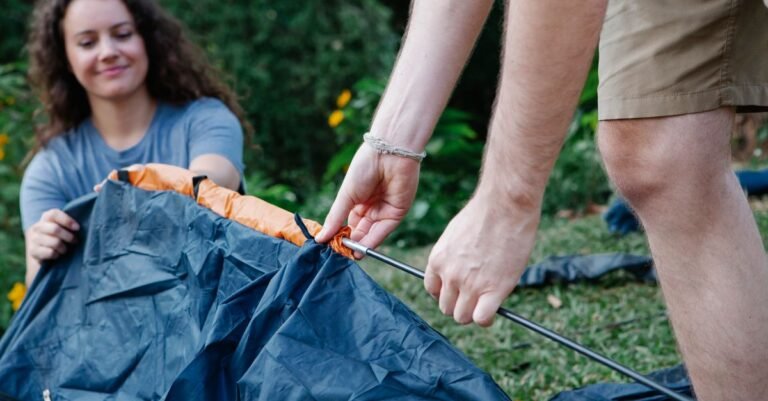
Prioritize setup ease. Your first pitch should not be a puzzle. Simple dome tents with two or three color-coded poles and clip attachments go up fast. Instant or pop-up tents are even faster but tend to be bulkier in the trunk. Whatever you buy, set it up once in your yard or a park before your trip. Ten minutes of practice at home saves thirty minutes of frustration at a campsite after dark.
Think about doors. Most tents under $100 have a single door. That is fine for one or two people, but with three or four occupants, someone will always be climbing over someone else for a midnight bathroom trip. Two doors are rare at this price, so if your group is bigger, lean toward a larger tent rather than hunting for a second door you will not find.
Check ventilation. Budget tents can get stuffy and damp inside, especially with two warm bodies breathing all night. Look for a mesh-heavy upper body, at least one or two windows or vents, and a rainfly that does not sit flat against the tent walls. A little airflow prevents the clammy condensation that makes cheap tents feel colder than they are.
Ignore weight, respect packed size. For car camping, nobody cares if the tent weighs 10 pounds. But do check the packed dimensions against your trunk space, especially if you are loading coolers, chairs, and a dog into a small car.
Look at the rainfly coverage. A full-coverage fly that reaches near the ground protects far better in wind-driven rain than a "cap" fly that only covers the roof. Most budget domes use partial flies, which is acceptable for fair weather. Just know that in a real storm, the exposed lower walls will take the weather directly.
Fiberglass poles are normal here. They are heavier and can splinter after years of use, but they keep the price down. Slide them through sleeves or clips gently, never force a bend, and store the tent dry.
Budget Tent Comparison: The Five Picks
Specs below are manufacturer-listed figures from major retailer listings, with a few figures from an independent hands-on review marked "approx." Model specs can change by year, so confirm the current product page before you buy.
| Tent | Capacity | Floor size | Peak height | Doors | Weight |
|---|---|---|---|---|---|
| Coleman Sundome 4-Person | 4 | 9 x 7 ft | 59 in (4 ft 11 in) | 1 | ~9 to 11 lb |
| Core 4-Person Dome | 4 | 9 x 7 ft | 54 in | 1 | ~8.3 lb |
| Ozark Trail 4-Person Dome with Awning | 4 | 8 x 7 ft | 59 in | 1 (oversized D-door) | ~13.4 lb |
| Coleman Sundome 2-Person | 2 | ~7 x 5 ft (approx.) | ~48 in (approx.) | 1 | ~6.4 lb (approx.) |
| Coleman Sundome 6-Person | 6 | ~10 x 10 ft (approx.) | ~74 in (approx.) | 1 | ~16 lb (approx.) |
Coleman Sundome 4-Person: the classic first tent
The Sundome is the tent most American campers start with, and there is a reason it keeps showing up on every budget list. The 4-person model gives you a 9 by 7 foot floor with a 59-inch peak height, enough for two adults and their gear or a couple of kids. Coleman lists features like its WeatherTec welded floor, taped seams, an E-port for running a power cord inside, and a frame it describes as tested to handle 35 mph winds.
Setup uses snag-free continuous pole sleeves, and most people get it up in about ten minutes on the first try and faster after that. The single door and partial rainfly are the expected budget compromises. Listed weight varies by version and retailer between roughly 9 and 11 pounds, which is irrelevant when the tent travels by car.
Best for: couples or small families buying their very first tent and wanting the safest, most proven choice.
Core 4-Person Dome: the lighter, simpler alternative
Core Equipment's 4-person dome covers the same 9 by 7 foot footprint as the Sundome but lists a lower 54-inch peak height and a notably lighter 8.3-pound carry weight. Retailer spec listings show a single door, fiberglass poles, a 68-denier polyester rainfly, taped seams, and a limited one-year warranty.
What stands out is the value: this is often one of the least expensive name-brand 4-person tents at big retailers, and it trims a couple of pounds off the typical budget dome. The lower peak height means less sitting-up room, but for sleeping it makes no difference.
Best for: two campers who want the cheapest credible tent from an established outdoor brand.
Ozark Trail 4-Person Dome with Awning: the big-box bargain
Walmart's Ozark Trail line exists to make the outdoors affordable, and this tent is a strong example. The listed specs show an 8 by 7 foot floor, a 59-inch peak height, one oversized D-style door, and a carry weight of about 13.4 pounds. The differentiators are the front awning, which creates a dry entry area and extra hangout space, plus a gear loft and organizer pockets that many budget tents skip.
The trade-off is weight: at over 13 pounds it is the heaviest tent on this list, and the 8-foot length is a touch shorter than the 9-foot rivals. For pure car camping, neither matters much. The taped seams on the removable rainfly and the roomy awning make this a genuinely comfortable fair-weather shelter.
Best for: car campers who want the most livable space and a dry place to sit out a passing shower.
Coleman Sundome 2-Person: small, light, and simple
If you camp solo or as a very cozy couple, the 2-person Sundome trims everything down: roughly a 7 by 5 foot floor, a peak height around 48 inches, and a weight in the 6-pound range. It pitches in minutes and takes up little trunk space.
Be realistic about the size. This is a tent for sleeping, not for waiting out weather. Two adults will fill it completely. But for a solo camper who wants a real tent rather than a bivy, or a couple that travels light, it is the cheapest way into a proven design.
Best for: solo campers and minimalist couples on short fair-weather trips.
Coleman Sundome 6-Person: standing room for families
The 6-person Sundome is the "size up" answer for a family of four. Approximate figures put it near 10 by 10 feet with a peak height around 74 inches, which lets most adults stand upright to change clothes, and a weight near 16 pounds. It keeps the same formula as its smaller siblings: one door, simple pole sleeves, and a partial rainfly.
The bigger the budget tent, the more the single door and partial fly matter, because there is more tent to catch wind and more people generating condensation. Guy out all the anchor points in breezy weather, and this becomes a perfectly serviceable family shelter for fair-weather weekends.
Best for: families of three to five who want real standing room without spending real money.
Footprint and Seam-Sealing Basics for Budget Tents
Two cheap upgrades dramatically extend the life of any budget tent.
Use a footprint. A footprint is a ground cloth that sits under your tent floor. It protects the floor from abrasion, pine sap, and small punctures, and it adds a little extra water resistance from below. Branded footprints cost extra, but a generic hardware-store tarp works fine. Cut or fold it so it is slightly smaller than the tent floor on every side. If the tarp sticks out past the tent walls, it will catch rain and funnel water underneath you, which is exactly the opposite of what you want.
Know about seam sealing. Tent seams are stitched, which means the needle holes are potential leak points. Many budget tents come with taped seams from the factory, and that tape can loosen after a few seasons of heat and humidity in storage. If you notice drips along seam lines during rain, a tube of silicone-based seam sealer from any outdoor retailer will fix it. Apply it on a dry day, let it cure fully, and you have added years of waterproof life for a few dollars.
One more habit that costs nothing: never pack a tent away wet. If you must break camp in the rain, set the tent up at home as soon as you can and let it dry completely before storage. A damp tent grows mildew, and mildew eats waterproof coatings.
Setup Tips for Your First Pitch
- Practice at home first. One dry run in the yard teaches you the pole order and clip system.
- Pick flat, slightly high ground. Avoid dips where water collects. A gentle slope is fine if you sleep with your head uphill.
- Clear the site. Remove sticks, rocks, and pinecones before laying the footprint.
- Stake the corners before raising poles. A taut base makes everything else easier.
- Attach the rainfly even if the sky is clear. Weather changes fast, and a fly also cuts morning dew.
- Guy out the tent in wind. Those little cords and stakes are not decoration; they keep the fly off the tent walls and the structure stable.
- Keep the door zipped when you are not entering. Bugs find an open tent in seconds.
Frequently Asked Questions
Are budget tents under $100 actually any good?
Yes, for fair-weather car camping. The best budget tents use proven dome designs, bathtub floors, and taped seams that handle ordinary rain just fine. Where they fall short is long-term durability, heavy storm protection, and weight. If your plan is weekend trips in decent weather near your car, a sub-$100 tent is a smart buy, not a compromise you will regret.
What size tent should I get for two people?
Get a 4-person tent. Capacity ratings assume sleepers packed shoulder to shoulder with no gear, so a 2-person tent fits two people the way a two-person elevator fits two people: technically, but not comfortably. A 4-person tent gives two adults room for sleeping pads plus bags, clothes, and a little elbow room.
Can I use a budget tent in heavy rain?
Light to moderate rain, yes. A heavy storm with wind is where budget tents earn their reputation for leaking, because partial rainflies and thinner coatings get overwhelmed. If the forecast calls for a real storm, either postpone the trip or camp somewhere with a shelter backup plan. Always pitch with the rainfly on and guy out the tent properly.
Do I need a footprint for a cheap tent?
It is strongly recommended, especially for a budget tent whose floor fabric is thinner. A simple tarp cut slightly smaller than the tent floor protects against punctures and ground moisture. It is one of the cheapest ways to make a $70 tent last like a $150 tent.
Fiberglass or aluminum poles: does it matter at this price?
Nearly every tent under $100 uses fiberglass poles, and that is fine. Fiberglass is heavier and can eventually splinter, but it keeps the tent affordable and works perfectly well for years of weekend use. Handle poles gently, never force them, and store them dry.
How long will a budget tent last?
With reasonable care, expect several seasons of regular weekend use. Store it clean and completely dry, keep it out of long-term attic heat, re-seal tired seams when needed, and always use a footprint. Most budget tents die from neglect in storage, not from nights in the field.
The Bottom Line
For your first car-camping tent, buy the size up from your headcount, insist on a rainfly and taped seams, and do not overthink the brand. The Coleman Sundome 4-Person remains the default recommendation for a reason: it is proven, easy to pitch, and usually priced well under $100. The Core 4-Person Dome and Ozark Trail 4-Person Dome are worthy alternatives if you find a better deal or prefer their features. Spend the money you saved on a good sleeping pad instead. That is the upgrade you will actually feel at 2 a.m.