10 Most Underrated National Monuments for a Weekend Trip (2026 Guide)
# 10 Most Underrated National Monuments for a Weekend Trip (2026 Guide)
Everyone knows Yellowstone and Yosemite. Far fewer people know that the National Park System protects more than 130 national monuments, and some of them hold landscapes every bit as staggering as the famous parks, with a fraction of the visitors. While the big parks wrestle with timed entry systems and full parking lots, these places are sitting quietly in the desert, waiting.
This is the weekend warrior's secret weapon. National monuments are often smaller than national parks, which means you can genuinely experience one in two days. Many charge no entrance fee at all or are covered by your America the Beautiful pass. And because they fly under the radar, you can plan a trip weeks ahead instead of a year ahead. Here are the 10 most underrated national monuments for a weekend trip.
Why National Monuments Make Perfect Weekend Trips
Three practical advantages make monuments ideal for short trips.
They are sized for weekends. A monument like Chiricahua or Colorado National Monument can be thoroughly explored in one to two days. You will not leave with the nagging feeling that you missed the park's best half, which is the standard outcome of a two-day Yellowstone attempt.
No timed entry gauntlets. As of 2026, none of the monuments on this list require the timed entry permits that complicate Rocky Mountain visits. You can decide on Wednesday and go on Saturday.
The wow-to-crowd ratio is unbeatable. Standing among Chiricahua's balanced rocks with nobody else in sight, or watching sunset over the Colorado National Monument with a handful of other visitors, delivers the emotional payoff people chase at the famous parks without the logistical warfare.
The 10 monuments at a glance
| Monument | State | Standout feature | Best season |
|---|---|---|---|
| Chiricahua | Arizona | Balanced rock wonderland | Mar to Nov |
| Colorado National Monument | Colorado | 23-mile rim drive | Apr to Oct |
| Craters of the Moon | Idaho | Lava fields, caves | May to Oct |
| Bandelier | New Mexico | Climbable cliff dwellings | Apr to Nov |
| Canyon de Chelly | Arizona | 5,000 years of history | Apr to Oct |
| Dinosaur | Colorado/Utah | Fossil quarry wall | May to Sep |
| Natural Bridges | Utah | Dark sky arches | Apr to Oct |
| Cedar Breaks | Utah | 10,000-ft amphitheater | Late May to Oct |
| El Malpais | New Mexico | Ice caves, lava tubes | Apr to Oct |
| Devils Tower | Wyoming | 1,267-ft rock column | May to Sep |
The 10 Most Underrated National Monuments
1. Chiricahua National Monument, Arizona
Southeastern Arizona hides what locals call the Wonderland of Rocks: thousands of volcanic pinnacles, balanced boulders, and stone spires packed into a single mountain range. Formed by a massive eruption millions of years ago and sculpted by erosion ever since, the formations look like a sculptor's fever dream.
The 8-mile Bonita Canyon Drive climbs to Massai Point for the overview, then roughly 17 miles of trails, including the Echo Canyon and Heart of Rocks loops, wind through corridors where pillars rise a hundred feet overhead. The monument is also a sky island, where species from the Rockies, Sierra Madre, and Sonoran Desert overlap, making it a surprisingly great birding spot.
Weekend tip: The monument sits far from interstates, which keeps it quiet. Pair it with nearby Bisbee, a funky old mining town, for food and lodging.
2. Colorado National Monument, Colorado
Twenty-three miles of Rim Rock Drive trace the edge of red rock canyons above Grand Junction, with overlook after overlook dropping into the depths. The road itself is the attraction, an engineering marvel clinging to cliff edges, but the hiking is excellent too, from short rim walks to the rugged Monument Canyon trail among free-standing rock towers.
This is the rare monument that works as a pure road trip stop or a full hiking weekend. Grand Junction provides breweries, restaurants, and lodging ten minutes from the entrance.
Weekend tip: Drive the rim road at sunset when the canyon walls glow, then hike the Coke Ovens overlook trail in the cool of the morning.
3. Craters of the Moon National Monument, Idaho
President Calvin Coolidge called it "a weird and scenic landscape peculiar to itself" when he established it in 1924, and the description still fits. Vast fields of twisted black lava, cinder cones, and lava tubes sprawl across southern Idaho, the product of eruptions as recent as 2,000 years ago. The Apollo 14 crew trained here before their moon mission because the terrain was the closest thing to the lunar surface on Earth.
A 7-mile loop road connects short trails to cinder cones, lava tube caves you can descend into, and the surreal Devils Orchard. At night, the monument's International Dark Sky status delivers some of the best stargazing in the country.
Weekend tip: Bring a jacket even in summer. Lava tube caves stay cold year-round, and the black rock radiates heat by day and chills fast after dark.
4. Bandelier National Monument, New Mexico
Bandelier preserves the cliff dwellings of Ancestral Pueblo people who farmed this canyon country for centuries. The Main Loop trail passes talus houses and, via ladders, climbs into cavates, hand-carved rooms in the soft volcanic tuff cliffs. Climbing a wooden ladder into a 600-year-old home is the kind of experience that rearranges your sense of history.
Longer trails lead to Alcove House, reached by a thrilling series of ladders up 140 feet of cliff face, and to backcountry waterfalls. The monument sits in the Jemez Mountains, an easy day trip or weekend from Santa Fe or Albuquerque.
Weekend tip: Arrive early. The parking area fills by mid-morning in peak season, and the monument runs shuttles from White Rock when it does.
5. Canyon de Chelly National Monument, Arizona
Canyon de Chelly holds roughly 5,000 years of continuous human habitation, from ancient pit houses to Navajo farms still worked today. Towering sandstone walls rise 1,000 feet above the canyon floor, sheltering cliff dwellings like the White House Ruin.
Here is what makes it special: the monument lies entirely within the Navajo Nation, and the canyon floor can only be entered with an authorized Navajo guide. A guided jeep or hiking tour is not a restriction, it is the point. Navajo guides share stories and perspectives you will not get from any interpretive sign.
Weekend tip: Book your guided tour before you arrive, especially for the full-day canyon trips. The rim drives and overlooks are free and self-guided.
6. Dinosaur National Monument, Colorado and Utah
The Quarry Exhibit Hall at Dinosaur is one of the great hidden wonders of the park system: a wall of rock with roughly 1,500 dinosaur fossils still embedded exactly where they were found, protected inside a glass-fronted building. You can touch 150-million-year-old bones with your fingertips.
Beyond the quarry, the monument sprawls across wild canyon country along the Green and Yampa Rivers, with petroglyph panels, box canyons, and rafting trips. It straddles the Colorado-Utah border, an easy add-on to a Dinosaur or Vernal road trip.
Weekend tip: The quarry is the star, but the Cub Creek petroglyphs and the drive to the Josie Morris cabin fill out a full day nicely.
7. Natural Bridges National Monument, Utah
Three massive natural bridges, Sipapu, Kachina, and Owachomo, span a white sandstone canyon in one of the most remote corners of southeastern Utah. A 9-mile bridge-view drive connects the overlooks, and trails descend to the base of each bridge for those who want the full perspective.
Natural Bridges was the world's first International Dark Sky Park, and the stargazing here is legendary. On a moonless night, the Milky Way is bright enough to cast shadows. Pair it with nearby Monument Valley or Goosenecks State Park for a dark-sky weekend.
Weekend tip: Stay for the ranger-led night sky programs in summer. Bring layers; the desert at 6,500 feet cools dramatically after sunset.
8. Cedar Breaks National Monument, Utah
A 10,000-foot natural amphitheater of eroded pink and orange limestone, Cedar Breaks looks like Bryce Canyon's wilder, quieter sibling. The geology is similar, hoodoos and fins in impossible colors, but the crowds are a fraction of Bryce's.
The catch is elevation and season. At over 10,000 feet, snow can linger into June and return in October. Summer brings wildflower meadows and cool temperatures while the desert parks below bake. The 5-mile scenic drive plus the short Spectra Point and Alpine Pond trails make a perfect half-day to full-day visit.
Weekend tip: Combine Cedar Breaks with nearby Brian Head or make it a stop between Zion and Bryce. Go in July or August for wildflowers.
9. El Malpais National Monument, New Mexico
El Malpais, "the badlands" in Spanish, protects a vast volcanic field south of Grants, New Mexico. Its lava tubes include ice caves where the temperature never rises above freezing, even when it is 90 degrees outside. Descending into an ice-floored cave in the desert summer is pure magic.
The monument is gloriously undeveloped: no entrance fee, no crowds, miles of lava-tube caves to explore with a good headlamp, plus sandstone bluffs, arches, and the famous La Ventana natural arch just outside the boundary. It rewards self-sufficient explorers.
Weekend tip: This is a bring-everything destination. There are no services in the monument, so carry water, food, and multiple light sources for the caves.
10. Devils Tower National Monument, Wyoming
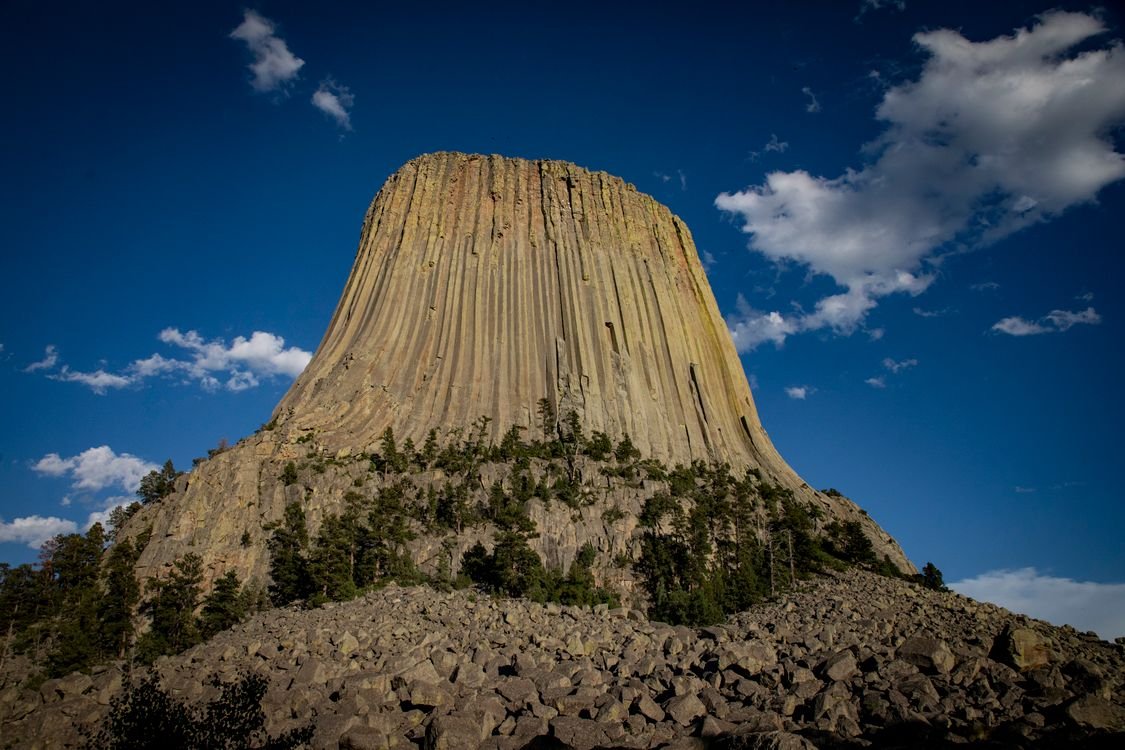
America's first national monument, established by Theodore Roosevelt in 1906, is famous enough to be recognizable and overlooked enough to be peaceful. The 1,267-foot igneous rock column rises abruptly from the Wyoming prairie, sacred to more than 20 Native American tribes.
The 1.3-mile Tower Trail circles the base, close enough to watch climbers on the column's famous cracks. Prairie dog towns, ponderosa forest, and the Belle Fourche River fill out the visit. It pairs naturally with the Black Hills or a Yellowstone road trip.
Weekend tip: Visit in June when climbers are active on the tower (there is a voluntary climbing closure in June out of respect for tribal ceremonies, so check current status), or in September for golden prairie light and thin crowds.
Three More Worth the Detour
Ten is an arbitrary number, and the monument system is deep. If your travels take you near these, do not skip them.
Vermilion Cliffs National Monument, Arizona. This 294,000-acre wilderness holds the famous Wave, a swirling sandstone formation whose permit lottery is one of the hardest tickets in the park system. But the monument is far more than one formation. Paria Canyon's narrows, the white domes of White Pocket, and one of the largest wild California condor colonies in the country reward those who explore beyond the headline. Come with a high-clearance vehicle, full self-sufficiency, and realistic expectations about the lottery.
Kasha-Katuwe Tent Rocks National Monument, New Mexico. Forty minutes from Santa Fe, cone-shaped volcanic formations line a slot canyon you can walk through in an afternoon. The 1.5-mile Cave Loop and the climb to the overlook deliver huge scenery per step, making this the easiest monument on this page to fit into a half day. It is managed by the Bureau of Land Management rather than the Park Service, so check BLM alerts for closures before going.
Sunset Crater Volcano and Wupatki National Monuments, Arizona. These two sit minutes apart near Flagstaff and pair perfectly. Sunset Crater preserves a cinder cone from an eruption less than 1,000 years ago, with trails through the lava fields. Wupatki protects red-rock pueblos, including a 100-room dwelling and a ceremonial ballcourt, that Ancestral Puebloans built in the eruption's aftermath. Together they tell one of the most fascinating stories in the Southwest: destruction, adaptation, and renewal.
How to Plan a National Monument Weekend
Passes: Many monuments charge no entrance fee. Where fees exist, the $80 America the Beautiful annual pass covers them. Check each monument's NPS page for current fees.
Gateway towns: Monuments cluster near great small towns. Use them. Bisbee for Chiricahua, Grand Junction for Colorado National Monument, Moab for Natural Bridges, Santa Fe for Bandelier, Torrey for Capitol Reef area combos.
Pairing strategy: The best monument weekends pair two nearby sites. Chiricahua plus Saguaro. Natural Bridges plus Monument Valley. Bandelier plus Kasha-Katuwe Tent Rocks. Colorado National Monument plus the Grand Mesa.
Season matters more than at big parks. Desert monuments are miserable at midday in July and glorious in October. Mountain monuments like Cedar Breaks have short summer seasons. Check the "best season" column in the table above and the monument's alerts page before committing.
Frequently Asked Questions
What is the difference between a national monument and a national park?
Both are units of the National Park System, but national parks are designated by Congress while national monuments are typically established by presidential proclamation under the Antiquities Act. In practice, monuments tend to be smaller and focused on a specific feature, which is exactly what makes them great for weekends.
Do I need reservations to visit national monuments?
Generally no. As of 2026, none of the monuments in this guide require timed entry permits. Some specific activities need advance booking, like tours at certain sites or the highly competitive lottery for The Wave at Vermilion Cliffs, but walk-up monument visits are the norm.
Which national monument is the most underrated?
Chiricahua gets our vote. Its rock formations rival anything in the famous Utah parks, it has excellent trails, and its remote location keeps visitation low. Most Southwest road trippers drive right past the turnoff without knowing what they are missing.
Can I camp at national monuments?
Many monuments have small campgrounds, often first-come, first-served. Craters of the Moon, Chiricahua, and El Malpais all offer camping. For monuments without campgrounds, nearby national forest land or gateway towns cover lodging.
Are national monuments free to enter?
Many are. El Malpais, for example, charges no entrance fee. Others charge modest fees, typically $10 to $30 per vehicle, and the America the Beautiful annual pass covers fee-charging monuments. Always verify on the monument's official NPS page.
How many national monuments are there?
More than 130 national monuments are managed by the National Park Service, with additional monuments managed by other federal agencies like the Bureau of Land Management and the Forest Service. New ones are still being designated, so the count grows over time.
Final Thoughts
The most underrated national monuments share a secret: they deliver the scale, the silence, and the strange beauty that people cross the country for, without the reservation warfare. Pick the one closest to you, or the one whose description made you lean forward, and go this season. The Wonderland of Rocks is waiting, and hardly anyone is there.
Looking for more crowd-free ideas? See our guide to the least crowded national parks for a peaceful weekend.