Tent Camping vs Hammock Camping: Which Is Right for You?
Every camper eventually faces the question: tent or hammock? Tents are the default, the thing everyone pictures when they hear "camping." Hammocks are the intriguing alternative, all over social media, promising better sleep and lighter packs. Both have passionate defenders. Both are right, for different people.
This is not a sponsored comparison and there is no affiliate agenda behind the verdict. It is an honest breakdown of how each system actually works, what each costs when you count everything, where each shines, and where each falls apart. By the end, you will know which one fits your camping style, or whether you are one of those people who ends up owning both.
The Short Answer: Which Should You Choose?
If you want the two-sentence version: beginners, families, couples, cold-weather campers, and anyone camping where trees are scarce should choose a tent. It is simpler, more versatile, and warmer out of the box.
Solo campers, backpackers, warm-weather campers, and people with bad backs who sleep in forested areas should seriously consider a hammock. The comfort is real, the packed weight is lower, and setup on uneven ground is liberating.
Everyone else: read on. The details matter, and the right answer depends on where you camp, who you camp with, and what kind of sleeper you are.
How Each System Actually Works
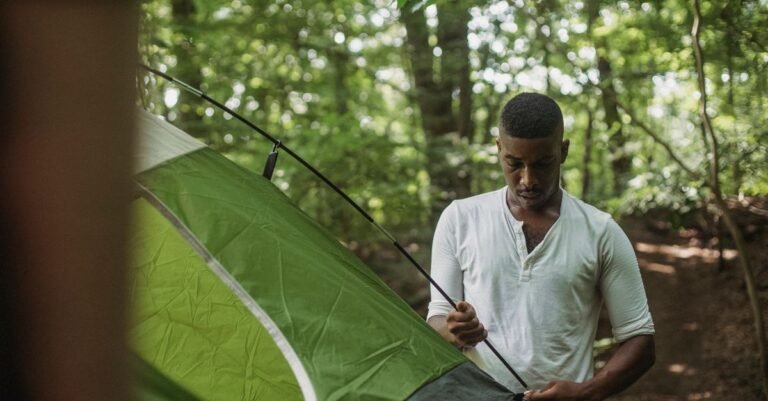
Tent camping is the system you already understand. A fabric shelter with poles, a rainfly, and a floor. You sleep on a pad inside a sleeping bag, on the ground. Modern tents range from $100 car-camping domes to $500 backpacking shelters, and setup takes five to fifteen minutes once you have done it twice. Everything you need comes in the box: shelter, floor, rain protection. Add a sleeping pad and bag and you are done.
Hammock camping replaces the tent with a fabric sling hung between two trees or posts. The basic hammock is just the sling and suspension straps. But a complete sleep system needs more: a rain tarp overhead for weather, a bug net for insects, and crucially, insulation underneath you (more on this below). A hammock setup has more pieces than a tent, each sold separately, which is where beginners get surprised.
The key mental shift: a tent is a complete shelter system in one purchase. A hammock is a modular system you assemble. Neither is better in the abstract. They are just different kinds of projects.
Head-to-Head Comparison
| Factor | Tent camping | Hammock camping |
|---|---|---|
| Comfort | Good on a quality pad; ground is hard | Excellent for back sleepers; gentle curve cradles you |
| Warmth (out of the box) | Good; enclosed space traps heat | Poor in cool weather without extra insulation |
| Weather protection | Excellent; integrated rainfly and floor | Good with a proper tarp; poor without one |
| Setup speed (beginner) | 10 to 15 minutes | 15 to 25 minutes (practice needed) |
| Setup speed (experienced) | 4 to 6 minutes | 8 to 12 minutes |
| Site selection | Needs flat, clear ground | Needs two sturdy trees; ground irrelevant |
| Privacy / changing | Full privacy | None; you change in the open or in a tarp shelter |
| Gear storage | Inside the tent vestibule | Minimal; needs a separate solution |
| Sleeps | 1 to 8+ depending on tent | 1 person (almost always) |
| Bug protection | Built in | Needs add-on bug net |
| Packed weight (full system) | Heavier | Lighter (for backpacking) |
| Beginner friendliness | High | Medium; learning curve on hang angle and insulation |
| Cost (complete starter system) | $200 to $350 | $150 to $300 |
Comfort: The Real Story
Let us talk about the thing everyone actually cares about: sleep quality.
Hammock defenders are not exaggerating about comfort. Sleeping suspended eliminates pressure points. No hip digging into the ground, no shoulder jammed against a root, no slowly deflating pad at 2 a.m. Many people, especially back sleepers, report their best outdoor sleep ever in a hammock. The gentle sway is genuinely soothing, and side sleepers can get comfortable too once they learn the diagonal lay (lying slightly angled across the hammock, which flattens the sleeping surface).
But tents have closed the gap. A quality insulated sleeping pad, three or more inches thick, transforms tent sleeping. It is not the thin foam pad of 1990s scouting trips anymore. Modern pads are legitimately comfortable, and in a spacious tent you can sprawl, sit up, and sleep in any position.
The honest summary: a hammock with a good hang beats a tent with a bad pad, and a tent with a great pad beats a hammock with a bad hang. Comfort is mostly about the quality of your specific setup, not the category. Do not switch systems expecting miracles; upgrade the weak link in the system you have first.
One more comfort factor people forget: getting in and out. Tents win for anyone with creaky knees or mobility issues. You can sit up, swing your legs around, and stand. Hammocks require an ungainly roll-and-plant maneuver that is funny to watch and less funny to perform at 3 a.m. in the rain. If you are over forty or just value dignity, factor this in.
Warmth: Where Hammocks Get Tricky
This is the section that saves hammock beginners from a miserable night. Read it twice.
In a tent, your sleeping bag's insulation compresses under your body, but your sleeping pad compensates with its own R-value. In a hammock, the same compression happens, but there is cold air flowing underneath you instead of a pad. Compressed insulation plus moving cold air equals a freezing back, even in a warm-rated sleeping bag. This phenomenon even has a name in hammock forums: cold butt syndrome.
The solution is an underquilt: an insulated quilt that hangs underneath the outside of the hammock, staying lofted (uncompressed) so it actually insulates. Underquilts are wonderful and they are also the hidden cost of hammock camping. A decent one costs $100 to $250, which can double the price of a budget hammock setup. Alternatives exist: a foam pad inside the hammock works but slides around and feels lumpy; some campers use a sleeping pad designed for hammocks. But the underquilt is the real answer, and any honest cost comparison has to include it.
Tents win on warmth simplicity, full stop. The enclosed space traps a bubble of warm air, the pad handles the ground, and the system works exactly as advertised down to the bag's rating. If you camp in shoulder seasons or cold weather, this simplicity is worth a lot.
Weather Protection
A tent with its rainfly on is a sealed unit: rain, wind, and bugs all handled. It is the most weatherproof thing you can sleep in short of a vehicle. Condensation can be an issue, but cracking a vent solves it.
A hammock with a properly pitched tarp is also very weather capable. A large hex or winter tarp, pitched low and tight, sheds rain and blocks wind impressively. Hammock campers ride out serious storms in these setups. But note the qualifiers: "properly pitched" and "large tarp." The little diamond tarp that comes in some starter kits is a fair-weather accessory, not storm protection. Learning to pitch a tarp well in wind and rain is a genuine skill that takes practice.
Wind deserves special mention. Tents, especially low-profile backpacking tents, handle wind well when guyed out. Hammocks expose more surface area and catch wind from below, which is both colder and noisier. In exposed, windy sites, tents have the clear edge.
Setup Speed and Site Selection
Here the hammock shines in one way and suffers in another.
Site selection is the hammock's superpower. Tents need flat, clear, dry ground, which at a crowded campground on a rainy weekend can be genuinely hard to find. Hammocks need two living trees of reasonable size, roughly 12 to 18 feet apart, and do not care at all what the ground is doing. Sloped, rocky, rooty, muddy: all fine. In dense forest, you will find a hammock site in seconds while tent campers are still pacing around with headlamps.
But tree availability is the hard constraint. Above treeline, in deserts, on beaches, in desert Southwest canyon country, at many developed campgrounds with manicured sites: no trees, no hammock. Some hammock campers carry trekking poles and adapt to ground setups, but at that point you are carrying a tent that is worse at being a tent. Before committing to a hammock, think honestly about where you actually camp.
Setup speed favors tents for beginners and keeps favoring them even with experience. Tent setup is intuitive: poles, clips, fly. Hammock setup involves finding the right trees, setting strap height, dialing the 30-degree hang angle, centering the tarp, and adjusting the underquilt. None of it is hard, but it is fiddly, and in rain or darkness the fiddliness multiplies. Budget extra time for your first five hangs.
Cost: Full System Breakdown
Advertised prices lie by omission. Here is what a complete, functional starter system actually costs for each.
| Component | Tent system | Hammock system |
|---|---|---|
| Shelter | $120 to $200 (2-person tent) | $60 to $100 (hammock with straps) |
| Rain protection | Included | $50 to $100 (tarp) |
| Bug protection | Included | $40 to $80 (bug net, if not integrated) |
| Bottom insulation | $50 to $100 (sleeping pad) | $100 to $200 (underquilt) |
| Top insulation | $80 to $150 (sleeping bag) | $80 to $150 (sleeping bag or top quilt) |
| Total | $250 to $450 | $330 to $630 |
The surprise for most people: a proper hammock system often costs MORE than an equivalent tent system, because the underquilt and tarp are significant purchases. The "$70 hammock" marketing is real for afternoon lounging, but camping-ready costs more. Tents look pricier at first glance and end up cheaper as complete systems.
Who Should Choose a Tent
Families. Tents sleep multiple people together, kids feel secure in the enclosure, and gear stays contained. Hammocks separate everyone into individual cocoons strung between different trees, which is a logistical headache with children.
Couples. Two people can share a tent. Two people cannot share a hammock (manufacturers who suggest otherwise are selling fantasy; it is uncomfortable and the weight math does not work).
Cold-weather campers. The warmth simplicity described above. If your camping season includes real cold, the tent's enclosed warmth is worth more than the hammock's comfort edge.
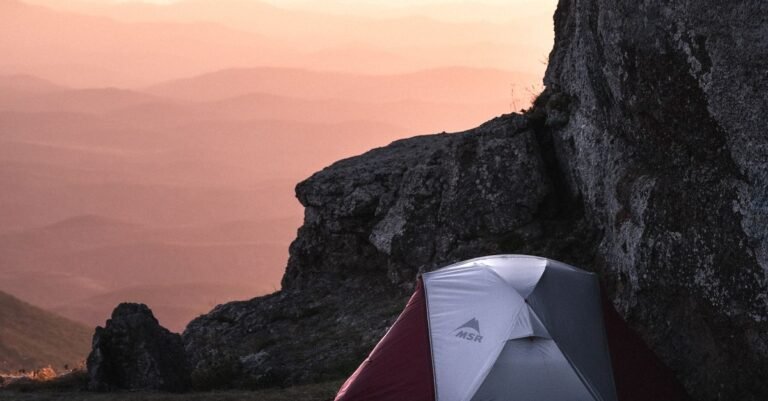
Desert, alpine, and beach campers. No trees, no hammock. Tents work everywhere there is a patch of ground.
Privacy-valuers. Changing clothes, dealing with nighttime bathroom needs, or just wanting a door that zips: tents provide a private room. Hammocks provide a view.
Gear-heavy car campers. If you bring the kitchen sink, the tent's vestibule and interior swallow it all. Hammock camping rewards minimalism and punishes sprawl.
Who Should Choose a Hammock
Solo backpackers in forested regions. This is the hammock's heartland. Lower packed weight, infinite site options, superb comfort. The Appalachian Trail, with its endless forest, is hammock country for a reason.
People with back pain. The pressure-point-free hang genuinely helps many back-pain sufferers sleep better outdoors than they do in their own beds. If ground sleeping has always hurt you, a hammock might be the thing that keeps you camping.
Warm-weather campers. In summer heat, the hammock's airflow is glorious while tents become saunas. The warmth problem disappears when nights stay above 65, and the comfort advantage is at its maximum.
Ultralight enthusiasts. A complete hammock system can dip under three pounds, competing with the lightest tents while offering better sleep. Every ounce matters to this crowd, and hammocks deliver.
Leave No Trace purists. Hammocks leave essentially zero ground impact: no compressed vegetation, no tent footprint. With tree-friendly wide straps (never rope, which damages bark), it is arguably the lowest-impact shelter there is.
Can You Do Both? The Hybrid Approach
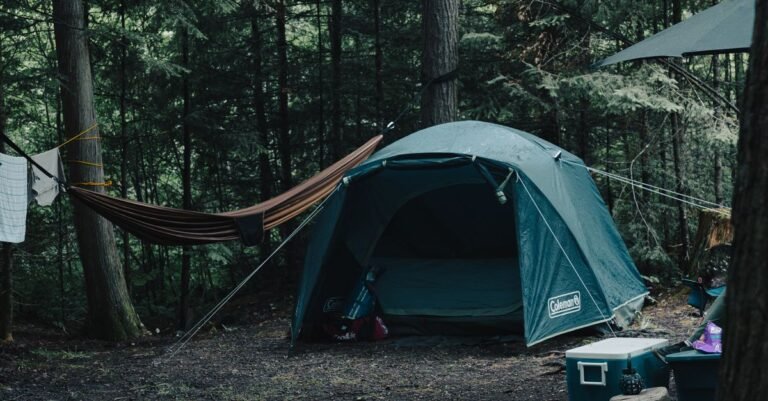
Plenty of campers end up with both, and it is not indecision, it is optimization. The common pattern: tent for family trips, cold weather, and treeless destinations; hammock for solo summer backpacking. A budget hammock for afternoon lounging costs little and scratches the itch without committing your whole sleep system.
There is also a middle path gaining popularity: the hammock tent, or a tent with a hammock-style lay. And some campers bring a cheap hammock purely as camp furniture, for reading and napping, while sleeping in the tent. If the hammock mystique appeals to you but the commitment worries you, start there. A $40 hammock for lounging teaches you whether you even like the sensation before you spend $400 on a full system. Many lifelong hammock converts started exactly this way: a lazy afternoon in a borrowed hammock, a surprised nap, and a gear order placed from the trailhead parking lot.
FAQ
Is hammock camping actually comfortable for sleeping all night?
For most back sleepers, yes, genuinely. The diagonal lay flattens the curve and the lack of pressure points is real. Stomach sleepers struggle, and some side sleepers never adjust. Try before you buy: borrow a setup or nap in a park hammock for an hour before committing.
Do I really need an underquilt for hammock camping?
Below about 65 degrees Fahrenheit at night, yes, effectively. Your sleeping bag's insulation compresses beneath you and cold air circulates under the hammock. A foam pad inside the hammock is a workable budget substitute but slides around. The underquilt is the proper solution and the main hidden cost of the system.
Can two people sleep in a camping hammock?
Not comfortably and not safely at rated weights. Camping hammocks are designed for one person; two people create an unstable, cocooned tangle and exceed most weight ratings. Couples who hammock camp bring two hammocks and hang them side by side.
Is a hammock or tent better for beginners?
A tent, clearly. It is one purchase, intuitive setup, built-in weather and bug protection, and it works everywhere. Learn to love camping in a tent first; add a hammock later as a second system once you know your style.
How do you stay dry in a hammock in the rain?
With a large tarp pitched low over the hammock, ideally a hex or winter tarp with doors. Keep the hammock centered under the tarp, pitch the tarp's windward side low, and store gear under the tarp or in a waterproof pack cover. Practice pitching in the backyard before trusting it in a storm.
Are hammocks bad for trees?
They can be if you use rope or cord, which cuts into bark. Wide tree straps (at least one inch, wider is better) distribute weight and are the standard. The Leave No Trace Center specifically recommends tree-friendly straps, and many parks and campgrounds require them. Never hang from dead, damaged, or very young trees.
The Bottom Line
Tents are the right default: simpler, cheaper as a complete system, warmer, more versatile, and better for groups. Hammocks are the right specialty tool: more comfortable for many solo sleepers, lighter for backpacking, and unbeatable on site selection in the forest, once you accept the learning curve and the underquilt.
The most honest advice: start with a tent, because it handles everything. Add a hammock when you know exactly which trips it would improve. The campers who love hammocks most are not the ones who were talked into them. They are the ones who tried one, slept better than they had in years, and never looked back.