16 Hallstatt Itinerary Ideas for the Perfect Getaway
Introduction
Hallstatt has been continuously inhabited for over 7,000 years, making it one of the oldest settlements in the entire world — and somehow, it only gets more breathtaking with time. Planning a smart hallstatt itinerary is the single best thing you can do before arriving at this tiny Austrian village perched on the edge of Lake Hallstatt.
With a permanent population of just 778 residents, Hallstatt welcomes millions of visitors every year. Without a clear plan, it’s surprisingly easy to spend your precious hours in the wrong spots at the wrong times.
This village rewards those who look beyond the famous lakeside photograph. Hidden salt mines, ancient Celtic burial sites, and alpine hiking trails are waiting just steps from the postcard-perfect waterfront.
For another perspective, this detailed piece on One day in Hallstatt – your perfect itinerary is worth a read.
Inside this article, you’ll find 16 unique itinerary ideas carefully chosen for every type of traveler — whether you’re a solo adventurer, a couple seeking romance, or a family with curious kids in tow.
- Outdoor adventures and scenic hikes
- Cultural and historical experiences
- Relaxed, slow-travel afternoon ideas
- Seasonal tips for every time of year
Hallstatt Itinerary Idea 1: Arrive by Ferry and Soak in the First Iconic Views
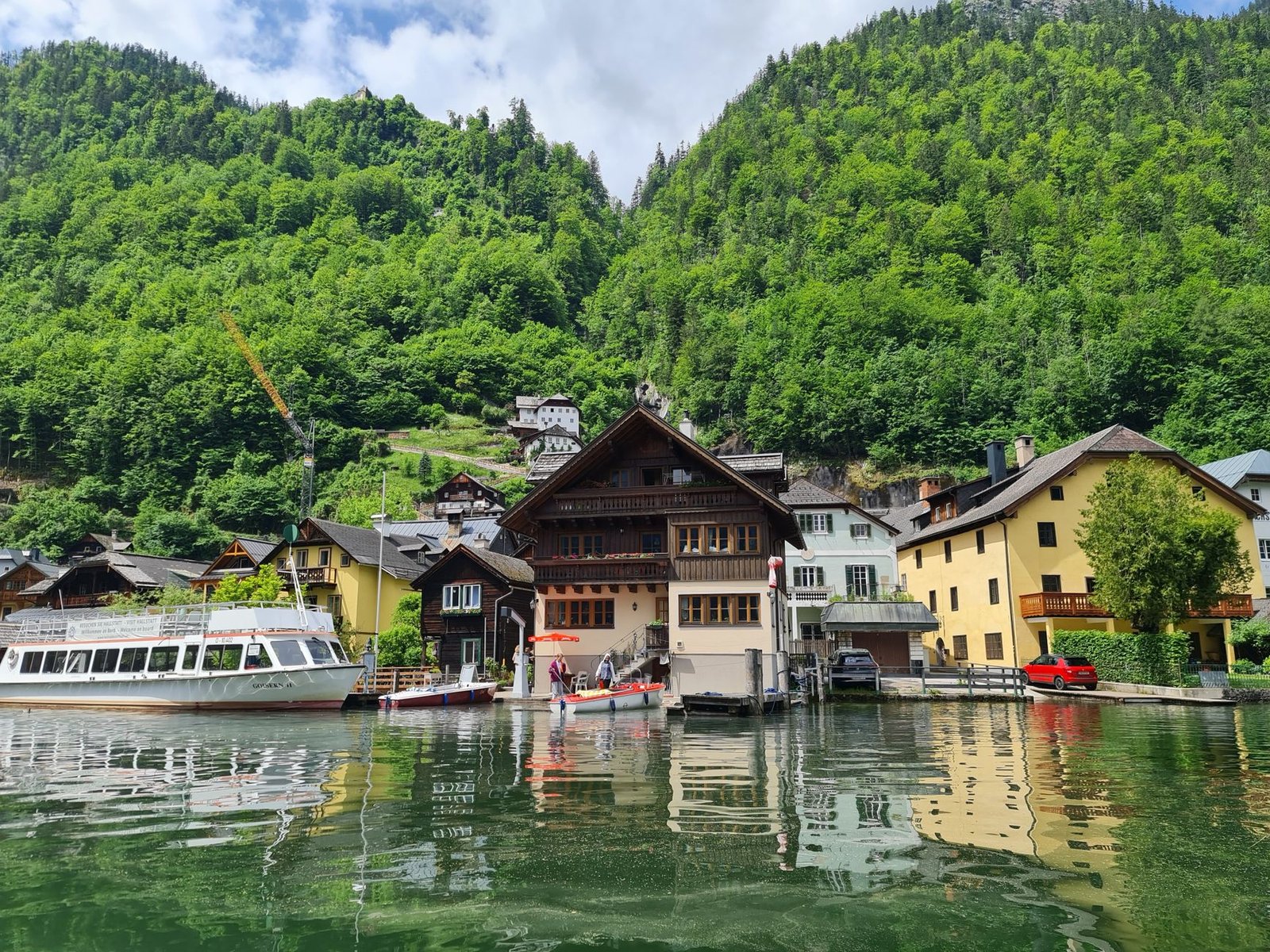
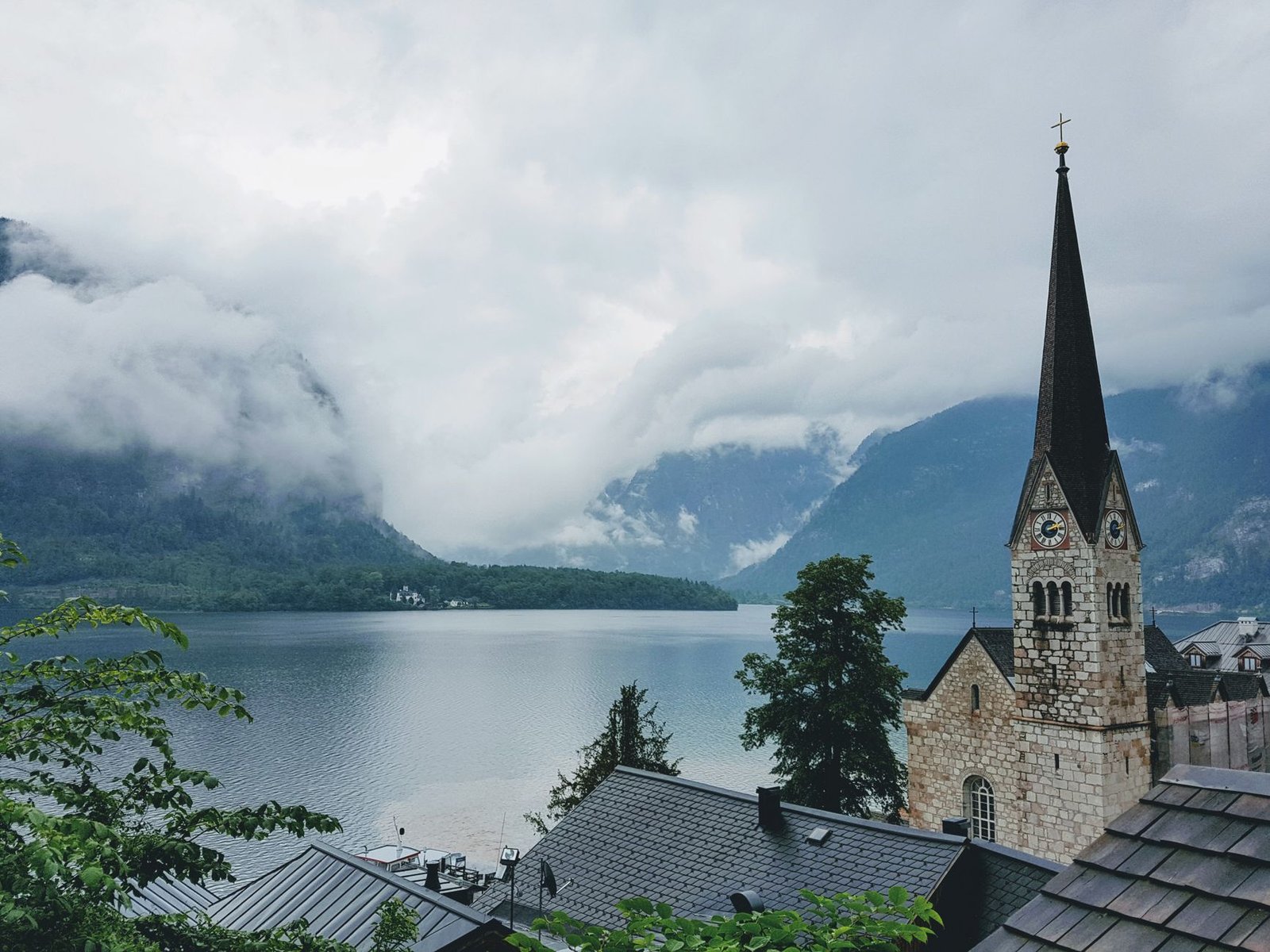
You’ve just stepped off the train at Hallstatt Bahnhof, your bag on your shoulder, and across the glittering Hallstätter See sits one of the most photographed villages in the world. The short ferry crossing makes that first glimpse feel earned.
Arriving via the ferry from the train station rather than by road gives you a completely different perspective — you approach the village from the water, watching the pastel-coloured houses and church spire slowly fill your entire view.
The ferry crossing itself takes only about 10 minutes and costs roughly €3 per person, making it one of the most affordable and memorable arrivals you’ll find anywhere in Austria.
For your hallstatt itinerary, timing your arrival matters more than you might expect. The golden hour before sunset, typically between 6:00 and 7:30 PM in summer, wraps the village in warm amber light that turns every photograph into something extraordinary.
Once you dock, the classic postcard shot is easier to find than people expect. Head south along the lakeside promenade for about two minutes until you reach the small wooden boat dock area.
For the best angle, keep these positioning tips in mind:
- Stand with the dock slightly to your left and the church tower centred in your frame
- Arrive early morning for glassy, reflection-perfect water with almost no foot traffic
- The north-facing viewpoint near the Hallstatt Market Square captures rooftops, lake, and mountains together
Take a slow breath before reaching for your camera. That first water-level view of Hallstatt is something you’ll want to hold in your memory, not just your camera roll.
Hallstatt Itinerary Idea 2: Explore the Historic Market Square (Marktplatz)
Have you ever stood in a square so picture-perfect that it felt almost unreal? Marktplatz delivers exactly that feeling, making it one of the most rewarding stops on any hallstatt itinerary.
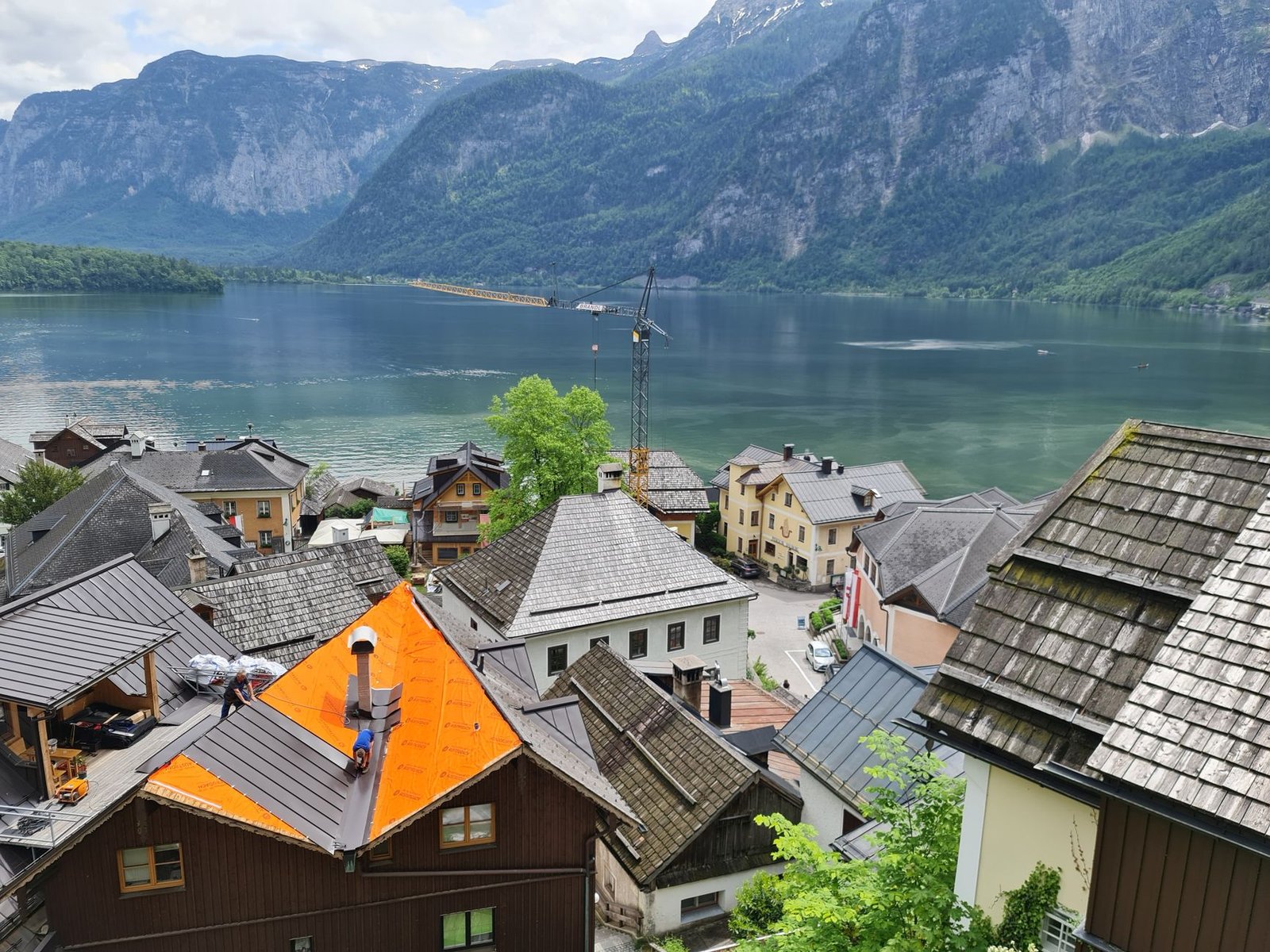
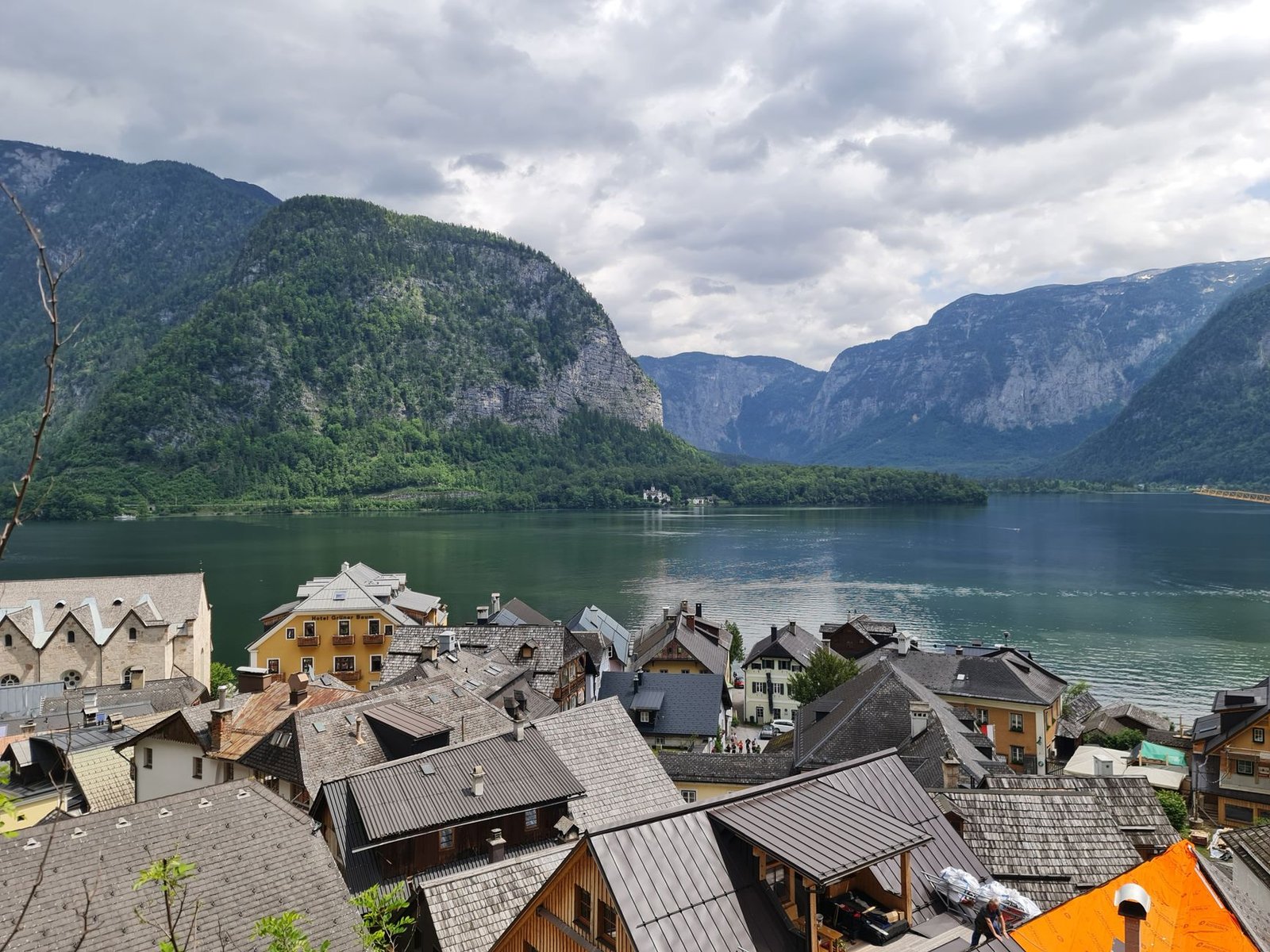
Start your morning with a slow walk around the square, taking in the colorful pastel facades that line each side. Many of the buildings date back to the 16th century, and their flower-draped balconies overflow with red and pink geraniums throughout summer.
Several key landmarks sit within a short stroll of each other here. The Holy Trinity Column, rising roughly 12 meters tall at the heart of the square, was erected as a gesture of gratitude after the town survived a devastating fire in 1750.
- The Trinity Column and its intricate Baroque carvings
- The Evangelical Church with its striking lakeside position
- The old town hall facade, painted in soft yellow
For breakfast, Café am See is a local favourite just steps from the square. Pull up a chair on their terrace and order a proper Austrian breakfast with fresh bread, cold cuts, and strong coffee while watching the morning light shift across the water.
Arriving before 9 a.m. makes a real difference here. The square feels calm and personal before the tour groups arrive, giving you space to photograph the facades and simply breathe in the atmosphere.
Hallstatt Itinerary Idea 3: Climb to the World Heritage Skywalk for Panoramic Views
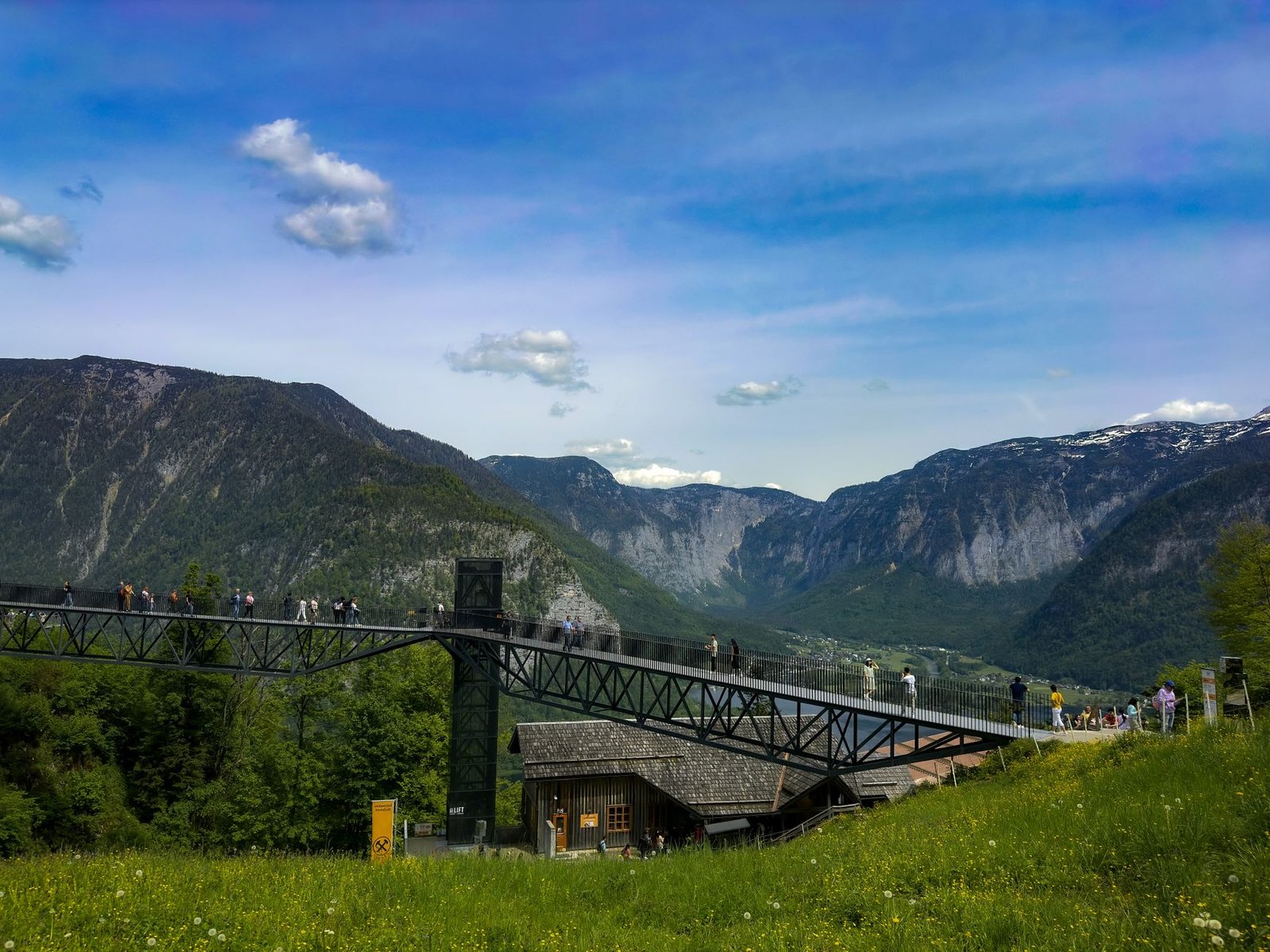
Many visitors assume the famous Hallstatt lake view is best appreciated from the village shoreline. In reality, the most breathtaking perspective sits 350 meters above the water at the Hallstatt Skywalk.
To reach the top, take the Hallstatt Salzberg funicular from the valley station near the boat dock. The ride takes just a few minutes and drops you steps away from the viewing platform, which juts out dramatically over the Alps and the shimmering Hallstätter See below.
On a clear day, you can see the full sweep of the Dachstein mountain range, the terracotta rooftops of the village, and the winding valley stretching south. The best photography angles come from the far edge of the platform, shooting back toward the village with the lake framing the foreground.
Planning this stop into your hallstatt itinerary works especially well in the early morning, when mist still clings to the lake and the light is soft and golden.
Practical details to keep in mind:
- The funicular runs daily from approximately 9:00 AM to 6:00 PM in peak season
- Combined funicular and Skywalk tickets cost around €16 per adult
- Wear sturdy shoes, as the path to the platform involves some uneven stone steps
- Bring a light jacket — the elevation makes it noticeably cooler than the village below
Hallstatt Itinerary Idea 4: Descend into the Ancient Hallstatt Salt Mine (Salzwelten)
There’s something quietly humbling about standing inside a mountain that humans have been hollowing out for over 7,000 years. The Hallstatt Salt Mine is the oldest working salt mine in the world, and its cultural weight helped earn the entire Hallstatt-Dachstein region its UNESCO World Heritage status back in 1997.
Adding this to your hallstatt itinerary means stepping into living history. Miners were extracting salt here during the Bronze Age, and the site has shaped European trade routes and entire civilisations.
The underground tour itself is genuinely fun, not just educational. Highlights include:
- Riding a traditional wooden mining slide deep into the mountain
- Crossing an eerie underground salt lake by boat
- Viewing prehistoric tools and reconstructed mining scenes
- Wearing an authentic miner’s suit for the full experience
The complete tour runs approximately 90 minutes from start to finish, including the funicular ride up from the village. Adult tickets cost around €36, which includes the cable car.
Book your tickets online at least two days ahead, especially between June and September when morning slots sell out fast. Arriving before 10am also helps you beat the tour group rush considerably.
Set aside a solid half-day for this experience so you can browse the small mine museum and enjoy the mountain views without feeling rushed.
Hallstatt Itinerary Idea 5: Visit the Bone House (Beinhaus) and St. Michael’s Chapel
Plan to arrive before 11 a.m. to avoid the midday crowds that gather around this compact but profoundly moving site.
Tucked beside St. Michael’s Chapel in Hallstatt’s hillside cemetery, the Beinhaus is a Catholic charnel house holding over 1,200 painted and decorated human skulls. Because the village’s rocky terrain left almost no room for traditional burials, bodies were exhumed after roughly 10 years and their bones carefully arranged here.
Most skulls are painted with the deceased person’s name, death date, and floral garlands — a deeply personal tradition that continued actively until 1995. It’s eerie and beautiful in equal measure.
This stop fits naturally into any hallstatt itinerary focused on cultural depth, offering a window into centuries of Alpine Catholic practice that few visitors find elsewhere in Austria.
The small chapel costs just €1.50 to enter, making it one of the most affordable and memorable experiences in town.
When visiting, keep these etiquette guidelines in mind:
- Speak quietly — this remains a sacred religious space
- Photography is permitted, but avoid flash out of respect
- Do not touch the skulls or bones under any circumstances
Just steps away, the surrounding hillside cemetery is genuinely worth a slow wander. Graves are decorated with iron crosses and fresh alpine flowers, offering a quieter, equally touching complement to the Beinhaus itself.
Hallstatt Itinerary Idea 6: Take a Scenic Boat Trip on Lake Hallstatt
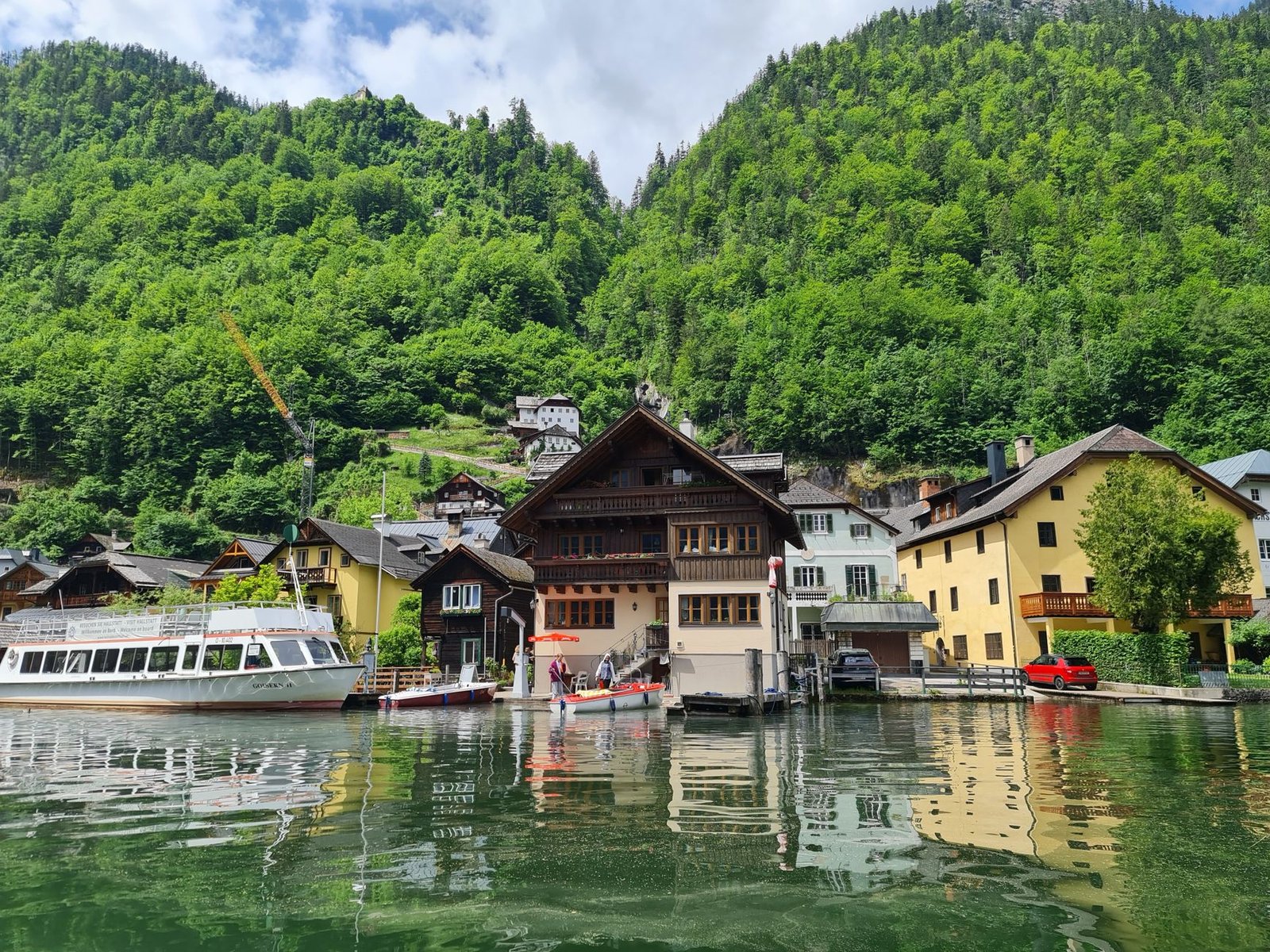
On a calm summer morning, the mirror-flat surface of Lake Hallstatt reflects the pastel facades and church spire in a way that feels almost unreal. Adding a boat trip to your hallstatt itinerary gives you a completely different perspective on this iconic village.
You have several ways to get out on the water. Rowboats and electric boats are available for rent near the main boat landing, typically for around €15 per hour, making it easy to set your own pace and drift wherever the light takes you.
If you prefer a guided experience, local lake tours run regularly and often include commentary about the region’s salt-mining history and Alpine geology. These are especially worthwhile if you want to focus on photography without managing the oars.
For the best shots of the village, paddle out to the northeastern corner of the lake where you get a wide-angle view of the entire waterfront with the Dachstein peaks rising behind it. Early morning light hits the buildings beautifully from this angle.
Keep your eyes on the shoreline as you row, because the natural scenery rewards patient observers. Watch for:
- Grey herons standing motionless along the reedy edges
- Swans nesting near the southern shore in late spring
- Dense pine forests dipping directly into the water
- Crystal-clear shallows revealing smooth white pebbles just beneath the surface
It’s a quietly magical hour however you choose to spend it.
Hallstatt Itinerary Idea 7: Hike the Echern Valley Trail to Waldbachstrub Waterfall
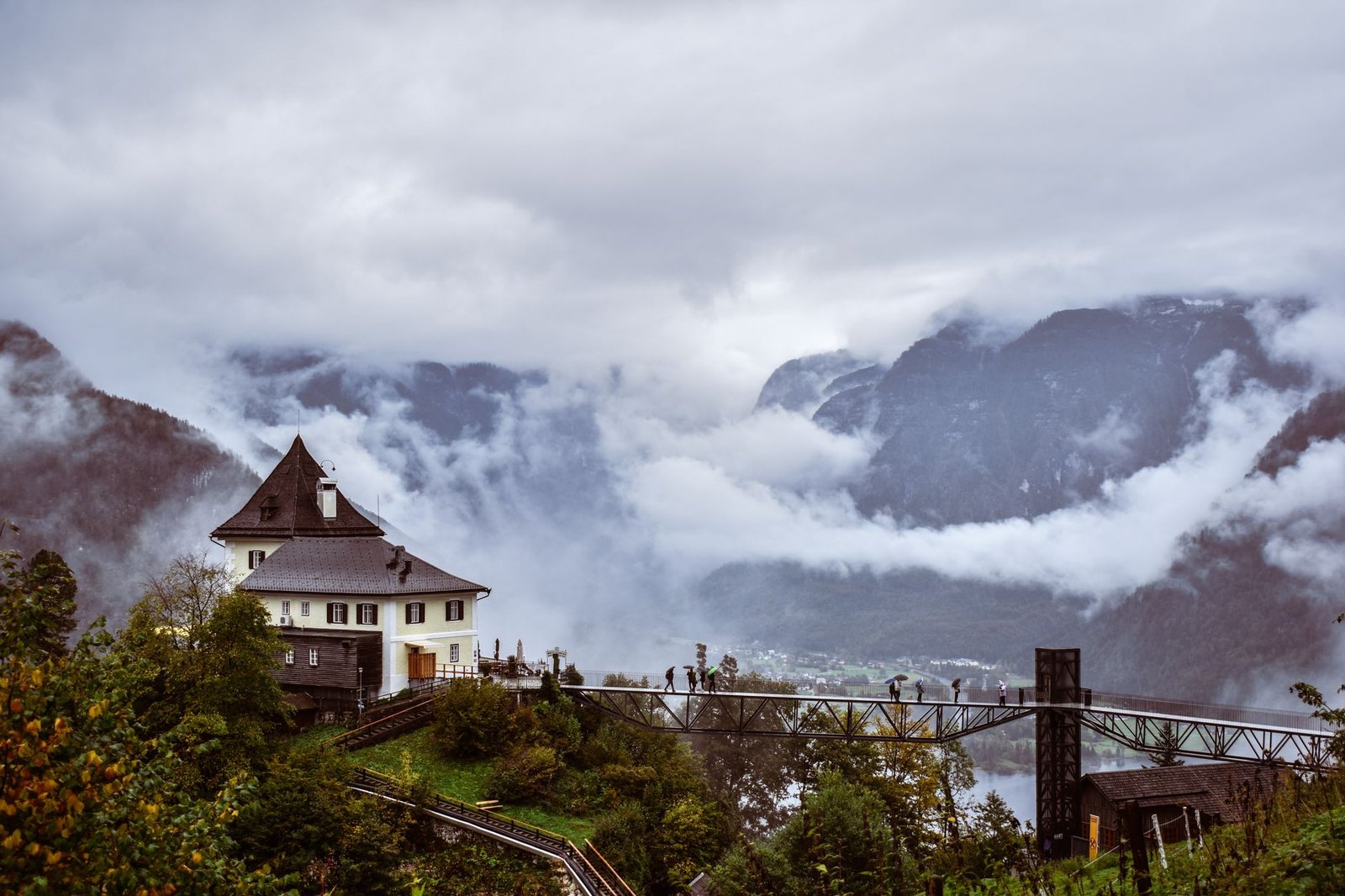
While a boat tour costs around €15 per person, this hike is completely free — and arguably just as rewarding. If you want to add natural drama to your hallstatt itinerary, the Echern Valley Trail delivers it in spades.
The trail begins right at the edge of the village, making it easy to reach on foot without any transport. Follow the clearly marked path along the Echernbach stream, passing through cool alpine forest before the landscape opens up dramatically.
The Waldbachstrub Waterfall greets you after roughly 3.5 kilometres of walking, cascading down mossy rock faces with a roar you hear well before you see it. The surrounding forest feels ancient and hushed, draped in ferns and soft green light filtering through the canopy.
The trail is rated easy-to-moderate, with a gentle but consistent incline that suits most fitness levels. Sturdy walking shoes are essential, as sections near the waterfall can be slippery from mist and spray.
- Pack a rain jacket even on clear days — the waterfall zone stays damp
- Bring water and a small snack, as there are no cafés along the route
- Trekking poles help on the return downhill stretch
Late spring and early summer are the best seasons, when snowmelt pushes the waterfall to its most powerful and the wildflowers line the path in colour. Autumn works beautifully too, with golden foliage reflecting in the stream below.
Hallstatt Itinerary Idea 8: Discover the Dachstein Ice Caves and Giant Ice World
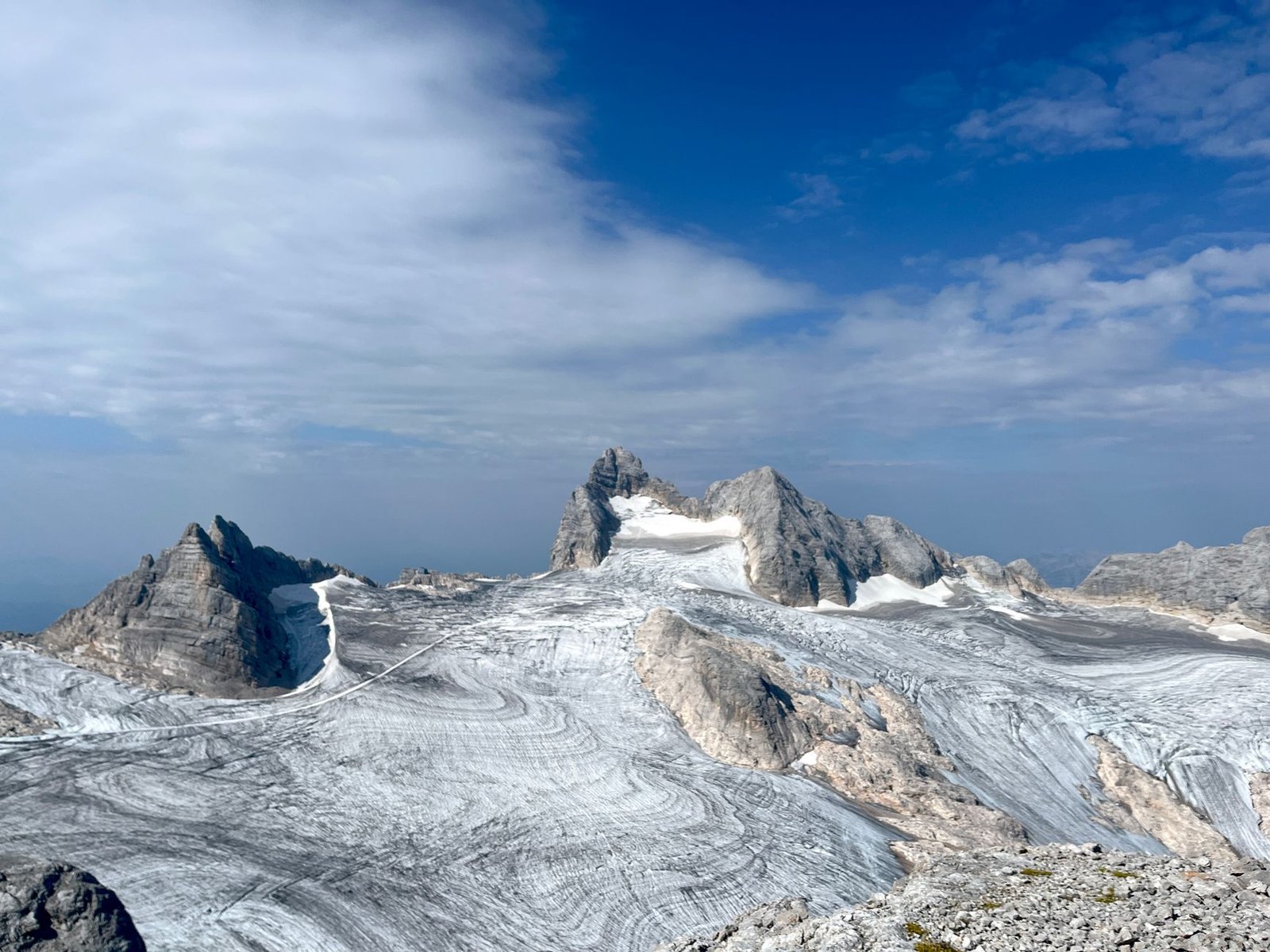
The Dachstein Giant Ice World sits at roughly 1,350 meters above sea level, and the temperature inside never climbs above freezing — even in the middle of July.
From Hallstatt, you take a short bus or taxi ride to Obertraun, which sits just 4 kilometers along the southern shore of the lake. From there, the Dachstein cable car whisks you up the mountain in two stages, with a combined ticket for the cable car and caves costing around €35 per adult.
Once at the top, you have two main experiences to choose between. The Giant Ice World tour winds through glittering frozen chambers shaped over thousands of years, while the Mammoth Cave tour explores a separate network of dramatic limestone passages lit by atmospheric spotlighting.
Most visitors pick one tour, but combining both rewards you with a genuinely full mountain day. Wear warm layers regardless of the season — the caves stay cold no matter what the weather is doing outside.
Adding this excursion to your hallstatt itinerary gives you something completely different from the village’s famous lakeside charm. It shifts the day into true alpine adventure territory.
Here is why this extension stands out in the Salzkammergut region:
- Ice formations that have been building for over 1,000 years
- Views across the Austrian Alps from the upper cable car station
- Easy access from the village with no car required
- A rare chance to explore both ice and limestone cave systems in one visit
Hallstatt Itinerary Idea 9: Stroll the Lakeside Boardwalk at Sunrise or Sunset
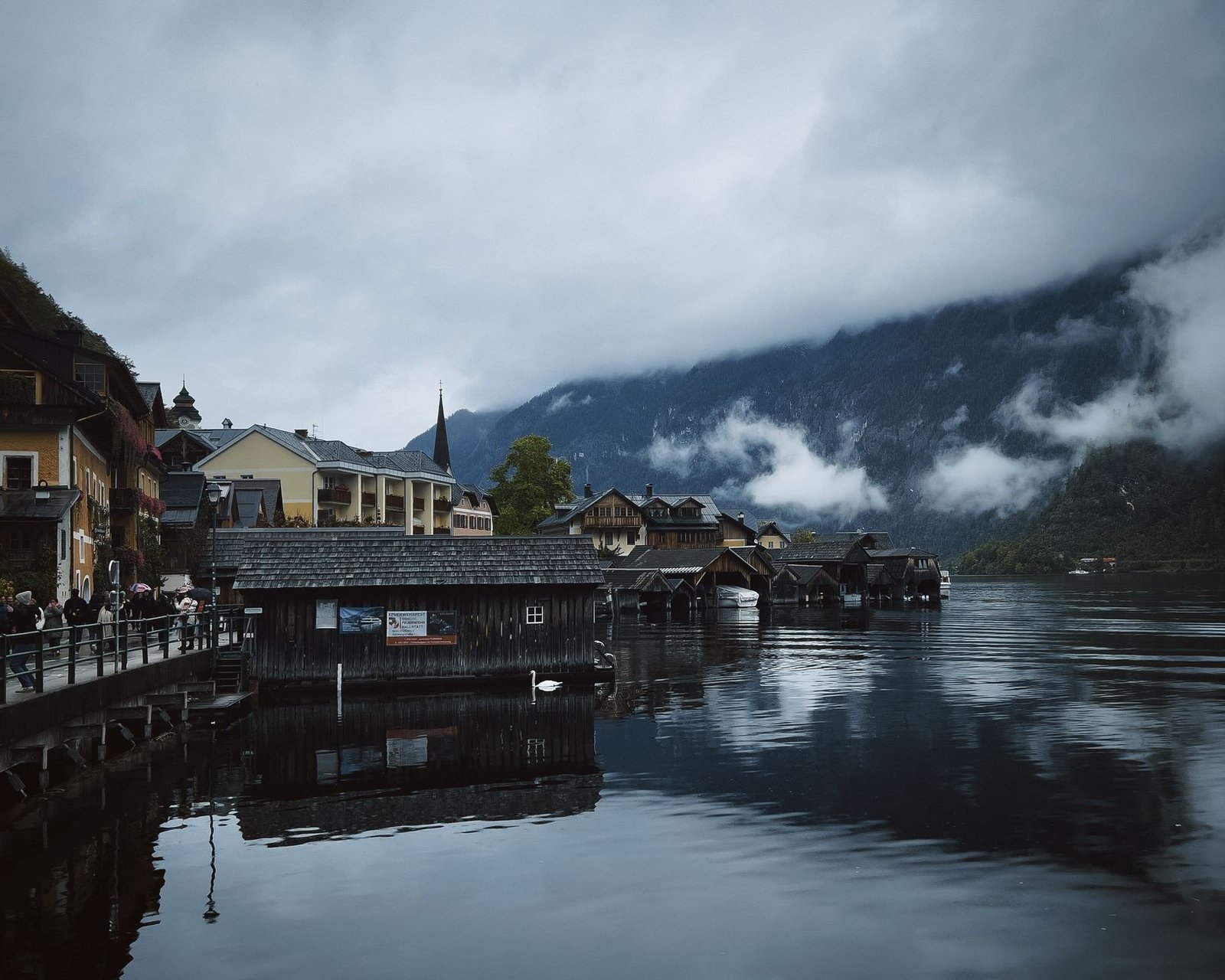
You wake up early, coffee in hand, and step outside to find the entire village wrapped in a pale gold glow reflected off the glassy surface of Hallstätter See. That moment costs absolutely nothing, and it stays with you long after you leave.
The boardwalk walk is one of Hallstatt’s most magical free activities, stretching roughly 1.5 kilometres along the lake’s edge through the heart of the village. No entrance fee, no ticket queue — just you, the water, and the mountains.
Light transforms this place completely depending on when you visit. At sunrise, the pastel-coloured houses glow amber and rose, their reflections almost perfectly mirrored below. By sunset, the same facades shift into deep copper and violet, and the surrounding Dachstein peaks take on a dramatic, shadowy presence.
Hidden nooks and weathered wooden benches are tucked along the route, especially near the old boathouse and the small fishing jetties on the northern end of the path. These quiet corners are ideal for slow photography or simply sitting still.
When planning your hallstatt itinerary, build in at least one early morning and one evening boardwalk walk — they feel like entirely different experiences.
- Arrive 20 minutes before sunrise for the softest, most even light
- Bring a wide-angle lens or use portrait mode for reflection shots
- The northern jetty area offers the clearest, least-crowded views
- Weekday mornings are noticeably quieter than weekend evenings
Hallstatt Itinerary Idea 10: Immerse Yourself in Local History at the Hallstatt Welterbemuseum
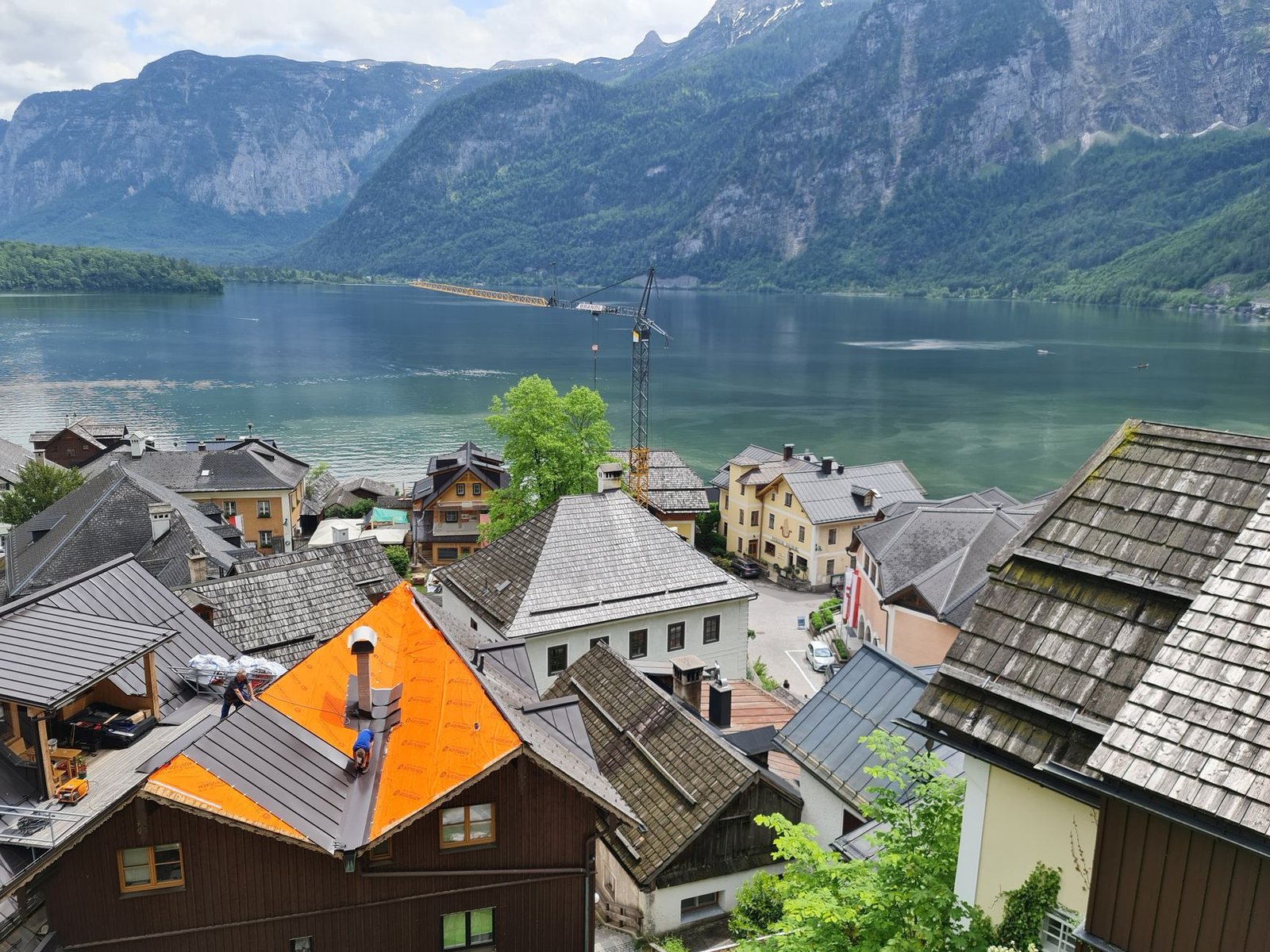
Have you ever wondered what life looked like in this alpine valley thousands of years before tourists arrived with their cameras? The Hallstatt Welterbemuseum answers that question beautifully.
Sitting right in the heart of the village, this compact but richly stocked museum takes you on a journey from prehistoric Hallstatt culture all the way through to modern times. The collection reflects the town’s remarkable continuity as a human settlement stretching back over 7,000 years.
The real showstoppers are the Celtic artifacts and reconstructed burial finds from the nearby Hallstatt salt mines and surrounding hillside cemetery. You’ll see jewelry, weapons, and everyday tools that paint an intimate picture of Iron Age life in this very valley.
- Prehistoric salt-mining tools recovered directly from the mountain
- Intricate Celtic ornaments and burial objects
- Reconstructed grave displays with original archaeological finds
- Exhibits tracing the region’s cultural evolution through medieval and modern periods
Adding this stop to your hallstatt itinerary is genuinely worthwhile. Budget roughly 90 minutes to move through the exhibits without rushing.
Adult admission costs €10, which is very reasonable given the depth of what’s inside. The museum is open daily during peak season, so it fits neatly into almost any morning or afternoon plan.
Hallstatt Itinerary Idea 11: Day Trip Extension to the Obertraun Village and Koppenbrüllerhöhle Cave
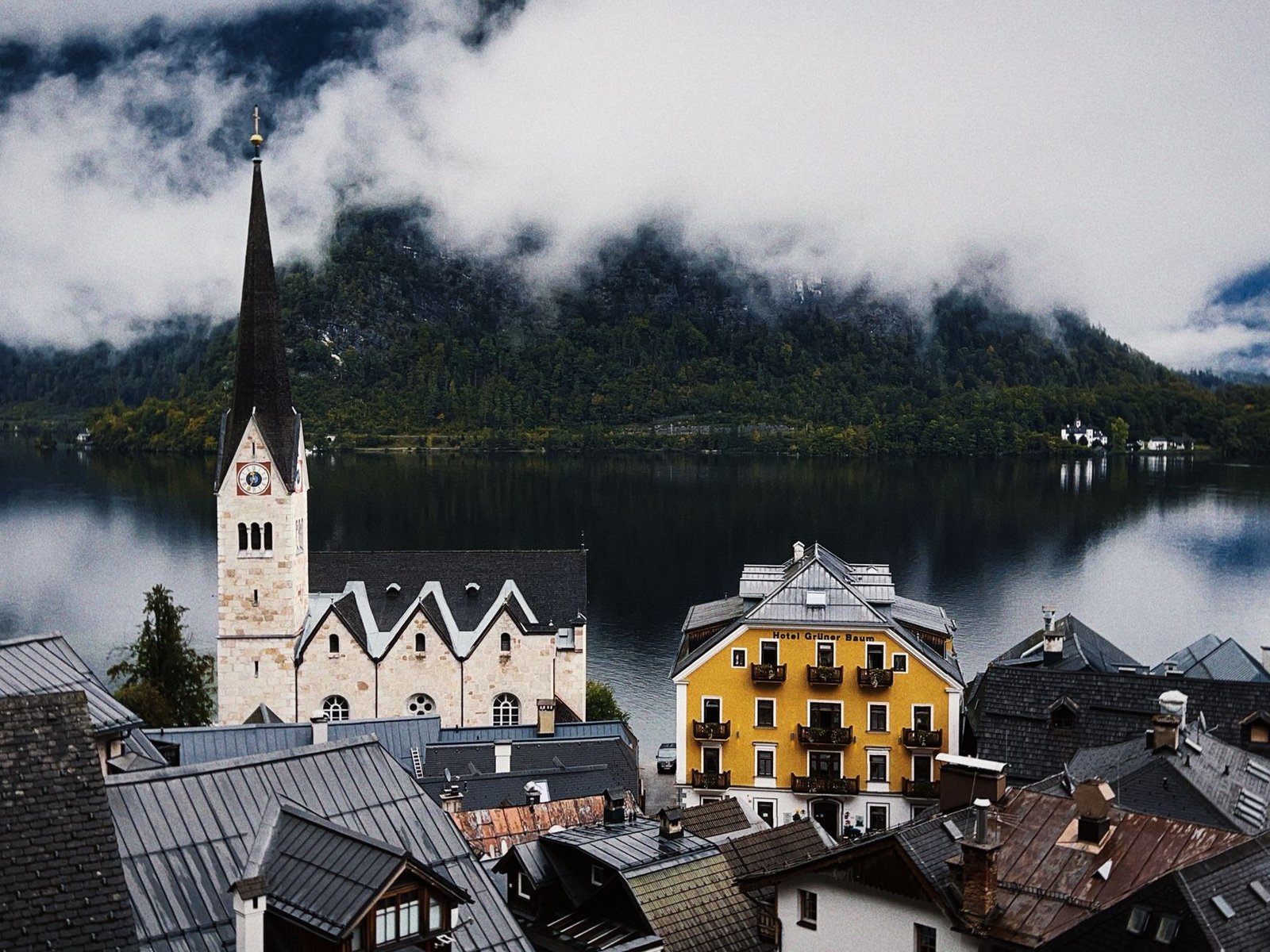
Many visitors assume Hallstatt’s lakeside village holds all the magic — but the quieter eastern shore tells a completely different story. Obertraun, just 4 kilometres away, offers a slower, more local rhythm that pairs beautifully with any hallstatt itinerary.
Obertraun’s trails wind through meadows and forested lakeside paths with almost none of the crowds you’ll find back in the main village. It’s an easy half-day add-on that genuinely changes your pace.
The highlight here is the Koppenbrüllerhöhle show cave, one of Austria’s most dramatic karst cave systems. Inside, an active underground river roars through narrow limestone passages, filling the cave with a constant cool mist and an almost theatrical echo.
Guided tours last approximately 45 minutes and take you through chambers where the river spills across ancient rock formations. The combination of sound, water, and stone makes it unlike any typical cave visit.
Getting there is refreshingly straightforward:
- Rent a bike in Hallstatt and follow the flat lakeside cycling path directly to Obertraun
- Walk the 4-kilometre shoreline trail for a scenic 50-minute stroll
- Catch the local bus (Line 542) which runs several times daily between Hallstatt and Obertraun
Arriving early on a weekday gives you the best chance of quiet trails and a small cave tour group. Pack a light jacket — the cave interior stays around 8°C year-round.
Hallstatt Itinerary Idea 12: Sample Austrian Cuisine at Lakeside Restaurants
There is something quietly magical about sitting beside the Hallstätter See with a plate of fresh trout in front of you, watching the water shift colors as the afternoon light fades.
No hallstatt itinerary feels complete without dedicating at least one proper meal to the lakeside dining scene. The restaurants here pull from regional Salzkammergut traditions, meaning you will find dishes rooted in alpine freshness rather than tourist shortcuts.
For classic plates, look for these local highlights:
- Pan-fried Reinanke (lake whitefish) served with buttered potatoes
- Golden, crispy Wiener Schnitzel with lingonberry jam
- Kaiserschmarrn for dessert — a fluffy shredded pancake with plum compote
- Regional Sturm wine during early autumn harvest season
Budget diners will find satisfying set lunch menus at Gasthof Simony for around €14 per person, while Seehotel Grüner Baum offers a more polished splurge experience with stunning unobstructed water views.
Timing your meal thoughtfully makes a noticeable difference. Arriving for lunch between 11:30 a.m. and noon, before the midday tour groups flood in, dramatically improves your chances of landing a coveted window seat.
Evening dining after 7:00 p.m. also tends to feel calmer and more intimate, with softer light reflecting beautifully off the lake right outside your table.
Hallstatt Itinerary Idea 13: Shop for Local Crafts and Unique Souvenirs
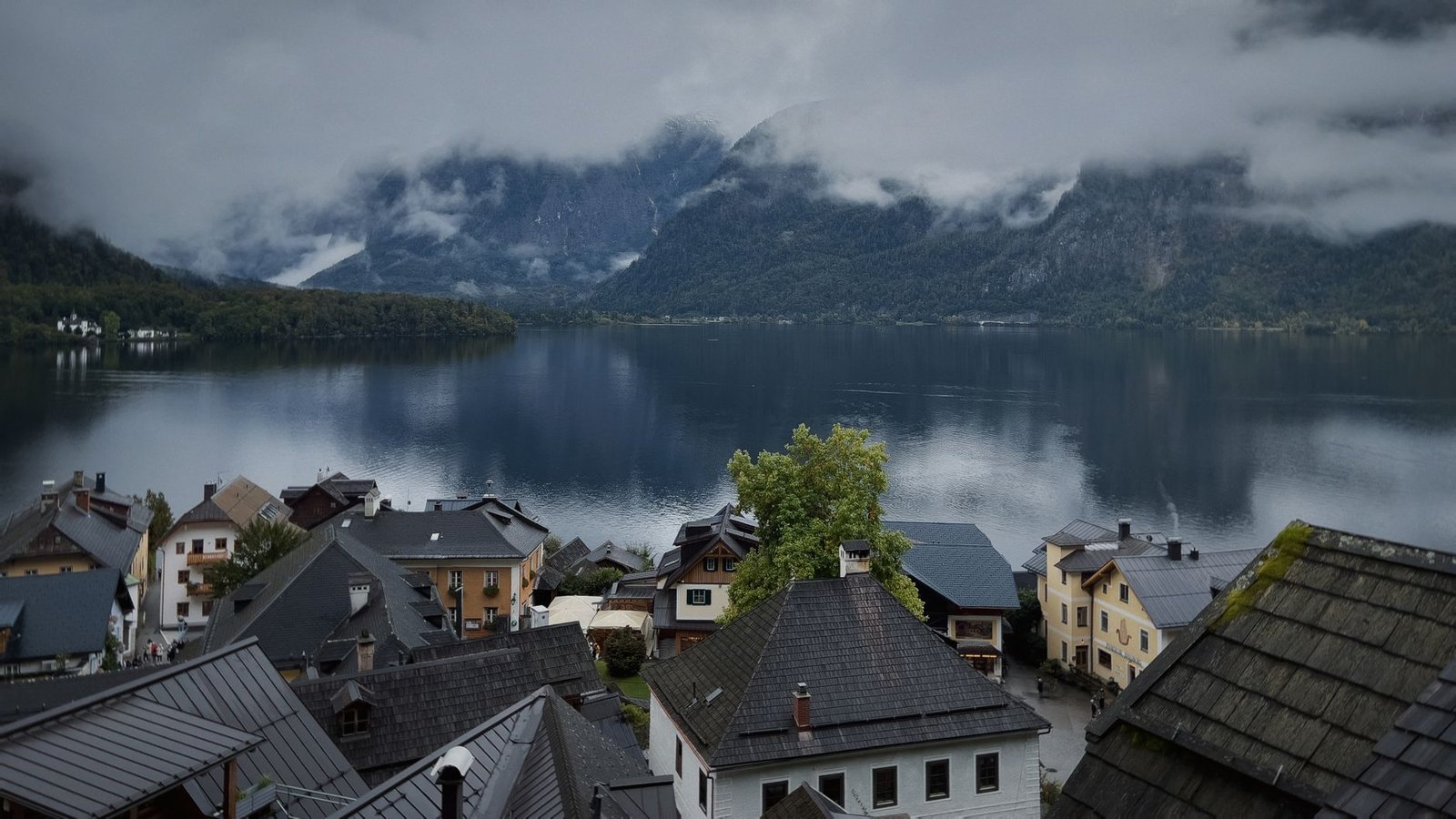
Set aside at least 90 minutes for browsing, because Hallstatt’s small shops reward slow, curious walkers rather than quick dash-and-buy tourists.
Unlike souvenir stalls that sell the same mass-produced keychains you’d find anywhere in Austria, Hallstatt’s artisan shops stock genuinely regional goods made by local craftspeople with deep roots in the area’s mining and Celtic history.
When you’re building out your hallstatt itinerary, pencil this stop in for late morning, when shopkeepers are unhurried and happy to explain what you’re actually looking at.
Salt-based products are the most distinctly local thing you can buy — think bath salts, mineral soaps, and seasoning blends sourced directly from the Salzwelten mine that has operated here for over 7,000 years.
Celtic-inspired silver jewelry and hand-thrown ceramics featuring traditional Alpine motifs are also worth seeking out. These pieces typically start around €18 and feel genuinely connected to the place rather than imported and repackaged.
The best shopping runs along two areas:
- Seestraße, the main lakeside promenade, where several established craft boutiques sit between cafés
- The narrow side lanes climbing uphill from the market square, where smaller one-room studios often sell directly from the maker
Bring cash to the smaller studios — card readers aren’t always available, and the pieces there tend to be the most personal and memorable finds of the whole trip.
Hallstatt Itinerary Idea 14: Photograph Hallstatt in Winter for a Snow-Dusted Fairytale Scene
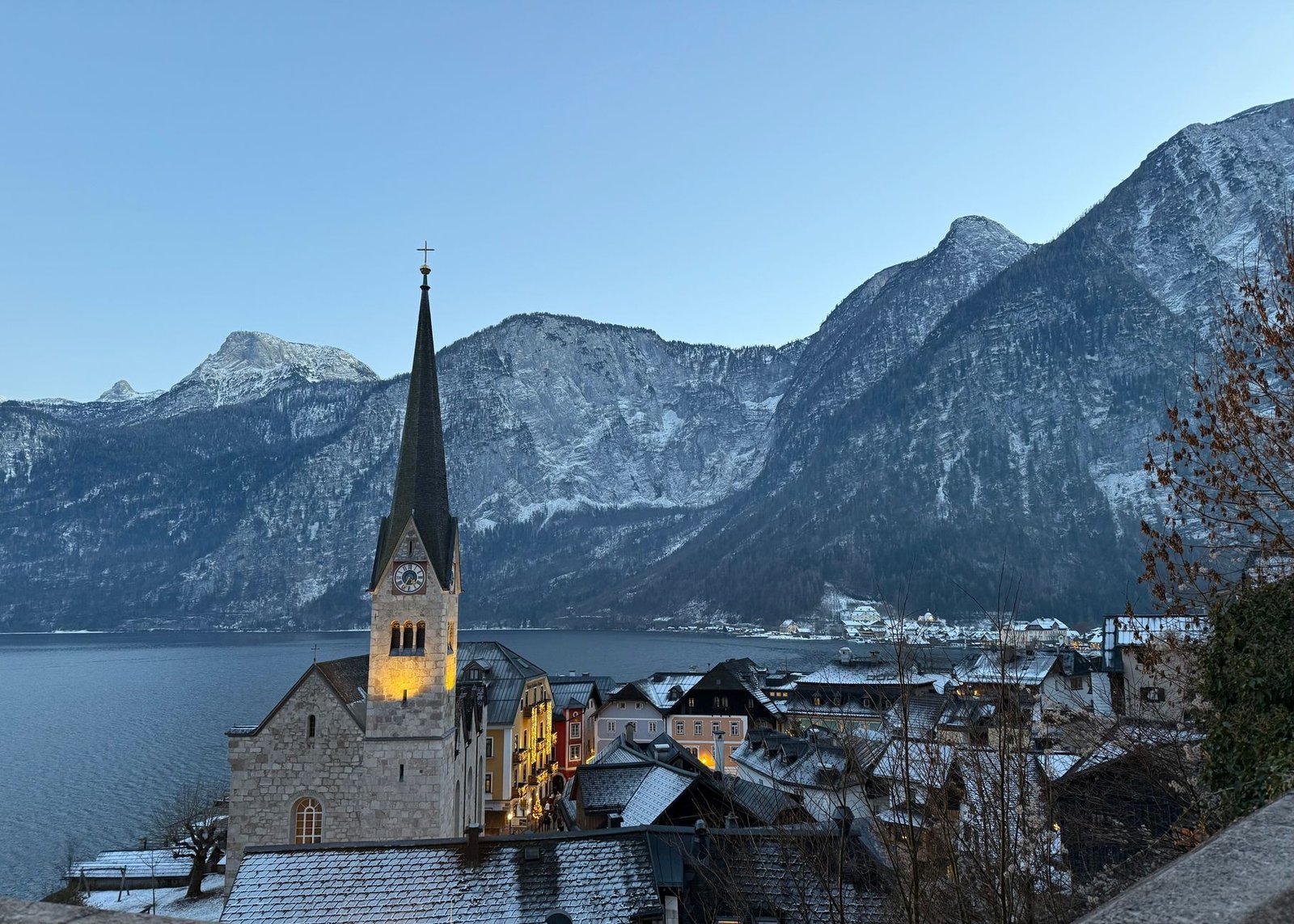
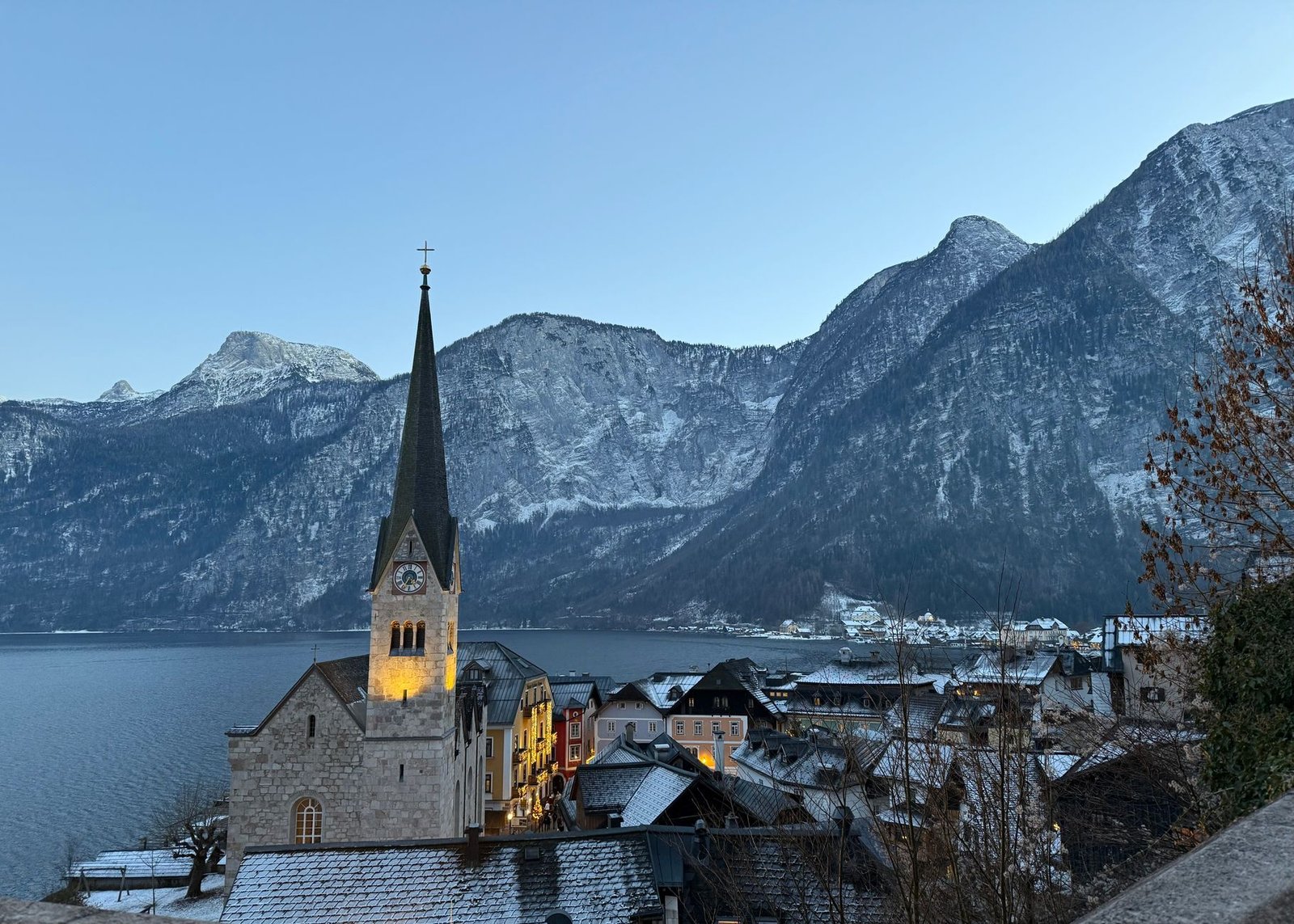
From December through February, Hallstatt transforms into something that feels almost too beautiful to be real — frosted rooftops, pale mist rising off the Hallstätter See, and streets so quiet you can hear your own footsteps on the cobblestones.
Building a winter hallstatt itinerary means sharing those streets with a fraction of the summer crowd, giving you unhurried access to every iconic angle.
Best vantage points for snow-dusted shots include the classic lakefront promenade near the market square, the Catholic parish church steps overlooking the water, and the viewpoint above the salt mine entrance where the whole village spreads out below you.
When the lake partially freezes along its shallow edges, the glassy surface creates mirror reflections that make early morning golden hour especially rewarding. Arrive before 8 a.m. for the softest light and zero foot traffic in frame.
Practically speaking, keep these winter specifics in mind:
- Layer with a base, mid-fleece, and a windproof outer shell — temperatures regularly drop to -5°C overnight
- Road conditions on Route 166 can be icy; check the ASFINAG road report before driving in
- Many cafés and boat tour operators run reduced hours or close entirely on Mondays and Tuesdays
- The Hallstatt Museum closes by 4 p.m. in winter, two hours earlier than its summer schedule
Pack hand warmers inside your camera bag to keep batteries from draining in the cold — lithium cells lose roughly 20% capacity below freezing.
Hallstatt Itinerary Idea 15: Spend Two Days in Hallstatt With an Overnight Stay
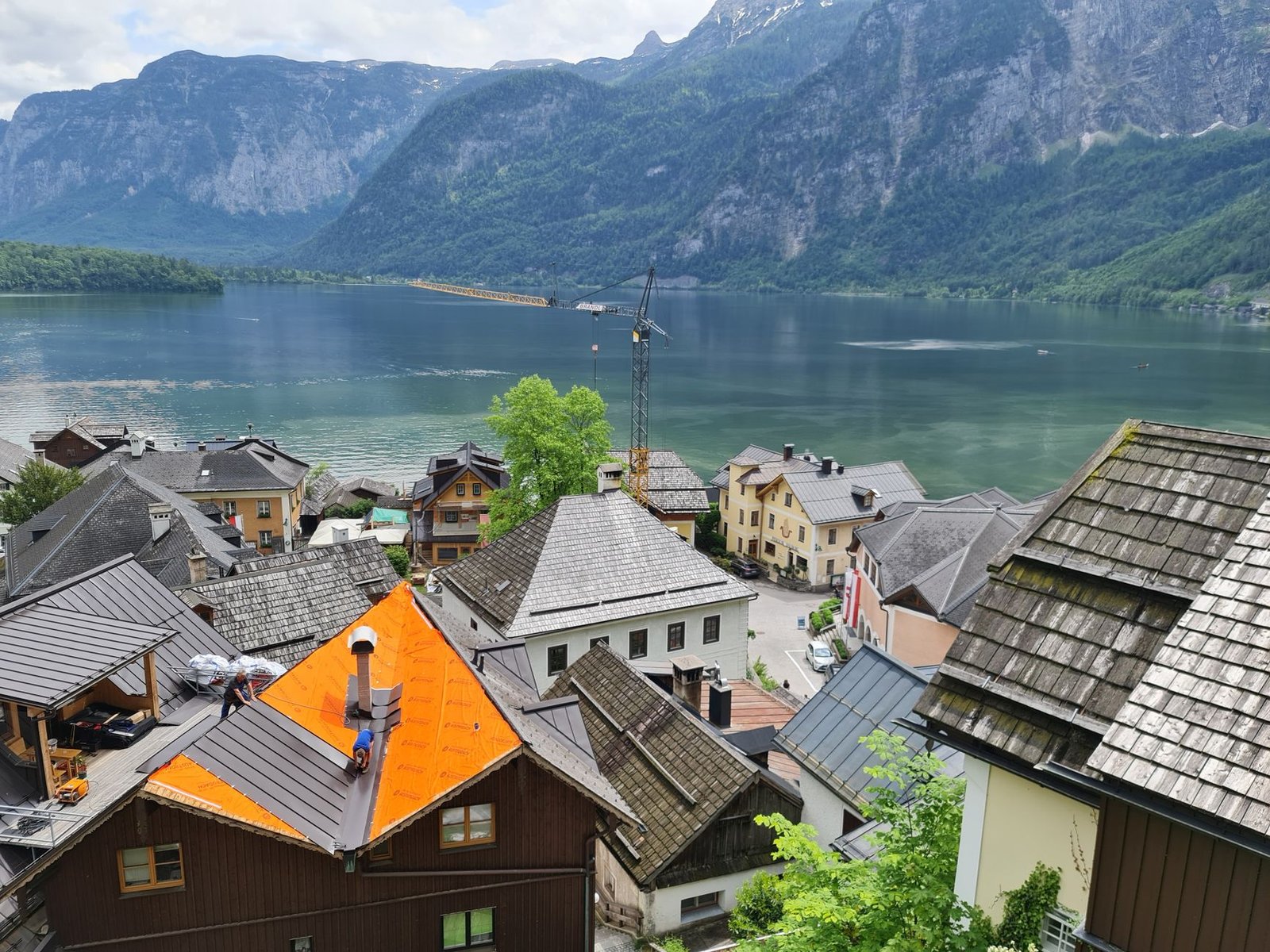
Day-trippers pay around €15 for the ferry from Hallstatt Bahnhof, rush through the highlights in four hours, and leave. Guests who stay overnight pay more upfront but gain something no ticket can buy.
By 6 pm, the tour groups board their coaches and the village exhales. The golden evening light across the Hallstätter See belongs almost entirely to you, and that stillness alone justifies the extra night.
Accommodation ranges from cozy family-run guesthouses right on the water to polished boutique hotels tucked into the hillside. Haus Lenz and Pension Sarstein both offer lakefront rooms with balconies that face the morning mist.
Booking two to three months ahead is essential between May and September, as the village holds fewer than 800 permanent residents and rooms fill fast.
Here is how to structure your two days:
- Day one morning: Arrive early, drop bags, and walk the Salzwelten salt mine trail before crowds gather
- Day one afternoon: Explore the Catholic market square, the ossuary, and the lakeside promenade
- Day one evening: Linger over dinner at a waterfront restaurant once the day-trippers have gone
- Day two morning: Catch sunrise over the lake, then hike up to the Skywalk viewpoint for clear views
This overnight hallstatt itinerary turns a rushed highlight reel into a genuine, slow-travel experience you will actually remember.
Hallstatt Itinerary Idea 16: Plan a Day Trip to Hallstatt From Salzburg or Vienna
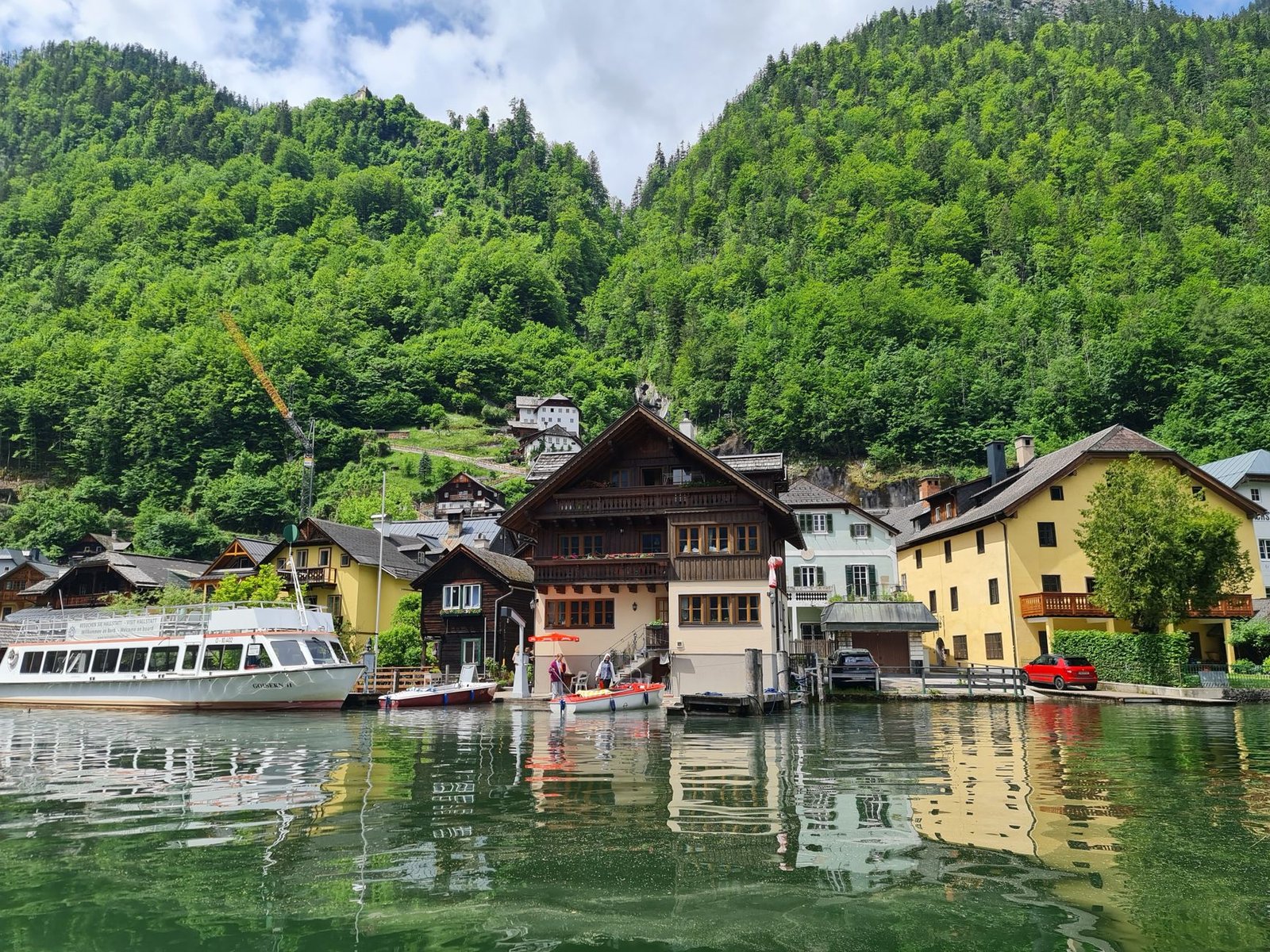
Salzburg sits just 75 kilometers from Hallstatt, making it one of Austria’s most rewarding same-day excursions — yet many visitors overlook it entirely in favor of city sightseeing.
From Salzburg, the independent route combines a regional train to Attnang-Puchheim, a connecting train to Hallstatt station, and a short ferry across the lake to the village. The full journey takes roughly 2.5 hours each way.
Organized bus tours from Salzburg simplify logistics considerably, departing centrally and dropping you directly at the waterfront. They cost more but save mental energy on timetables.
From Vienna, the fastest option is the Railjet train to Attnang-Puchheim, then the regional connection and ferry — around 4 hours total. Coach tours from Vienna are available but consume more of your day in transit.
To build a smart hallstatt itinerary around a day trip, arrive before 10 a.m. to beat tour group crowds at the salt mine and lakeside promenade.
Use these time management principles to maximize your hours:
- Book the Salzwelten salt mine in advance — tours fill by midmorning
- Eat lunch early, around 11:30 a.m., before restaurant queues build
- Save the Hallstatt Skywalk viewpoint for the afternoon when light is softer
- Catch a return ferry no later than 5 p.m. to connect comfortably with evening trains
Packing light in a single daypack keeps you nimble on the narrow village paths and the steep staircase climb toward the ossuary.
FAQ
You’ve booked your flights, you’re scrolling Pinterest at midnight, and now you have a dozen questions about whether this tiny Austrian village lives up to the hype. Here are honest answers to help you plan with confidence.
How many days do you need in Hallstatt?
Two days is the sweet spot for most visitors. A solid hallstatt itinerary gives you time to explore the village, hike to the Skywalk, and visit the salt mine without feeling rushed.
Is Hallstatt worth visiting or too touristy?
It is genuinely crowded during summer days, but the village retains its magic in the early mornings and evenings once the day-trip coaches leave. Staying overnight makes an enormous difference in your experience.
What is the best time of year to visit Hallstatt?
Late September through early October offers cooler temperatures, golden foliage, and noticeably thinner crowds. Winter visits bring a fairy-tale atmosphere, though some boat services run on reduced schedules.
How do you get to Hallstatt from Salzburg?
The most scenic route combines a train to Attnang-Puchheim, a connection to Hallstatt station, then a short five-minute ferry across the lake. The full journey takes roughly 2.5 hours.
Is Hallstatt expensive to visit?
Austria is generally pricey, and Hallstatt reflects that. Budget around €25–€35 per person for salt mine entry, with meals and accommodation adding up quickly in peak season.
You might also like: 18 Amalfi Coast Travel Tips for a Picture-Perfect Trip
Key Takeaways
Ready to start planning your dream trip to one of Austria’s most beautiful villages? Here’s everything you need to remember before you go.
- Match activities to your interests: Whether you love history, hiking, photography, or slow mornings with coffee and lake views, this hallstatt itinerary has something tailored just for you across all 16 ideas.
- Book accommodations early: Hallstatt has fewer than 800 permanent residents, which means lodging fills up fast — especially between May and October. Aim to reserve at least 3 months in advance.
- Beat the crowds with smart timing: Arriving before 9 a.m. or staying past 5 p.m. gives you the village almost entirely to yourself, especially at the iconic lakeside viewpoint.
- Layer your days thoughtfully: Combining one big attraction with slower, local moments — a bakery stop, a quiet boat ride, a chat with a shopkeeper — always makes for a richer experience.
- Flexibility is your best travel companion: Short on time? Focus on the lake and village core. Have a full week? Add the Dachstein caves, Gosausee day trip, and a salt mine tour.
- Save your favorites and come back often: Hallstatt changes beautifully with every season, so no two visits ever feel the same.
Found this helpful? Pin this guide to Pinterest so you can come back to it whenever the planning mood strikes.