3 Days in Moab: Arches, Canyonlands & Where to Stay (2026 Guide)
# 3 Days in Moab: Arches, Canyonlands & Where to Stay (2026 Guide)
Few places on earth concentrate this much raw, staggering wonder into one small desert town. Moab, Utah, sits within an hour of two national parks, a justly famous state park, and some of the best mountain biking, rafting, and off-roading in America. Arches holds more than 2,000 natural stone arches sculpted by time and weather. Canyonlands is a vast, untamed wilderness of mesas, buttes, and winding canyons. And Dead Horse Point delivers truly unforgettable sunsets that people cross entire oceans to see.
Three days is the ideal first Moab trip. It gives you one full day for Arches, one for Canyonlands and Dead Horse Point, and a third for the deeper cuts: the Devils Garden primitive trails, Corona Arch on BLM land, or an adrenaline day on the river or the slickrock. It is enough time to see the icons properly, at the right light, without the frantic pace that ruins so many desert road trips. You will leave with a camera full of red rock and a list of reasons to come back. This itinerary is built for the long weekend warrior, with precise sunrise and sunset timing that puts you at exactly the right arch at exactly the right hour.
Before You Go: Moab Essentials
Fees and reservations
Arches charges $30 per private vehicle, valid for seven days. Good news for 2026: the park dropped its timed entry reservation system, so you can enter without advance booking. Arrive before 8am or after 3pm in peak season to dodge the entrance station lines. Canyonlands charges its own entrance fee. Dead Horse Point is a Utah state park with a separate day-use fee. Your America the Beautiful pass covers the two national parks but not the state park.
When to visit
Spring (March through May) and fall (September through November) are the prime windows, with mild hiking weather and manageable crowds. Summer highs regularly exceed 100 degrees Fahrenheit, which makes midday hiking genuinely dangerous. If summer is your only option, hike at dawn, rest midday, and hike again at dusk. Winter is quiet and beautiful, with snow-dusted arches, but some facilities close and trails can be icy.
Getting there
Most visitors fly into Grand Junction, Colorado (about 2 hours away), Salt Lake City (about 4 hours), or make the longer drives from Denver or Las Vegas as part of a Southwest road trip. Moab's own small airport has limited service. This itinerary assumes you arrive the evening before Day 1.
The three days at a glance
| Day | Focus | Sunrise | Sunset |
|---|---|---|---|
| Day 1 | Arches: Windows, Balanced Rock, Delicate Arch | Sleep in, easy morning | Delicate Arch |
| Day 2 | Canyonlands Island in the Sky + Dead Horse Point | Mesa Arch | Dead Horse Point |
| Day 3 | Devils Garden + Corona Arch or adventure day | Landscape Arch (optional) | Flexible |
Day 1: Arches National Park
Morning: The Windows and Balanced Rock
Enter Arches early and drive the 18-mile scenic road to the Windows Section. This compact cluster holds the park's most accessible wonders: North and South Window, Turret Arch, and nearby Double Arch, all reached by short, flat trails under half a mile. Balanced Rock, a massive boulder perched impossibly on a pedestal, sits along the main road and takes ten minutes.
These easy walks are the perfect warm-up. They also photograph beautifully in morning light. Give the Windows area two to three hours, including the short trails.
Midday: Rest and refuel
There are no restaurants inside Arches, so pack a picnic lunch or drive back to Moab. The midday desert sun is brutal, especially in warmer months, so this is your built-in rest period. Eat, hydrate, refill water bottles, and escape the heat.
Afternoon into evening: Delicate Arch at sunset
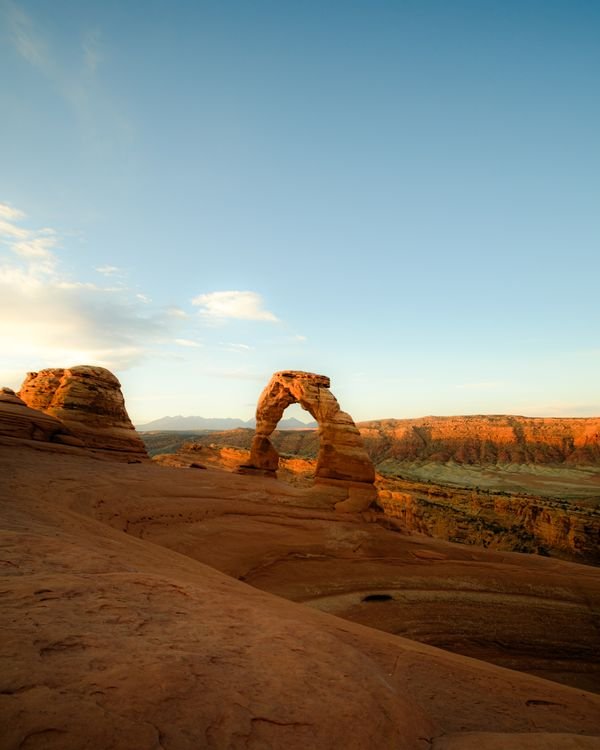
The main event. The Delicate Arch trail is about 3 miles round trip with moderate difficulty, climbing open slickrock with no shade. Start 2.5 to 3 hours before sunset so you arrive with time to spare. The trail's final stretch crosses a narrow rock ledge to a natural amphitheater, where the arch frames the La Sal Mountains.
Watching the sun drop and the arch glow orange is the signature Moab experience. Bring a headlamp for the walk back; the trail is well-cairned but dark descents on slickrock demand light. Carry more water than you think you need.
Dinner in Moab
Back in town, Moab's food scene goes well beyond trail fuel. You will find Southwestern restaurants, brewpubs, Thai food, and the famous local ice cream shops. After a Delicate Arch sunset, you have earned a real dinner.
Day 2: Canyonlands and Dead Horse Point
Sunrise: Mesa Arch
Set the alarm. Mesa Arch in Canyonlands' Island in the Sky district is one of the most photographed sunrises in the West: the sun rises directly through the arch's opening, lighting its underside on fire. The hike is only 0.7 miles round trip and easy, but the viewpoint is small and wildly popular. Arrive at least an hour before sunrise for parking and a front-row spot.
The drive from Moab to Island in the Sky takes about 35 minutes, so plan accordingly.
Morning: Island in the Sky overlooks
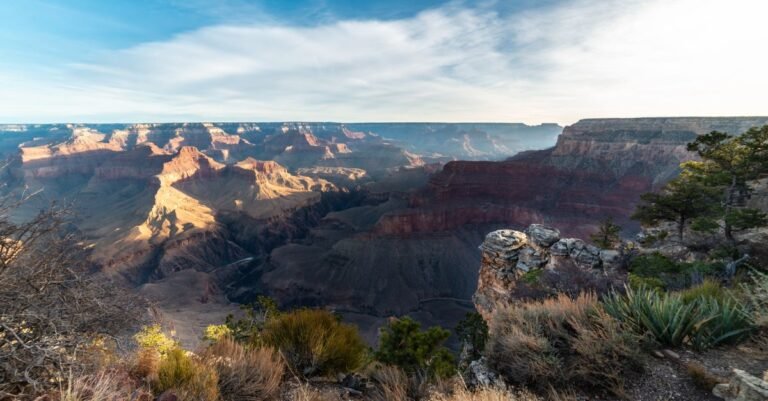
After sunrise, work the district's overlook road. Grand View Point lives up to its name with a panorama over the confluence of the Green and Colorado Rivers. The Green River Overlook, Buck Canyon Overlook, and White Rim Overlook each frame different angles of the canyon maze. Short trails connect several overlooks for those who want to stretch their legs.
Island in the Sky is a mesa 1,000 feet above the surrounding canyons, so every viewpoint is dramatic with minimal hiking. It is the highest scenic return per step in the Moab area.
Afternoon: Rest, then Dead Horse Point
Head back toward Moab for lunch and a midday break. In the late afternoon, drive to Dead Horse Point State Park, just outside Canyonlands' entrance. The point's overlooks stare straight down 2,000 feet to a gooseneck bend in the Colorado River, with the La Sal Mountains behind.
Stay for sunset. Dead Horse Point at golden hour, with the canyon glowing red and the river snaking below, rivals anything in the national parks. The park has an excellent campground if you want to sleep under these stars.
Day 3: Devils Garden, Corona Arch, or Adventure
Option A: Devils Garden and Corona Arch
Start early at Devils Garden, at the far end of the Arches scenic road. The trail to Landscape Arch (1.8 miles round trip, easy) leads to one of the world's longest natural spans, a ribbon of rock that looks too thin to stand. Adventurous hikers can continue on the primitive loop past Double O Arch, scrambling over slickrock fins.
In the afternoon, hike Corona Arch on BLM land outside the parks. The 3-mile round trip trail crosses slickrock to a spectacular arch with far fewer people than anything inside Arches. There is no fee and no timed entry, just a register at the trailhead.
Option B: Adventure day
Moab is the adventure capital of Utah. Options include:
- Mountain biking: The Slickrock Trail is the most famous bike trail in America, 10 miles of rolling petrified dunes. Rent bikes in town; the practice loop lets you test your skills.
- Rafting: Half-day and full-day trips on the Colorado River range from scenic floats to whitewater.
- 4×4 tours: Hell's Revenge is the classic guided off-road experience, climbing impossibly steep slickrock in purpose-built vehicles.
- Canyoneering: Guided trips descend slot canyons on ropes outside the parks.
Book adventure activities ahead, especially in spring and fall. They sell out on weekends.
Stargazing: Moab After Dark
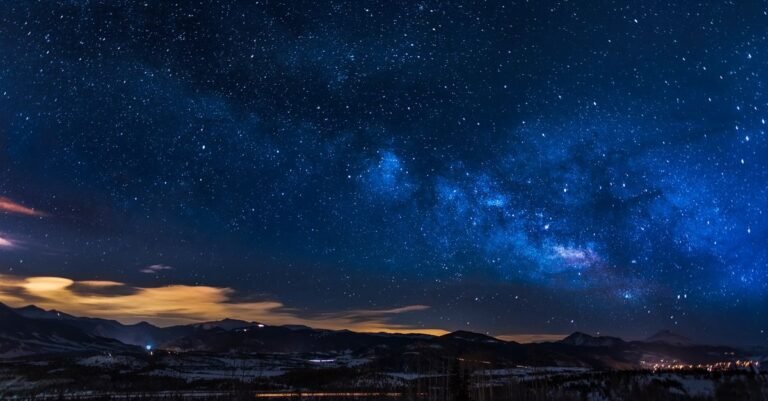
Do not sleep through Moab's nights. The desert around town has some of the darkest skies in the country, and Arches and Canyonlands are both certified International Dark Sky Parks. On a moonless night, the Milky Way stretches overhead in shocking detail, and the silhouettes of arches against the stars are unforgettable.
The best spots: the Windows Section parking area in Arches (short walk from the car, arches framing the sky), Dead Horse Point (the overlook with the canyon below invisible in the dark, just stars), and any BLM pullout along Sand Flats Road. Bring a red-light headlamp to preserve your night vision, warm layers (desert nights are cold even after hot days), and a tripod if you want photos. Check the moon phase before your trip; the week around the new moon is prime.
Moab with Kids
Moab is a fantastic family destination if you plan around heat and distances. The Windows Section and Balanced Rock are perfect for young kids: short, flat trails with enormous payoffs. Sand Dune Arch, tucked between fins with soft sand at its base, is a natural playground that children love. Dead Horse Point's overlooks are fenced and stroller-accessible.
For older kids and teens, the Slickrock bike practice loop, a guided Hell's Revenge tour (minimum ages apply), and the Corona Arch hike are all winners. The key rules for families: hike early, carry twice the water you think you need, and build in pool time at your hotel during the midday heat. The town's ice cream shops are not optional.
If You Had a Fourth Day: The Needles
Canyonlands' Needles district, two hours south of Moab near Monticello, is the park's wilder, quieter half. Towering sandstone spires, the famous Chesler Park Loop hike, and far fewer visitors reward those who make the drive. It needs a full day on its own, which is why it does not fit in three days, but it is the best reason to plan a return trip. Pair it with Newspaper Rock's dense petroglyph panels on the drive down.
Where to Stay in Moab
| Option | Vibe | Notes |
|---|---|---|
| Downtown hotels/motels | Convenient, walkable | Widest selection; book early for spring/fall |
| Vacation rentals | Space, kitchens | Good for groups; whole town has options |
| Campgrounds (private) | Social, pools | Several in town with full amenities |
| BLM camping (Sand Flats Rd) | Cheap, scenic | First-come sites with incredible views |
| Glamping/tipis | Fun, comfortable | Growing scene on the town's outskirts |
| Dead Horse Point campground | Dark skies, quiet | Reserve ahead; books out |
There is no lodging inside Arches or Canyonlands, so Moab is your base for all three days. The town is 5 miles from the Arches entrance and about 35 minutes from Island in the Sky. Downtown Moab is walkable, with restaurants, gear shops, and grocery stores clustered on Main Street.
Campers should know that Moab's BLM campgrounds along Sand Flats Road and in the surrounding desert are first-come, first-served and fill by afternoon on weekends. Arrive early or reserve a private campground.
Where to Eat
Moab punches above its weight for a town of 5,000. Breakfast burritos and hearty diner breakfasts fuel hiking days. For dinner, you will find Southwestern cuisine, wood-fired pizza, Thai, sushi, brewpubs, and the justly famous local ice cream. The Desert Bistro is the special-occasion pick; Zax and the Moab Brewery cover the casual end.
Critical advice: there are no restaurants inside Arches or Canyonlands. Pack picnic lunches and plenty of water every park day. A cooler in your rental car is the single most useful piece of gear for this trip. Stock it at the grocery stores on Moab's Main Street before your first park day: sandwich supplies, fruit, salty snacks for the heat, and more water than seems reasonable. The money you save on park-adjacent convenience stores will fund a very nice dinner.
Packing Checklist
- America the Beautiful pass or park fee budget
- 3+ liters of water capacity per person (no water in the parks' backcountry)
- Sun protection: hat, sunglasses, sunscreen, lightweight long sleeves
- Sturdy hiking shoes with grip for slickrock
- Headlamp (Delicate Arch sunset return, stargazing)
- Layers for 40-degree desert temperature swings
- Cooler with picnic supplies
- Camera and tripod for Mesa Arch sunrise and night skies
Frequently Asked Questions
Do I need a timed entry permit for Arches in 2026?
No. Arches dropped its timed entry system for 2026. You can enter with just your park pass or entrance fee. Arrive before 8am or after 3pm in peak season to avoid entrance station lines and full trailhead parking.
Which is better, Arches or Canyonlands?
They are completely different parks. Arches is intimate and iconic, with the highest concentration of natural stone arches on earth. Canyonlands is vast and wild, with Grand Canyon-scale overlooks. If forced to choose one, most first-timers pick Arches. With three days, you do not have to choose.
How far is Moab from Arches and Canyonlands?
Downtown Moab is about 5 miles from the Arches entrance station and roughly 30 miles (35 minutes) from the Island in the Sky district of Canyonlands. Dead Horse Point State Park sits just before the Canyonlands entrance.
Can I see Mesa Arch and Delicate Arch in one day?
It is possible but rushed, and you would miss both at their best light. Mesa Arch demands sunrise; Delicate Arch demands sunset. They are also in different parks 45 minutes apart. Give each its own day, as this itinerary does.
Is three days enough for Moab?
Yes, for the highlights: a full Arches day, a Canyonlands and Dead Horse Point day, and a third day for Devils Garden, Corona Arch, or an adventure activity. It is not enough for the Needles district of Canyonlands, multi-day rafting, or serious mountain biking. Those deserve their own trips.
When is the best time to visit Moab?
March through May and September through November offer the best hiking weather. Summer brings extreme heat that makes midday hiking dangerous. Winter is quiet and starkly beautiful but cold, with possible icy trails.
Final Thoughts
Three days in Moab is a greatest-hits album of the American desert: the most famous arch in the world glowing at sunset, the most famous sunrise streaming through an arch, and a state park overlook that stops all conversation. It is the rare trip where every single day has a definitive highlight, and where the drives between sights are almost as good as the sights themselves. The town makes it easy, the parks make it unforgettable, and the desert light does the rest. Book your lodging early for spring and fall, pack your cooler the night before each park day, and set that Mesa Arch alarm without hitting snooze. You will not regret a single early morning.
Heading east after Moab? Our Blue Ridge Parkway weekend guide covers a completely different kind of mountain magic, trading red rock desert for misty blue Appalachian ridges.