2 Days in the Grand Canyon: The Perfect Itinerary for Limited Time
# 2 Days in the Grand Canyon: The Perfect Itinerary for Limited Time
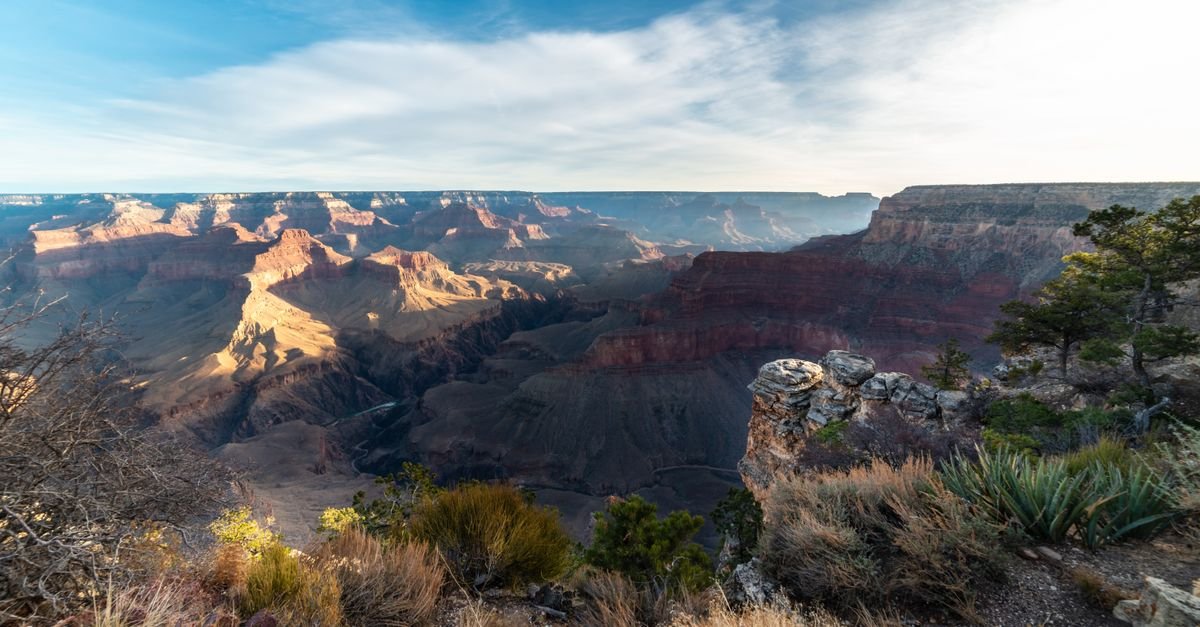
Nothing prepares you for the first look. You walk up to the rim at Mather Point, and the ground simply ends. A mile deep and up to eighteen miles wide, the canyon drops away in layer upon layer of red, orange, and gold rock, and your brain takes a full minute to accept the scale. Photographs do not do it justice. They never do.
The Grand Canyon rewards even short visits enormously, which makes it perfect for a two-day weekend. You do not need a week or a rim-to-rim trek to have a profound experience here. Two well-planned days give you the great rim viewpoints, a taste of hiking below the rim, a desert sunset, and a sunrise you will talk about for years.
This itinerary assumes the South Rim, which is the right choice for nearly every weekend visitor. More on why below.
Short on Time? Here Is Your Grand Canyon Mini Guide
| Topic | The Essentials |
|---|---|
| Entrance fee | $35 per vehicle, valid 7 days; park is cashless (check NPS.gov for latest) |
| Timed entry | None for general park entry |
| Best rim for a weekend | South Rim: open year-round, most viewpoints, free shuttles, most lodging |
| Hermit Road | Closed to private cars Mar 1 to Nov 30; use the free shuttle, bike, or walk |
| Best 2-day combo | Day 1: rim viewpoints + Hermit Road sunset. Day 2: South Kaibab hike to Cedar Ridge + Desert View |
| Below-the-rim rule | Never hike to the river and back in one day; turn around at Cedar Ridge or Skeleton Point |
| Where to stay | In-park lodges (book months ahead), Tusayan (10 min), or Flagstaff (80 min) |
South Rim vs North Rim: The Only Decision That Matters
First-timers agonize over this, so let us settle it fast: for a two-day weekend, go to the South Rim. Full stop.
The South Rim is open year-round, 24 hours a day. It holds the famous viewpoints (Mather Point, Yavapai, Hopi Point), the historic Grand Canyon Village, most of the park's lodging and restaurants, and the free shuttle network that makes car-free sightseeing easy. Roughly 90 percent of the park's visitors choose the South Rim, and the infrastructure reflects that.
The North Rim is wilder, quieter, higher in elevation, and open only seasonally (roughly mid-May through mid-October). It is wonderful, but it has far fewer services, a much longer drive from most starting points, and several key facilities have faced closures. Save it for a dedicated trip when you have more days.
Before You Go: Fees, Shuttles, and Smart Timing
Entrance Fees
The Grand Canyon entrance fee is $35 per private vehicle, valid for seven days. The park is cashless, so bring a credit or debit card or a digital pass. The $80 America the Beautiful annual pass covers your vehicle and pays for itself if you visit multiple parks within a year.
As of 2026, non-U.S. residents aged 16 and older pay an additional surcharge at major parks unless they hold a qualifying annual pass. International visitors should check the current NPS fee page before arriving.
The Free Shuttle System
The South Rim's free shuttle buses are the backbone of a car-free visit. Routes connect Grand Canyon Village, the visitor center, major viewpoints, and trailheads, with schedules varying by season. Key things to know:
- Hermit Road (Red Route): from March 1 through November 30, private vehicles are prohibited on Hermit Road. The shuttle is the way to reach its eight spectacular overlooks. In winter, the road opens to private cars.
- Kaibab Rim (Orange Route): serves the visitor center, Mather Point, Yaki Point, and the South Kaibab trailhead. Note that the road to the South Kaibab trailhead and Yaki Point is closed to private vehicles year-round, so the shuttle (or walking) is mandatory there.
- Village (Blue Route): loops around Grand Canyon Village lodges, restaurants, and shops.
Shuttles run frequently in peak season but thin out in winter. Check the current NPS shuttle schedule before your visit, and build buffer time into your plans.
Timing Your Visit
The South Rim sits at about 7,000 feet elevation, which surprises people expecting desert heat. Summer days are warm (80s) but pleasant, while winter brings snow and icy trails. Spring and fall are the sweet spots for a weekend: mild temperatures, smaller crowds than summer, and full services.
Arrive at the park early on Saturday. Entrance station lines can stretch long on weekend mornings, especially in summer. An alternative: enter through the East Entrance at Desert View if you are coming from Flagstaff. The drive along Desert View Drive strings together a dozen viewpoints, and entrance lines are often shorter there.
Day 1: Rim Views and a Desert Sunset
Theme: the grand overview. Today stays on the rim, covering the classic viewpoints at a relaxed pace.
Morning: Mather Point and the Visitor Center
Start at the Grand Canyon Visitor Center. Watch the park film, grab a map, fill your water bottles, and check the day's shuttle schedule and any trail alerts. Then walk to nearby Mather Point, the classic first viewpoint. Yes, it is crowded. Yes, it is still breathtaking. Stand at the railing, let the scale sink in, and take the photo everyone takes. Some clichés exist for good reason.
From Mather Point, walk the paved Rim Trail west toward Yavapai Point and the Yavapai Geology Museum. The Rim Trail is mostly flat and paved, and the geology museum's exhibits explain what you are looking at: nearly two billion years of Earth's history exposed in the canyon walls. Understanding the rock layers transforms the view from pretty to profound.
Midday: Grand Canyon Village and Lunch
Continue along the Rim Trail to Grand Canyon Village, the park's historic heart. Eat lunch at one of the village restaurants or grab supplies from the general store for a picnic. Take time to admire the historic lodges: El Tovar (1905) and the Hopi House are worth a look even if you are not staying there.
This is also the moment to check in on your body. The rim sits at 7,000 feet. If you flew in from sea level yesterday, you may feel the altitude. Hydrate, eat, and do not plan anything strenuous until you have acclimatized a bit.
Afternoon: Hermit Road by Shuttle
Board the Hermit Road shuttle and ride it west, hopping off at the overlooks that call to you. With eight viewpoints along 7 miles, you cannot go wrong, but these are the standouts:
- Trailview Overlook: watch tiny hikers switchback down the Bright Angel Trail and grasp the canyon's depth.
- Maricopa Point: views of an old mining operation and the canyon's layered geology.
- Hopi Point: the widest, most dramatic viewpoint on Hermit Road, and a legendary sunset spot.
- Mohave Point: a quieter favorite with stunning sunset light on the canyon temples.
- Hermits Rest: the end of the road, with a historic stone rest house and trailhead.
You do not need to stop at all eight. Pick three or four, walk between some of them on the Rim Trail, and let the shuttle handle the rest.
Sunset: Hopi Point or Mohave Point
Stay on Hermit Road for sunset. This is non-negotiable. As the sun drops, the canyon walls ignite in shifting shades of red and gold, and the shadows climb the far wall in real time. Hopi Point is the most popular sunset spot for good reason, but Mohave Point offers nearly the same drama with fewer tripods. Arrive at least 45 minutes before sunset to claim a good spot.
Ride the shuttle back to the village after dark. Have dinner, look at the stars (the Grand Canyon is an International Dark Sky Park), and get to bed at a reasonable hour. Tomorrow you hike down.
Day 1 totals: 3 to 5 miles of easy, mostly flat rim walking.
Day 2: Below the Rim
Theme: into the canyon. Today you go down, because the canyon is a completely different place from the inside.
The Golden Rule of Canyon Hiking
Going down is optional. Coming up is mandatory. Every year, unprepared hikers discover that descending into the canyon is easy and climbing out is brutal. The park's rangers repeat this constantly because people ignore it constantly.
For a day hike, the rule is simple: do not attempt to hike to the Colorado River and back in one day. It is roughly 14 to 16 miles round trip with nearly 5,000 feet of elevation gain on the return, in extreme heat. Instead, pick a turnaround point and honor it.
Morning: South Kaibab Trail to Cedar Ridge or Skeleton Point
The South Kaibab Trail is the best below-the-rim day hike in the park. Unlike the Bright Angel Trail, it follows a ridgeline, which means panoramic views in every direction from the first switchback. There is no water and little shade, so start as early as the shuttle allows.
- Ooh Aah Point (1.8 miles round trip): the first big viewpoint, about an hour round trip. A great turnaround for cautious hikers or tight schedules.
- Cedar Ridge (3 miles round trip, 1,140 ft elevation gain): the sweet spot for most weekend visitors. Wide rest area, pit toilets, jaw-dropping views. Plan 2 to 3 hours round trip.
- Skeleton Point (6 miles round trip): for strong hikers only. Your first view of the Colorado River, but the climb out is serious. Plan 4 to 5 hours.
Take twice as long going up as going down. Carry at least 2 to 3 liters of water per person, salty snacks, and sun protection. There is no water on the South Kaibab Trail, so what you carry is what you have.
Reach the South Kaibab trailhead via the free Kaibab Rim shuttle from the visitor center. The Hikers' Express shuttle also runs early-morning service in peak season. Check the current schedule the night before.
Midday: Recover at the Rim
Climb out, catch the shuttle back to the village, and eat the biggest lunch of your life. Your legs will be shaky. This is normal and also a little bit wonderful. Rest in the shade, refill water, and let your body recover before the afternoon.
Afternoon: Desert View Drive
For your final half-day, drive east along Desert View Drive toward the park's East Entrance. This 25-mile scenic road strings together a dozen viewpoints, each with a different perspective on the canyon and the Colorado River:
- Grandview Point: quiet, dramatic, and a favorite of photographers.
- Moran Point: layered red rock formations and excellent river views.
- Lipan Point: one of the best Colorado River views on the South Rim.
- Desert View Watchtower: the 70-foot stone tower designed by Mary Colter, with murals inside and a viewing deck on top. Climb it if it is open.
End at Desert View, then exit through the East Entrance if you are heading toward Flagstaff, or turn around and drive back to the village. Either way, you have now seen the canyon from end to end.
Alternative Afternoon: Bright Angel Trail
If your legs somehow still work and you want a second below-the-rim taste, hike partway down the Bright Angel Trail from the village. The first tunnel and the first resthouse make natural turnaround points. The Bright Angel has water stations (seasonal) and more shade than South Kaibab, making it the gentler option.
Day 2 totals: 3 to 6 miles of strenuous hiking with significant elevation gain, plus scenic driving.
Where to Stay for a Grand Canyon Weekend
| Option | Pros | Cons | Typical Cost |
|---|---|---|---|
| In-park lodge (El Tovar, Bright Angel, Maswik) | Unbeatable location; sunrise at the rim | Books out 6 to 12 months ahead; pricey | $150 to $400/night |
| Tusayan hotels | 10 minutes from the South Entrance; plenty of options | Tourist-town prices; still books out in summer | $150 to $300/night |
| Flagstaff | Real city with great restaurants; 80 min drive | Long daily commute eats into hiking time | $100 to $200/night |
| Mather Campground | Inside the park; reserve well ahead | No hookups; can be cold at 7,000 ft | Around $18 to $30/night |
| Williams | Charming Route 66 town; 60 min drive | Further than Tusayan | $90 to $180/night |
My recommendation: splurge on an in-park lodge if you can get one. Watching sunrise over the canyon without driving anywhere is worth every penny on a two-day trip. Book the moment you know your dates. Failing that, Tusayan keeps you close without the Flagstaff commute.
What to Pack for the Grand Canyon
Hiking essentials:
- Sturdy hiking shoes or boots with good traction
- Daypack with 2 to 3 liters of water capacity per person
- Electrolytes and salty snacks (you lose enormous amounts of salt descending)
- Sun hat, sunglasses, sunscreen (the canyon amplifies sun exposure)
- Layers: rim mornings can be 40 degrees even when afternoons hit 80
Often forgotten:
- Headlamp (for pre-dawn starts or delayed returns)
- Trekking poles (your knees will thank you on the climb out)
- Blister kit and basic first aid
- A warm layer for after-sunset viewpoints
Leave behind: cotton clothing for hiking (it holds sweat and chills you), single-use plastic bottles you cannot refill (fill stations are everywhere), and any plan that involves hurrying. The canyon punishes rushing.
Grand Canyon Weekend Budget Breakdown
Per person, two people sharing:
| Expense | Budget Option | Comfortable Option |
|---|---|---|
| Entrance fee (split) | $17.50 | $17.50 |
| Lodging (2 nights, split) | $30 (camping) | $300 (in-park lodge) |
| Food | $70 | $140 |
| Gas / transport | $60 | $100 |
| Total per person | Around $180 | Around $560 |
The Grand Canyon is one of the best-value national park weekends because the main attraction, the view, is free after the entrance fee. Camp, pack lunches, and your biggest expense is getting there.
FAQs About 2 Days in the Grand Canyon
Is 2 days enough for the Grand Canyon?
Yes, for the South Rim highlights. Two days covers the classic rim viewpoints, a below-the-rim day hike, a sunset, and the Desert View drive. You will not do a rim-to-river hike or visit the North Rim, but you will experience the canyon's essence.
Should I hike Bright Angel or South Kaibab?
For a day hike with limited time, South Kaibab wins on scenery: ridgeline views from the first steps, no shuttle needed beyond the trailhead bus. Bright Angel wins on logistics: it starts in the village, has water stations and shade, and is easier to bail out of. Fit hikers chasing views choose South Kaibab. Cautious hikers and families choose Bright Angel.
Can I visit the Grand Canyon as a day trip from Las Vegas?
It is possible but grueling: roughly 4 to 5 hours each way to the South Rim. You would get perhaps 4 hours at the canyon. For a weekend, drive to the canyon Friday night or Saturday morning and stay over. The day trip from Vegas works better for the West Rim (Skywalk area), which is not part of the national park.
What is the best time of year to visit the Grand Canyon?
Spring (March to May) and fall (September to November) offer mild weather and moderate crowds. Summer is hot below the rim (over 100 degrees at the river) but pleasant on the rim. Winter brings snow and ice on rim trails but tiny crowds and a serene canyon.
Is the Grand Canyon dangerous?
It demands respect, not fear. The main dangers are heat, dehydration, and overexertion on below-the-rim hikes. Stay on marked trails, carry abundant water, turn around before you are tired, and never feed or approach wildlife. The rim itself is safe if you respect railings and keep children close.
Do I need a permit to hike in the Grand Canyon?
Day hikes on the corridor trails (Bright Angel, South Kaibab, North Kaibab) require no permit. You need a backcountry permit for any overnight trip below the rim. No timed-entry reservation is required for general park entry.
Final Thoughts
The Grand Canyon has a way of resetting your sense of scale. Problems that felt enormous on Friday feel appropriately small standing at the edge of a mile-deep canyon on Saturday. That is not just poetry; it is the actual psychological effect of awe, and the canyon delivers it in industrial quantities.
Two days is enough to feel it. Stand at Mather Point, hike below the rim, watch the walls catch fire at sunset, and drive home knowing you will be back. Everyone comes back.
Fees, shuttle schedules, and road statuses change. Always confirm current conditions on the official NPS Grand Canyon website before your trip.