Utah National Parks Road Trip: The Ultimate Mighty 5 Itinerary (7–10 Days)
Introduction
A Utah National Parks road trip is the most rewarding way to experience Zion, Bryce Canyon, Capitol Reef, Arches, and Canyonlands in a single adventure. Most travelers complete the Mighty 5 loop in 7–10 days, beginning in Las Vegas or Salt Lake City and following a route packed with dramatic desert scenery, iconic hikes, and unforgettable viewpoints.
There are road trips, and then there are journeys that stay with you long after you return home. Driving through Utah’s Mighty 5 feels like moving between different worlds, where towering sandstone cliffs, colorful hoodoos, natural arches, and vast canyon landscapes appear around every bend. Whether you’re planning your first visit or returning to explore deeper, this guide helps you create an efficient route while maximizing your time at each park.
One of the reasons this itinerary is so popular is the incredible variety packed into a relatively compact area. In a single week, you can hike through narrow slot canyons, watch sunrise over famous rock formations, drive scenic byways, and discover some of America’s most photographed landscapes. I’ve noticed that travelers often underestimate just how different each park feels. Zion’s massive canyon walls create a completely different experience from the open desert vistas of Canyonlands or the surreal hoodoos of Bryce Canyon.
This guide covers route planning, driving distances, timing, park highlights, lodging recommendations, hiking opportunities, and practical travel tips. By the end, you’ll have everything needed to confidently plan an unforgettable Mighty 5 adventure while avoiding common mistakes that first-time visitors often make.
Utah National Parks Road Trip at a Glance
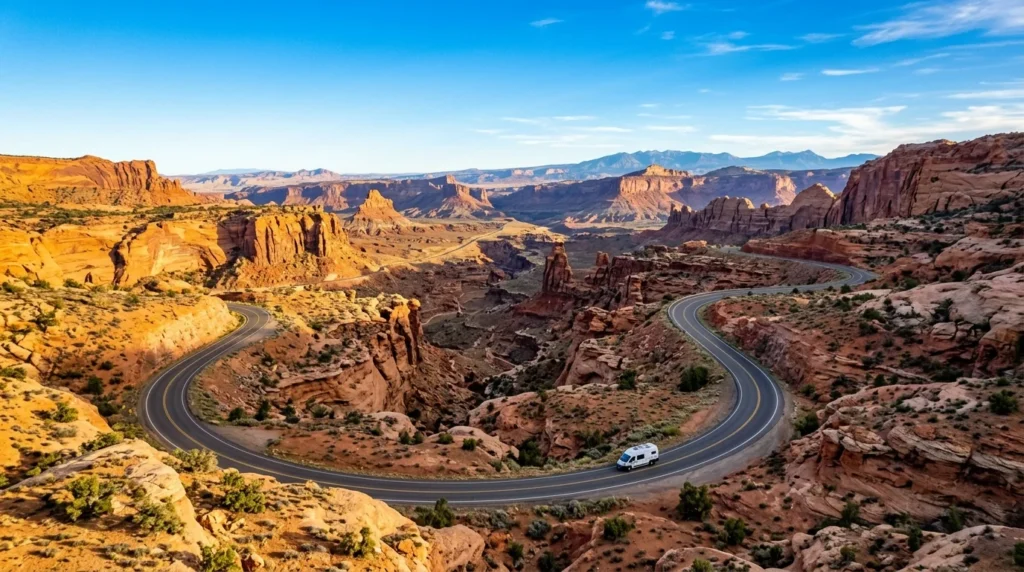
A well-planned itinerary can transform a complicated multi-park vacation into a smooth and unforgettable adventure. The Mighty 5 route covers approximately 900 to 1,100 miles depending on your chosen stops and side trips. Along the way, you’ll experience some of the most spectacular desert landscapes in North America, including towering canyon walls, natural arches, colorful rock formations, and scenic overlooks. Because the parks are connected by excellent roads and stunning drives, the journey itself becomes a major part of the experience rather than simply transportation between destinations.
Many travelers are surprised by how accessible this route can be with proper planning. Most roads are paved, visitor centers are well-equipped, and accommodations range from luxury resorts to campgrounds and RV parks. In my experience, the biggest challenge isn’t driving distance but deciding how much time to spend at each location. Every park offers enough trails, viewpoints, and activities to fill several days. That’s why understanding travel times, seasonal conditions, and personal priorities helps create an itinerary that feels exciting instead of rushed.
| Question | Answer |
|---|---|
| Best trip length | 7–10 days |
| Total driving distance | Approximately 900–1,100 miles |
| Best starting city | Las Vegas or Salt Lake City |
| Best time to visit | Spring and Fall |
| Park pass needed? | Yes – America the Beautiful Pass |
Utah Mighty 5 Road Trip Map
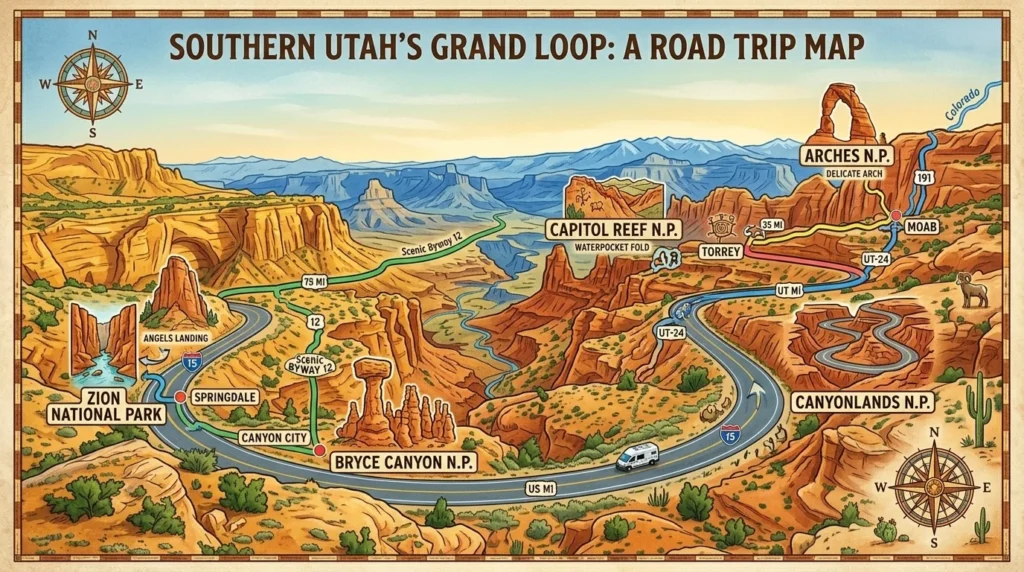
Looking at the full route on a map reveals why this journey has become one of America’s most famous national park adventures. The parks naturally connect through a network of scenic highways that showcase Utah’s remarkable diversity. Most travelers begin in Las Vegas, drive northeast to Zion, continue through Bryce Canyon and Capitol Reef, then finish in Moab before returning to either Salt Lake City or Las Vegas. This sequence minimizes backtracking while allowing travelers to experience the parks in an efficient order that feels both practical and rewarding.
The drive itself deserves almost as much attention as the parks. Scenic Byway 12, often considered one of the most beautiful roads in the United States, connects Bryce Canyon and Capitol Reef through breathtaking desert and mountain scenery. I’ve found that travelers who build extra time into driving days enjoy the experience far more than those who rush between destinations. Countless overlooks, hidden viewpoints, and unexpected photo opportunities appear throughout the journey. Downloading offline maps before departure is especially helpful since cellular service can be limited in remote areas.
Recommended Route Order
- Las Vegas → Zion National Park (2.5 hours)
- Zion → Bryce Canyon National Park (1.5–2 hours)
- Bryce Canyon → Capitol Reef National Park via Scenic Byway 12 (2.5–3 hours)
- Capitol Reef → Moab (2.5 hours)
- Moab → Arches National Park (10–15 minutes)
- Moab → Canyonlands National Park (40–60 minutes)
- Return to Salt Lake City or Las Vegas
Best Utah National Parks Road Trip Route
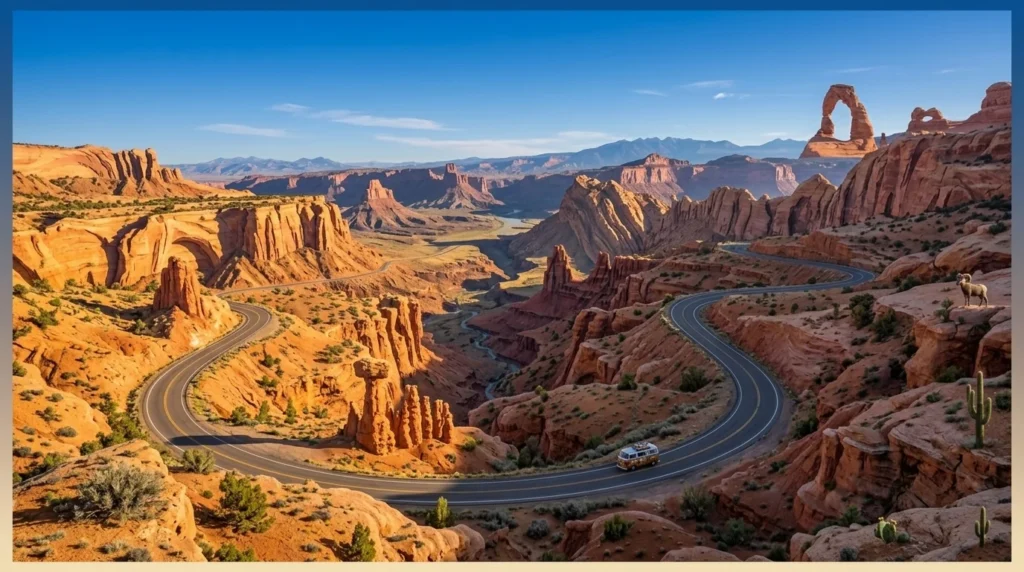
The most efficient route begins in Las Vegas and gradually moves northeast through Utah’s iconic national parks. Zion National Park serves as the perfect introduction, with towering canyon walls and famous hikes like Angels Landing and The Narrows. From there, Bryce Canyon offers a striking contrast with its colorful hoodoos and panoramic viewpoints. Continuing along Scenic Byway 12 brings travelers through some of Utah’s most underrated landscapes before reaching Capitol Reef, where scenic drives, orchards, and dramatic cliffs create a quieter but equally rewarding experience.
The second half of the route centers around Moab, one of the most adventure-friendly towns in the American Southwest. Arches National Park showcases world-famous sandstone arches, while nearby Canyonlands delivers massive canyon views and unforgettable overlooks. Many travelers add Dead Horse Point State Park as an extra stop because of its proximity and stunning scenery. I’ve seen this route work exceptionally well for first-time visitors because it combines iconic landmarks, manageable driving distances, and plenty of flexibility. Whether you have seven days or ten, the sequence allows you to experience the best of Utah’s red rock country without feeling overwhelmed.
Route Breakdown
Las Vegas to Zion
- Approximately 160 miles
- Around 2.5–3 hours driving time
- Excellent first stop for hiking and sightseeing
Zion to Bryce Canyon
- Approximately 85 miles
- Around 1.5–2 hours
- Scenic drive with multiple viewpoints
Bryce to Capitol Reef via Scenic Byway 12
- Approximately 120 miles
- Around 2.5–3 hours
- One of America’s most scenic drives
Capitol Reef to Moab
- Approximately 150 miles
- Around 2.5 hours
- Easy transition into eastern Utah
Arches & Canyonlands
- Located near Moab
- Ideal for a 2–3 day stay
- Minimal daily driving required
Return to Salt Lake City or Las Vegas
- Salt Lake City: Approximately 4 hours from Moab
- Las Vegas: Approximately 6.5–7 hours from Moab
7-Day Utah National Parks Itinerary
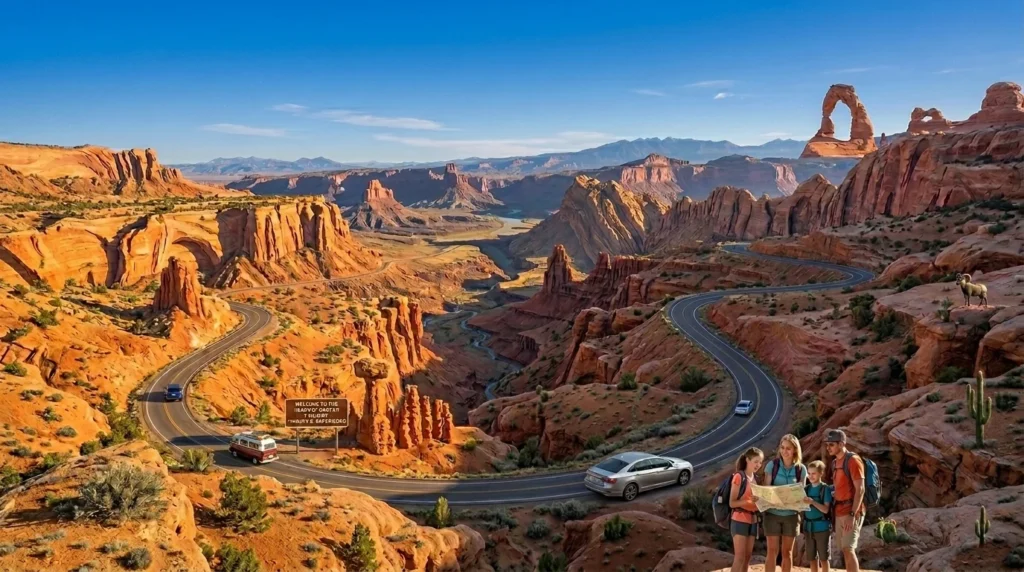
A seven-day itinerary strikes an excellent balance between adventure and practicality. While some visitors spend weeks exploring southern Utah, a carefully planned week allows you to experience the highlights of every park without feeling rushed. The key is maintaining a steady pace while leaving room for spontaneous stops along scenic routes. From the towering canyon walls of Zion to the expansive overlooks of Canyonlands, each day introduces a completely different landscape. This variety is one of the biggest reasons travelers consistently rank Utah among the best road trip destinations in the United States.
The route works particularly well for first-time visitors because it follows a logical progression through Utah’s most famous natural attractions. In my experience, travelers enjoy the journey more when they focus on signature hikes and viewpoints rather than trying to see everything. Each park offers dozens of trails and attractions, but selecting the most rewarding experiences creates a trip that feels memorable instead of overwhelming. This itinerary combines iconic landmarks, scenic drives, and practical overnight stops to help you maximize every day on the road.
Day 1 – Arrive in Las Vegas & Drive to Zion
- Drive approximately 2.5–3 hours to Springdale.
- Explore Temple of Sinawava.
- Walk the Canyon Overlook Trail.
- Settle into lodging near Zion National Park.
Arriving in Las Vegas provides one of the easiest gateways to Utah’s red rock country. After collecting your rental vehicle, the drive toward Zion introduces travelers to the dramatic desert scenery that defines the region. By afternoon, you can explore the Temple of Sinawava area and enjoy a short walk surrounded by towering canyon walls. The Canyon Overlook Trail is another excellent option, delivering panoramic views with relatively little effort. These introductory experiences create a perfect first impression without requiring a full day of strenuous hiking.
Springdale serves as the ideal base for your first nights in the region. The town offers restaurants, lodging options, and convenient access to park entrances and shuttle stops. Many visitors enjoy spending the evening strolling through town while preparing for the next day’s adventures. I’ve noticed that arriving early enough to enjoy a short hike significantly improves the overall trip experience because it allows travelers to start exploring immediately rather than waiting until the following morning. Even a few hours inside Zion can leave a lasting impression.
Day 2 – Explore Zion National Park
- Hike Angels Landing (permit required).
- Walk sections of The Narrows.
- Visit Emerald Pools.
- Use the Zion shuttle system efficiently.
Some national parks impress visitors, but Zion tends to completely captivate them. Massive sandstone cliffs rise above the canyon floor while the Virgin River winds through lush landscapes below. Adventure seekers often prioritize Angels Landing, one of the most famous hikes in America, while many others choose to explore The Narrows, where hikers walk directly through a river surrounded by towering canyon walls. For a more relaxed experience, the Emerald Pools trails provide beautiful scenery and accessible viewpoints suitable for a wide range of fitness levels.
The park shuttle system makes exploring Zion much easier during busy seasons. Parking can be limited, so using the shuttle allows visitors to move efficiently between trailheads and viewpoints throughout the day. I’ve found that starting hikes early dramatically improves the experience, especially during warmer months when temperatures rise quickly. Spending a full day in Zion gives travelers enough time to appreciate both the iconic attractions and the quieter corners that make the park feel truly special. Every viewpoint reveals another stunning perspective of the canyon.
Day 3 – Zion to Bryce Canyon
- Drive approximately 1.5–2 hours.
- Hike the Navajo Loop Trail.
- Explore Queens Garden Trail.
- Watch sunset from Sunset Point.
The transition from Zion to Bryce Canyon feels like entering a completely different world. While Zion is defined by massive canyon walls and lush river valleys, Bryce Canyon is famous for its colorful hoodoos—towering rock spires sculpted by erosion over millions of years. The relatively short drive allows plenty of time for exploration, making it one of the most enjoyable travel days of the entire itinerary. Arriving before midday provides opportunities to experience multiple viewpoints and trails before evening crowds gather around the most popular overlooks.
The Navajo Loop and Queens Garden combination is often considered the best introduction to Bryce Canyon. Descending among the hoodoos offers perspectives that simply cannot be appreciated from the rim alone. As sunlight changes throughout the day, the landscape transforms into shades of orange, pink, and gold. Sunset Point lives up to its name and remains one of the most photographed locations in the park. In my experience, many travelers are surprised by how unique Bryce Canyon feels compared to every other destination on the route, making it a true highlight of the journey.
Day 4 – Scenic Byway 12 to Capitol Reef
- Drive one of America’s most scenic highways.
- Stop at major viewpoints along Scenic Byway 12.
- Hike Hickman Bridge.
- Enjoy pie at the historic Gifford House.
- Stay overnight in Torrey.
Few roads in the United States deliver scenery as consistently spectacular as Scenic Byway 12. This stretch of highway winds through rugged desert landscapes, colorful cliffs, high-elevation forests, and sweeping overlooks that seem designed for road trip photography. The drive itself becomes a major attraction rather than simply transportation between parks. Along the route, travelers pass through some of Utah’s most remarkable terrain, including areas near Grand Staircase-Escalante. Frequent pullouts and viewpoints make it easy to stop, stretch your legs, and admire the constantly changing scenery throughout the journey.
Capitol Reef National Park often receives less attention than the other Mighty 5 destinations, but many travelers leave pleasantly surprised by its beauty and tranquility. Hickman Bridge is one of the park’s most rewarding hikes, leading to an impressive natural arch surrounded by dramatic desert landscapes. The historic Gifford House is another favorite stop, famous for its homemade fruit pies and charming atmosphere. I’ve noticed that visitors often appreciate Capitol Reef because it feels less crowded while still delivering stunning scenery. Staying overnight in Torrey provides convenient access to the park and a relaxing evening after a scenic day of driving.
Day 5 – Drive to Moab & Arches
- Travel approximately 2.5 hours to Moab.
- Visit Delicate Arch.
- Explore Landscape Arch.
- Learn Arches timed-entry requirements.
- Enjoy Moab’s restaurants and outdoor atmosphere.
Arriving in Moab marks the beginning of the road trip’s adventure-packed eastern section. This vibrant desert town serves as the perfect base for exploring both Arches National Park and Canyonlands National Park. Arches immediately impresses visitors with its concentration of natural sandstone formations, many of which are found nowhere else on Earth. Delicate Arch remains the park’s most recognizable landmark and rewards hikers with an unforgettable view. Landscape Arch offers another must-see destination, stretching gracefully across the desert as one of the longest natural arches in North America.
Because Arches is one of Utah’s most visited parks, planning ahead is essential. Timed-entry reservations may be required during certain seasons, so checking current regulations before arrival helps avoid disappointment. The park’s scenic drive also provides access to numerous viewpoints and short trails for travelers who prefer less strenuous exploration. Moab itself adds another layer of enjoyment to the experience with its welcoming atmosphere, local dining options, and outdoor-focused culture. In my experience, many visitors wish they had scheduled an extra day here because the surrounding area offers so much to see and do beyond the national parks.
Day 6 – Canyonlands & Dead Horse Point
- Watch sunrise at Mesa Arch.
- Visit Grand View Point.
- Explore Island in the Sky district.
- Stop at Dead Horse Point State Park.
- Capture some of Utah’s best photography opportunities.
The landscapes of Canyonlands feel almost impossibly vast. Deep canyons, towering mesas, and rugged desert formations stretch toward the horizon in every direction, creating one of the most dramatic panoramas in the American Southwest. Mesa Arch is especially popular at sunrise when golden light illuminates the canyon below through the natural stone opening. Grand View Point offers another spectacular perspective, revealing layers of colorful rock formations shaped by millions of years of erosion. The immense scale of the scenery makes every overlook feel like a destination in itself.
Just a short drive away, Dead Horse Point State Park provides another unforgettable experience. Its famous overlook delivers breathtaking canyon views that rival many national park viewpoints while often attracting fewer visitors. Photographers particularly appreciate the area’s changing light conditions throughout the day, which constantly transform the colors and textures of the landscape. I’ve found that travelers often underestimate how much time they want to spend simply admiring the scenery here. The combination of Canyonlands and Dead Horse Point creates one of the most visually rewarding days of the entire itinerary.
Day 7 – Return via Capitol Reef or Fly Out
- Choose optional scenic detours.
- Add extra hikes if time allows.
- Return to Salt Lake City or Las Vegas.
- Allow flexibility for flight schedules.
- Enjoy final viewpoints before departure.
The final day offers an opportunity to tailor the journey based on your schedule and interests. Travelers flying from Salt Lake City typically enjoy a shorter return drive, while those heading back to Las Vegas may choose additional scenic stops along the way. If time permits, revisiting a favorite viewpoint or adding one final hike can be a rewarding way to conclude the adventure. Many visitors use this day to explore overlooked attractions, enjoy local dining, or simply take in the last views of Utah’s remarkable desert landscapes before beginning the trip home.
Ending the journey often brings mixed emotions because the week passes surprisingly quickly. After experiencing towering canyon walls, colorful hoodoos, natural arches, and expansive desert vistas, many travelers leave already planning a future return. In my experience, the Mighty 5 route consistently exceeds expectations because every park delivers a distinct experience while contributing to a larger story of Utah’s extraordinary landscapes. Whether you followed the itinerary exactly or customized it along the way, the memories created throughout the trip will likely remain among your most memorable travel experiences.
10-Day Utah National Parks Road Trip (More Relaxed)
A ten-day adventure transforms the Mighty 5 experience from a highlights tour into a more immersive journey. Instead of moving quickly between destinations, travelers gain additional opportunities to explore lesser-known trails, enjoy scenic drives at a slower pace, and spend more time appreciating each park’s unique atmosphere. Zion and Moab especially benefit from extra days because both areas contain enough attractions to fill extended stays. The relaxed schedule also allows flexibility for weather changes, photography opportunities, and spontaneous discoveries that often become trip highlights.
Many experienced travelers consider ten days the ideal length for this route because it balances exploration with comfort. Additional time means fewer rushed mornings and more opportunities to experience popular locations during optimal lighting conditions. I’ve seen this approach work especially well for families, photographers, and outdoor enthusiasts who prefer quality experiences over checking destinations off a list. With two days in Zion, two days around Moab, and extra stops along Scenic Byway 12, the journey feels more rewarding while maintaining the same unforgettable landscapes that make Utah famous.
Best Hikes in Each Utah National Park
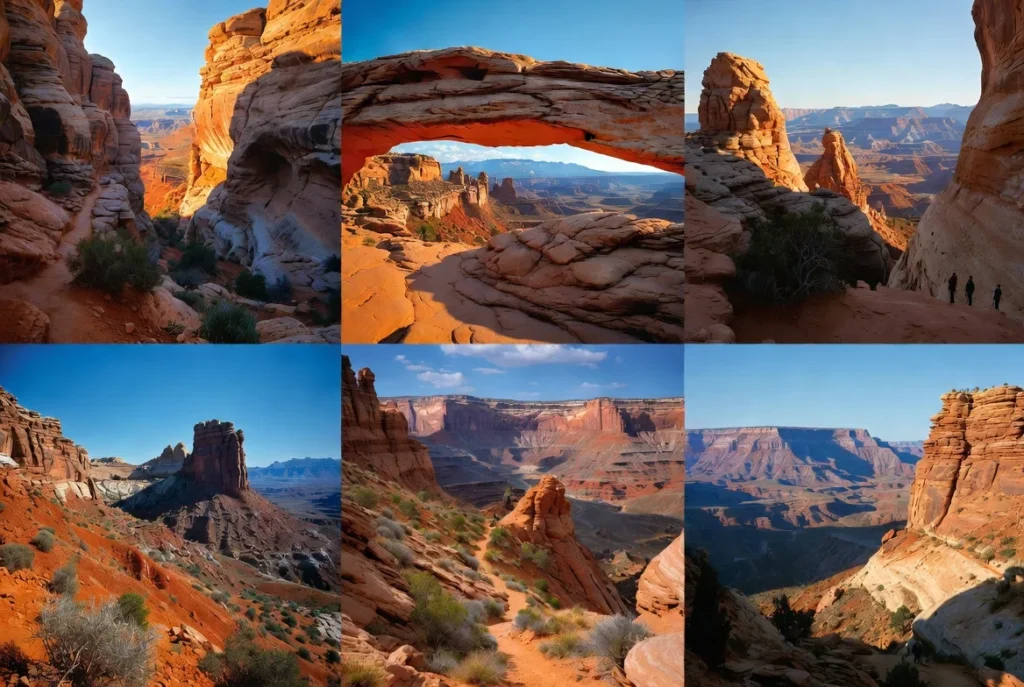
Hiking is one of the most rewarding ways to experience Utah’s national parks because it allows travelers to move beyond roadside viewpoints and immerse themselves in the landscape. Every park offers its own signature trail, showcasing unique geological features and unforgettable scenery. Some hikes lead through towering canyon walls, while others reveal expansive overlooks or natural rock formations shaped over millions of years. Choosing the right trail for your fitness level and available time can significantly improve your overall experience and help you appreciate the incredible diversity found throughout the Mighty 5.
While many visitors focus on famous trails, success often comes from proper preparation. Carrying enough water, checking weather conditions, and starting early can make a dramatic difference, especially during warmer months. I’ve noticed that travelers who research trail conditions beforehand enjoy a smoother experience and avoid common mistakes. Whether you’re tackling a challenging route like Angels Landing or enjoying a shorter walk to Mesa Arch, each hike provides a unique perspective that cannot be fully appreciated from a vehicle or overlook alone.
| Park | Top Hike | Why It’s Famous |
|---|---|---|
| Zion National Park | Angels Landing | Thrilling views and iconic cliffside route |
| Bryce Canyon National Park | Navajo Loop Trail | Close-up views of colorful hoodoos |
| Capitol Reef National Park | Cassidy Arch | Stunning natural arch and scenic desert views |
| Arches National Park | Delicate Arch | Utah’s most famous natural landmark |
| Canyonlands National Park | Mesa Arch | Spectacular sunrise photography location |
Where to Stay on a Utah National Parks Road Trip
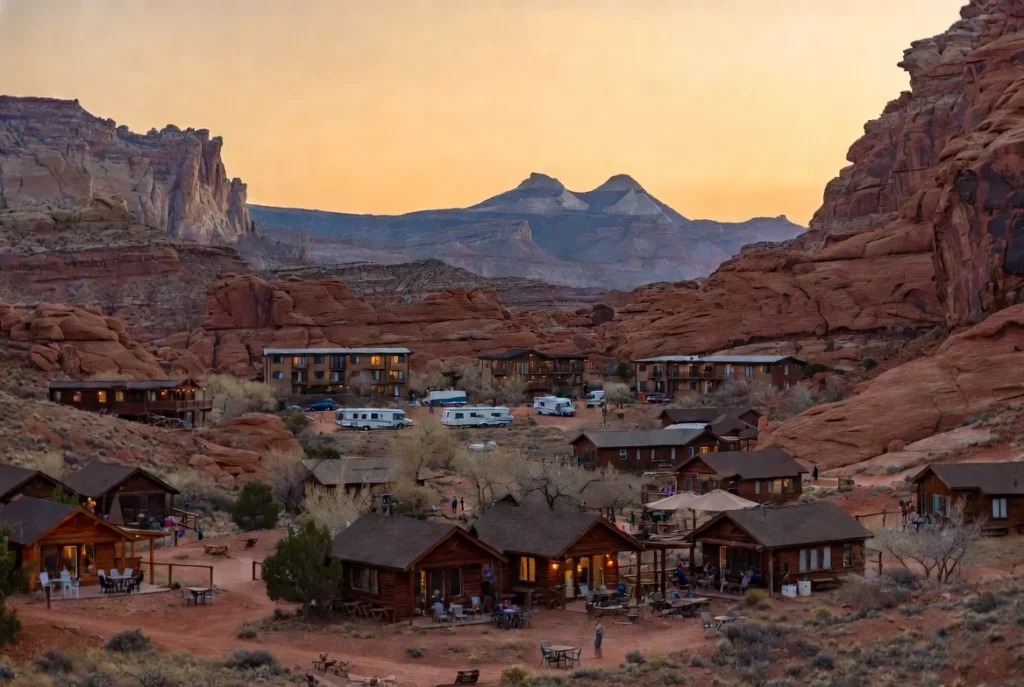
Choosing the right accommodations can greatly improve both comfort and convenience throughout your journey. Springdale remains the most popular choice for visitors exploring Zion thanks to its proximity to the park entrance, restaurants, and shuttle access. Bryce Canyon City offers practical lodging near Bryce Canyon, while Torrey provides a peaceful atmosphere close to Capitol Reef. As travelers move east, Moab becomes the primary hub for exploring both Arches and Canyonlands. Staying strategically near each destination minimizes daily driving and creates more time for hiking, sightseeing, and relaxation.
Accommodation styles vary considerably across southern Utah, giving travelers flexibility regardless of budget or travel style. Hotels, boutique inns, vacation rentals, campgrounds, and RV parks are available throughout the route. I’ve found that booking early is one of the smartest decisions travelers can make, especially during spring and fall when demand is highest. Popular lodging options often sell out months in advance. Whether you prefer luxury amenities or nights beneath the stars, planning accommodations carefully helps ensure a smoother and more enjoyable road trip experience.
Springdale (Zion)
- Closest town to Zion National Park.
- Excellent restaurants and visitor services.
- Easy access to shuttle stops.
Bryce Canyon City
- Convenient location near Bryce Canyon entrance.
- Variety of hotels and lodges.
- Ideal for sunrise and sunset visits.
Torrey
- Gateway community for Capitol Reef.
- Quiet atmosphere and scenic surroundings.
- Great option for a relaxing overnight stay.
Moab
- Best base for Arches and Canyonlands.
- Wide range of accommodations.
- Popular destination for outdoor enthusiasts.
Best Campgrounds
- Watchman Campground (Zion)
- North Campground (Bryce Canyon)
- Fruita Campground (Capitol Reef)
- Devils Garden Campground (Arches)
RV-Friendly Options
- Ruby’s RV Park
- Moab Valley RV Resort
- Zion Canyon Campground
- Thousand Lakes RV Park
Best Time for a Utah National Parks Road Trip
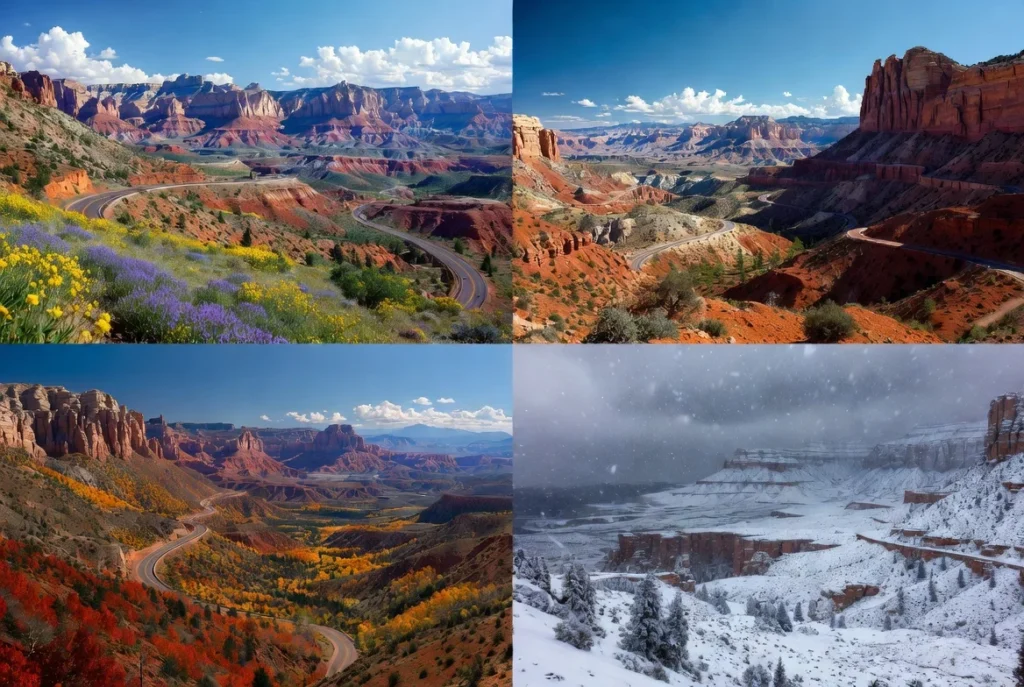
Timing can dramatically influence your overall experience across Utah’s national parks. Spring and fall consistently rank as the most popular seasons because they combine pleasant temperatures with excellent hiking conditions. Wildflowers often bloom during spring months, while autumn brings cooler weather and fewer visitors after the summer rush. Comfortable daytime temperatures make exploring trails and scenic overlooks far more enjoyable. These seasons also provide ideal lighting conditions for photography, allowing travelers to capture the vibrant colors that define Utah’s remarkable landscapes.
Although spring and fall are widely recommended, every season offers unique advantages. Summer delivers long daylight hours but often includes intense desert heat, particularly in lower-elevation areas. Winter transforms portions of the route into surprisingly peaceful destinations with occasional snow-covered scenery. I’ve seen Bryce Canyon after a snowfall, and the contrast between white snow and red rock formations creates an unforgettable sight. Understanding seasonal conditions helps travelers align expectations with reality and choose the time of year that best matches their interests and activity preferences.
Spring (March–May)
- Mild temperatures.
- Blooming wildflowers.
- Excellent hiking conditions.
- Best overall season for many travelers.
Summer (June–August)
- Very warm daytime temperatures.
- Early starts recommended.
- Larger crowds at major attractions.
Fall (September–October)
- Comfortable weather.
- Beautiful photography conditions.
- Reduced crowd levels compared to summer.
Winter (November–February)
- Snow possible in higher elevations.
- Quieter trails and viewpoints.
- Unique seasonal landscapes.
Essential Travel Tips
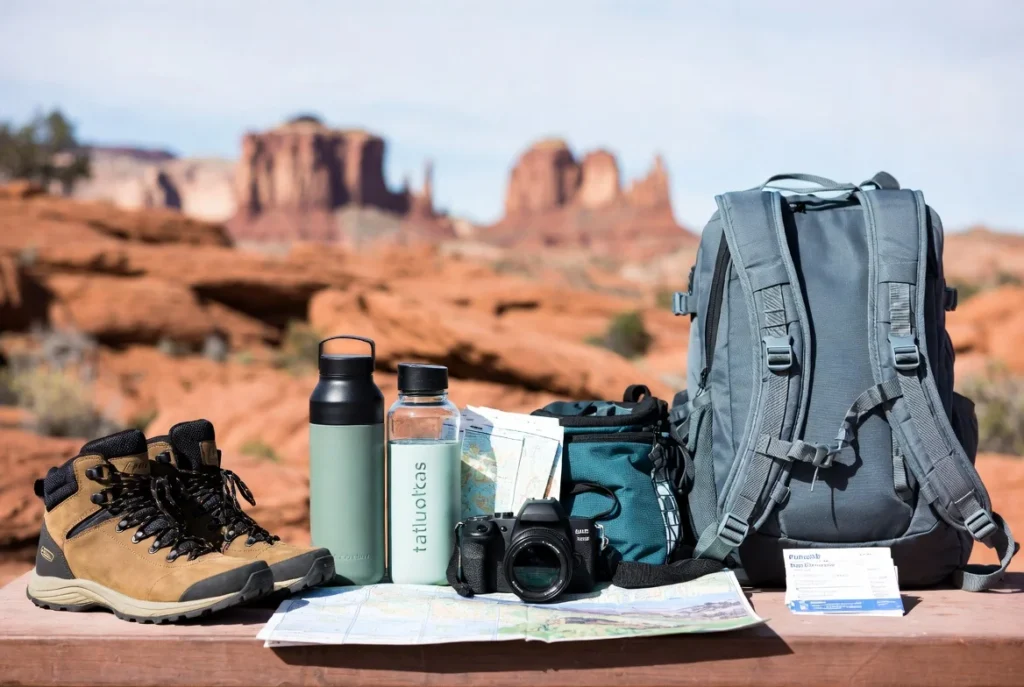
Even the most spectacular itinerary benefits from smart preparation. Southern Utah’s landscapes may look welcoming in photographs, but the region’s remote nature requires thoughtful planning. The America the Beautiful Pass is one of the best investments for travelers visiting multiple parks, often saving money compared to individual entrance fees. Checking current reservation requirements is equally important because regulations can change seasonally. Arches National Park may require timed-entry reservations, while certain Zion hikes, including Angels Landing, involve permit systems that should be researched before departure.
Preparation becomes especially valuable once you’re on the road. Cell service can disappear unexpectedly between parks, making offline maps essential for navigation. Carrying more water than you think you’ll need is another simple habit that can prevent problems during hikes. I’ve noticed that travelers who plan accommodations several months ahead usually enjoy more flexibility and better pricing options. Small details such as checking shuttle schedules, monitoring weather forecasts, and packing layers for temperature changes can significantly improve comfort and reduce unnecessary stress throughout the adventure.
Essential Planning Checklist
- Buy the America the Beautiful Pass.
- Check Zion shuttle schedules.
- Reserve Arches timed-entry access.
- Download offline maps.
- Carry plenty of water and snacks.
- Pack sun protection and layered clothing.
- Book accommodations months ahead.
Budget for a Utah Mighty 5 Road Trip
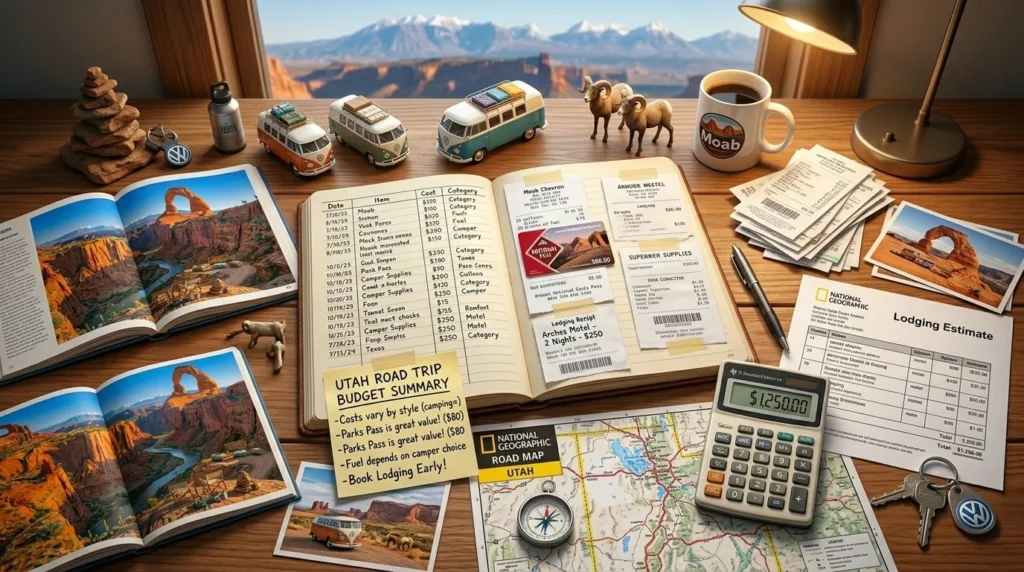
One of the biggest advantages of this adventure is its flexibility. Travelers can create a memorable experience on a modest budget or choose more luxurious accommodations and activities depending on personal preferences. Entrance fees remain relatively affordable, especially when using the America the Beautiful Pass. Fuel expenses typically represent one of the largest transportation costs because the route covers nearly one thousand miles. Fortunately, many of the parks offer exceptional scenery and hiking opportunities that require little more than admission, making the experience accessible for a wide range of budgets.
Accommodation choices have the greatest impact on total spending. Campgrounds provide budget-friendly options, while hotels and resorts near popular parks command higher rates during peak travel seasons. Dining expenses also vary depending on whether travelers cook meals, visit grocery stores, or dine at local restaurants. In my experience, booking accommodations early often results in better availability and lower prices. Careful planning helps travelers avoid unexpected expenses while still enjoying the incredible landscapes, trails, and experiences that make the Mighty 5 route one of America’s best road trips.
| Category | Estimated Cost |
|---|---|
| America the Beautiful Pass | $80 |
| Gas | $150–300 |
| Hotels | $100–300 per night |
| Camping | $20–50 per night |
| Food | $30–80 per day |
| Activities & Extras | Variable |
Frequently Asked Questions (AEO Goldmine)
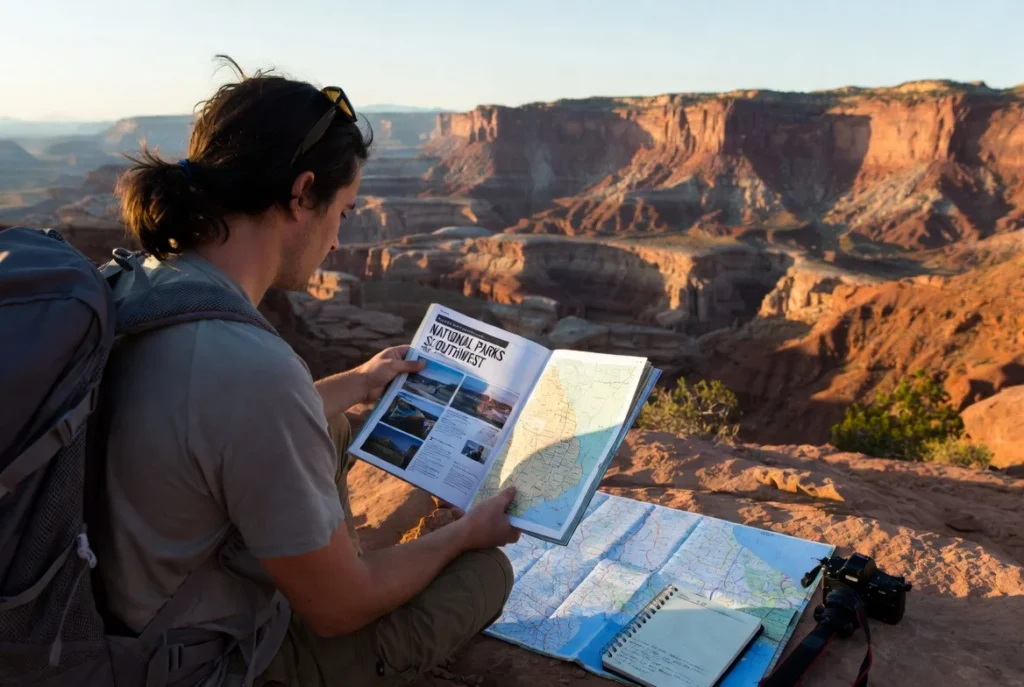
Answering common questions before departure helps travelers make smarter decisions and avoid planning mistakes. Many visitors wonder whether one week is enough time, which route works best, and which airport offers the easiest access. These concerns are understandable because the Mighty 5 covers a large geographic area and includes countless attractions. Understanding travel logistics early allows visitors to create realistic expectations and maximize their available time. A little preparation can make the difference between feeling rushed and enjoying a smooth, memorable adventure.
The good news is that most planning questions have straightforward answers. A carefully designed route can comfortably connect all five parks within seven to ten days while still allowing time for major hikes and viewpoints. I’ve found that travelers who focus on priorities rather than trying to see everything often leave more satisfied with their experience. The itinerary remains flexible enough for different travel styles while still covering the destinations that make southern Utah one of the most extraordinary road trip regions in North America.
How many days do you need for Utah’s Mighty 5?
Seven to ten days is ideal for most travelers. A week allows you to see the highlights, while ten days provides a more relaxed pace with extra hiking and sightseeing opportunities.
What is the best order to visit Utah national parks?
The most efficient sequence is:
Zion → Bryce Canyon → Capitol Reef → Arches → Canyonlands
This route minimizes backtracking and follows a logical driving path through southern Utah.
Is a Utah National Parks Road Trip worth it?
Absolutely. It combines world-famous hikes, scenic drives, stunning viewpoints, unique geological formations, and some of the most beautiful landscapes in the United States.
Can you do the Mighty 5 in one week?
Yes. With careful planning, travelers can visit all five parks in seven days while experiencing the major highlights and iconic attractions.
What is the best airport for the Utah Mighty 5?
Las Vegas (LAS) is often considered the best starting point because it offers the shortest drive to Zion National Park and numerous flight options.
Final Thoughts: The Ultimate Utah National Parks Road Trip
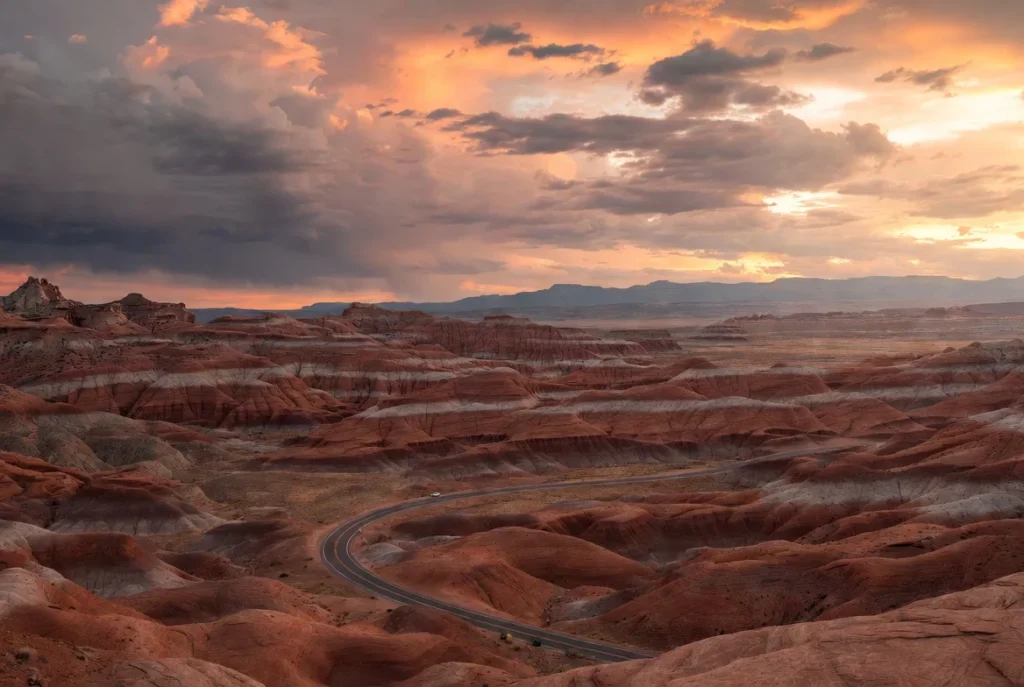
A Utah National Parks road trip is more than just a vacation—it’s a journey through some of the most dramatic landscapes in the world. From the towering cliffs of Zion to the surreal hoodoos of Bryce Canyon, and from the massive arches of Arches National Park to the vast canyon systems of Canyonlands, every stop tells a different story carved by time, wind, and water. The beauty of this route lies in its diversity, offering something unforgettable at every turn.
What makes this adventure truly special is how accessible it is with the right planning. In my experience, even first-time visitors are surprised by how smoothly the route flows when distances, lodging, and park highlights are organized in advance. Whether you follow a strict itinerary or explore at your own pace, the Mighty 5 consistently delivers moments that feel both humbling and inspiring.
This journey stays with you long after the final drive home. Many travelers find themselves planning a return before they’ve even left Utah. If you save this itinerary, share it, and use it as your planning guide, you’ll be setting yourself up for an experience that combines adventure, natural beauty, and unforgettable memories.